




NVIDIA Backs Unified Push As Linux Distros Align On Gaming Foundations
 Nvidia
 Steam
Steam Microsoft
Linux gaming continues to consolidate its position as a viable PC platform, with NVIDIA expanding official support and a group of Linux distributions coordinating development work. Recent changes focus on shared infrastructure, driver compatibility, and platform-level consistency.
According to PC Gamer, the momentum is visible across hardware, software, and distribution-level projects. Proton updates remain frequent, handheld PC interest continues to grow, and NVIDIA has now introduced an official GeForce Now client for Linux. At the same time, multiple gaming-focused Linux distributions have formed a joint effort to reduce duplicated work and align core components.
At the center of the distribution effort is the Open Gaming Collective, or OGC. The group brings together developers from Bazzite, Nobara, PikaOS, ChimeraOS, Asus Linux, and several other gaming-oriented Linux distributions. These projects are not based on a single Linux family. Fedora, Debian, Arch, and related ecosystems are all represented. The goal is not to merge distributions, but to align their gaming foundations (via GamingOnLinux).
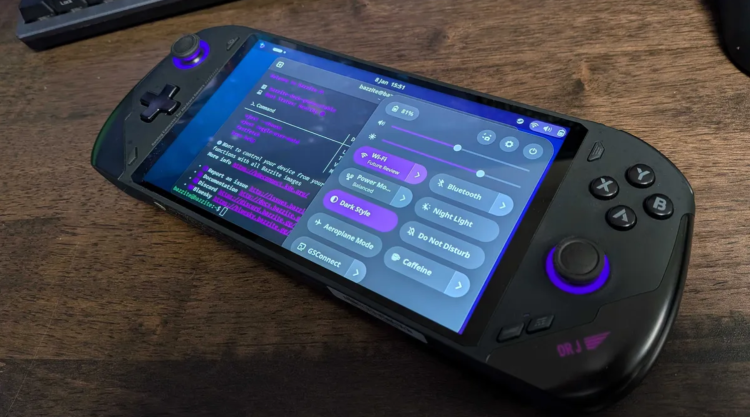
Developers involved in the OGC are working toward a unified set of gaming-focused components that can be shared across Linux distributions. The intent is to simplify maintenance, improve hardware compatibility, and reduce the amount of one-off engineering currently required by each project. Rather than solving the same problems multiple times, participating distributions plan to contribute improvements upstream wherever possible.
A central element of this work is a shared kernel configuration known as the OGC kernel. Bazzite described the approach in clear terms.
“Operates on an upstream-first approach, meaning all patches shipped by the OGC will be at least in review for eventual inclusion into the Linux kernel. This means better hardware compatibility, fewer duplicated efforts, and a more unified Linux gaming experience for everyone.”
— Bazzite Developers
This upstream focus aims to reduce long-term divergence between gaming distributions and mainline Linux. Hardware vendors and game developers often struggle with Linux due to inconsistent behavior across distros. By aligning kernel changes and driver handling, the OGC hopes to reduce that friction.
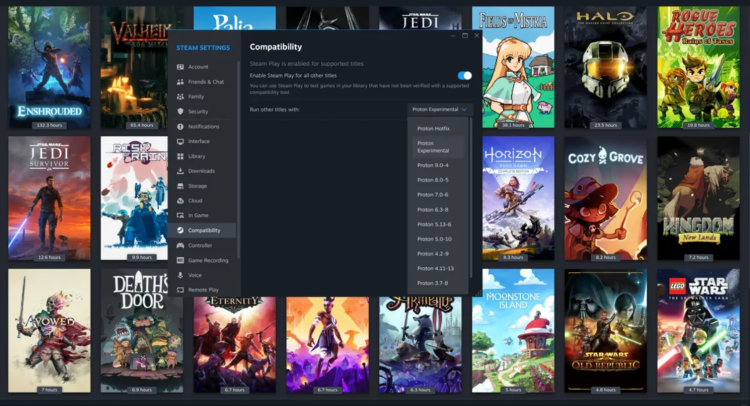
Input handling is another area where consolidation is already happening. Bazzite confirmed it will drop its use of Handheld Daemon in favor of InputPlumber. InputPlumber is already used by SteamOS, ChimeraOS, Nobara, Playtron GameOS, Manjaro Handheld Edition, and CachyOS Handheld Edition. Moving to a common input framework should improve controller support and reduce bugs across handheld and desktop systems.
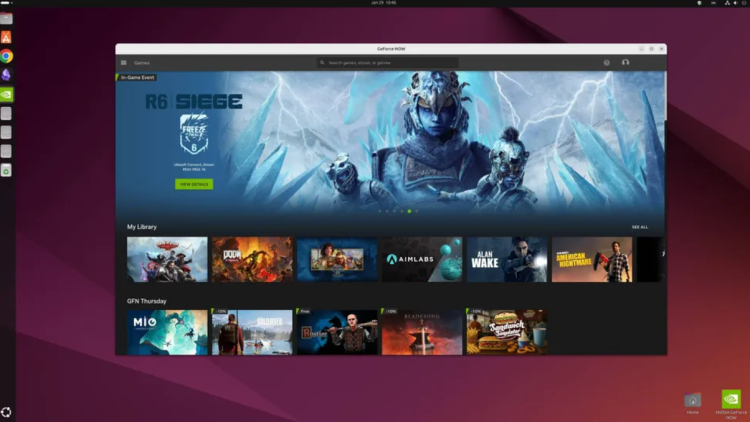
This work coincides with NVIDIA’s recent move to officially support GeForce Now on Linux. NVIDIA has released a native Linux client for its game streaming service, currently available in beta. Official support is limited to Ubuntu 24.04 LTS, but the client unlocks features not available through browser access or third-party tools. Higher resolutions, higher frame rates, and improved stability are among the immediate benefits.
Before the native client, Linux users relied on browser streaming or unofficial applications such as GeForce Infinity. Those options worked but imposed limits on image quality and performance. The native GeForce Now client removes several of those constraints, provided users meet NVIDIA’s driver and hardware requirements.
NVIDIA stated that Ubuntu is the only officially supported distribution at launch, though other distros may work through Flatpak installation.
“Nvidia does want to bring it to further ones and is actively evaluating them.”
— NVIDIA
Testing on Ubuntu 24.04 LTS shows stable performance when using NVIDIA’s recommended 580 series drivers. Vulkan H.264 or H.264 decoding support is required, and AMD GPUs are supported through Flatpak-managed drivers. Users attempting newer NVIDIA drivers, such as the 590 series, have reported compatibility issues, though NVIDIA has indicated this is expected behavior during the beta phase.
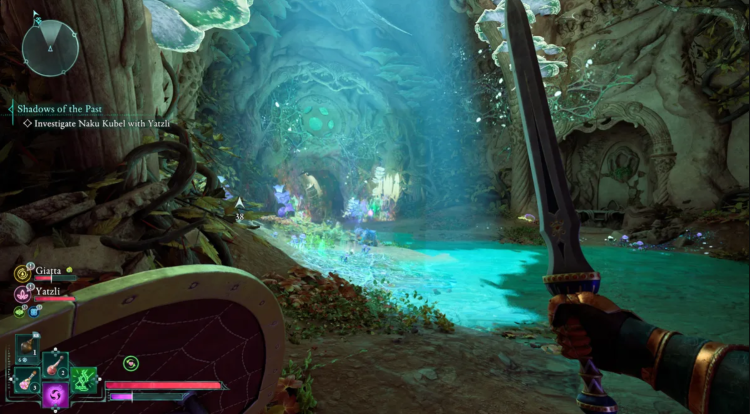
In-game performance through GeForce Now on Linux closely matches the Windows experience. Streaming latency remains slightly higher than native play, but not enough to disrupt gameplay in most titles. Features such as ray tracing, DLSS, Reflex, and low-latency streaming presets function as intended. Some features, including AV1, HDR, and Cloud G-Sync, are not yet available on Linux.
The GeForce Now client also expands the playable catalog for Linux users. Games that fail to run locally due to anti-cheat restrictions, such as Apex Legends, can now be accessed through streaming. Titles that rely on kernel-level anti-cheat and are not available on GeForce Now, such as Valorant, remain inaccessible.
When viewed together, NVIDIA’s client release and the OGC’s coordination effort address two of Linux gaming’s long-standing problems. The first is inconsistent platform support from hardware vendors. The second is internal fragmentation that complicates development and testing. Official NVIDIA support reduces uncertainty for users, while shared infrastructure reduces overhead for developers.
Handheld gaming PCs have added urgency to these efforts. Devices such as the Steam Deck, Legion Go S, and other portable systems rely on predictable input behavior, driver stability, and fast iteration. SteamOS, built on Arch Linux, already benefits from tight integration between Valve’s software stack and hardware assumptions. The OGC’s work aims to bring similar consistency to non-SteamOS distributions.
Fedora-based gaming distros such as Bazzite and Nobara have gained popularity due to newer kernels and drivers. Debian-based systems prioritize stability, while Arch-based systems offer rapid updates. The OGC’s structure allows these differences to persist while aligning their gaming-specific layers.
Linux gaming still trails Windows in overall compatibility and market share. However, the current trajectory differs from previous cycles of enthusiasm. This time, platform vendors, distribution maintainers, and hardware manufacturers are making changes that reduce friction rather than add new abstractions.
NVIDIA’s involvement is particularly notable given its history with Linux. Driver availability has improved significantly over the past decade, but official platform-level features often arrived late or inconsistently. A native GeForce Now client, even in beta, marks a shift toward treating Linux as a first-class endpoint rather than an afterthought.
The OGC’s success will depend on sustained coordination and upstream acceptance of its changes. Kernel review processes are slow by design, and not all patches will be accepted. Even so, the effort to submit changes upstream reduces long-term maintenance costs and improves predictability for users.
Linux gaming no longer hinges on a single breakthrough. Instead, it advances through incremental alignment across software layers. NVIDIA’s streaming support and the OGC’s shared foundation represent parallel steps toward a more coherent platform.
Read also, GOG’s new owner, Michał Kiciński, sharply criticized Windows as “such poor-quality software” while signaling increased interest in Linux support, as the company explores deeper compatibility for its storefront.


 Successfully copied... Thank you for sharing our content!:



5% deposit bonus up to 100 gems

a free Gift Case





EGAMERSW - get 11% Deposit Bonus + Bonus Wheel free spin


EXTRA 10% DEPOSIT BONUS + free 2 spins

3 Free Cases + 100% up to 100 Coins on First Deposit


5 Free Cases, Daily FREE & Welcome Bonuses up to 35%

3 free cases and a 5% bonus added to all cash deposits.

+5% to deposit




Comments