




Cairn And The Cost Of Every Grip
 Games
Games Steam
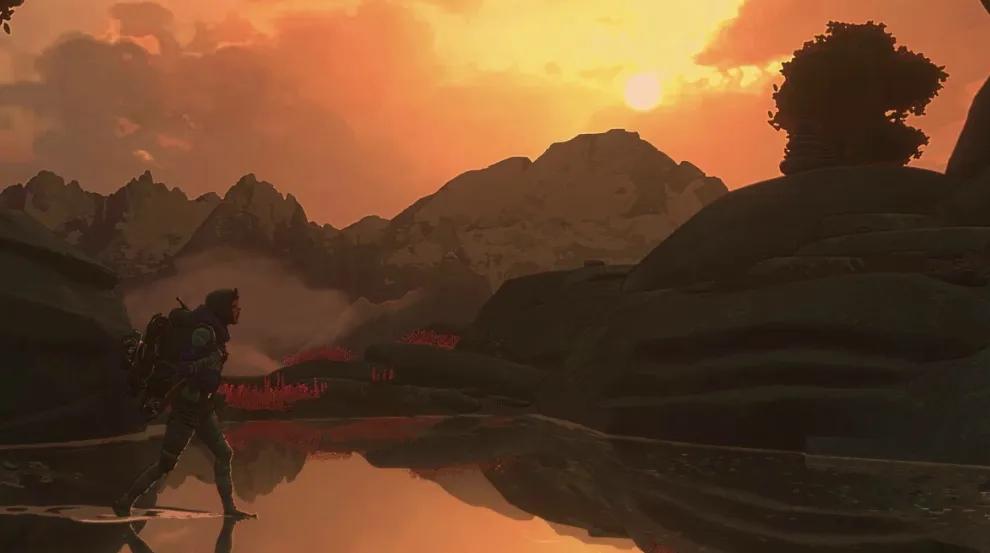
SteamCairn opens on a mountain that does not frame itself as a challenge to be conquered, but as a place that decides whether you are allowed to pass. In the opening hours of the game’s hands-on demo, the climb sets its terms quickly: every movement costs energy, every mistake carries weight, and safety is something you construct slowly, or not at all.
Thanks to IGN's preview, early access to Cairn shows how deliberately the game resists spectacle in favor of control. Developed by The Game Bakers, Cairn is a climbing-focused survival simulator built around Mount Kami, a towering, hostile peak that demands attention at every meter gained. The player controls Aava, a solo climber attempting an ascent that is as much about endurance as intent.
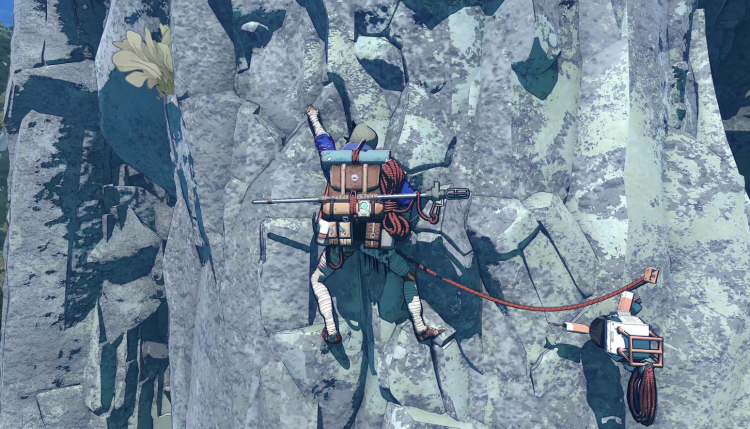
The climbing system rejects automation. Each limb is placed manually, and progress depends on reading the rock face in detail. Small cracks, shallow ledges, and uneven corners define what is possible. Aava does not magnetize to surfaces. She responds to placement, balance, and fatigue. Her strength is considerable, but it is not infinite. Arms shake, legs tremble, and grips degrade as energy drains.
The relationship between player input and character behavior feels weighted rather than adversarial. Aava assists where she can, securing holds when placed correctly and adjusting her body to maintain balance, but responsibility remains mostly with the player. Mistakes do not feel random. They feel earned.
“There’s an ebb and flow to the climbing. Sometimes, clear hand and footholds make for a fast and controlled ascent.”— Justin Koreis
Route selection becomes the central decision-making layer. The mountain can be climbed almost anywhere, but not everywhere is viable. Some paths trade safety for speed. Others appear forgiving until a single section offers no obvious solution. There is no visual guidance. The camera can pull back to survey the terrain, but the judgment remains yours.
Failure is persistent. A fall without protection can end the run. Protection comes from pitons placed into the rock and linked to Climbot, a small robot companion that manages rope tension. Belays allow rest, controlled descents, and a margin for error, but pitons are limited. Each one takes time to secure, and hesitation can cost more than haste.
Climbot also carries narrative weight. It replays messages, stores supplies, and follows Aava through narrow passages and exposed ridges. When damaged versions of Climbot appear abandoned on the mountain, they imply outcomes without explanation. The game trusts the player to read those signs.
Environmental threats compound the climb. Cold reduces stamina and health. Rain degrades grip. Storms and nightfall cut visibility. Hunger and dehydration matter, as does the condition of Aava’s hands. Bloodied fingers reduce effectiveness and must be taped during rest.
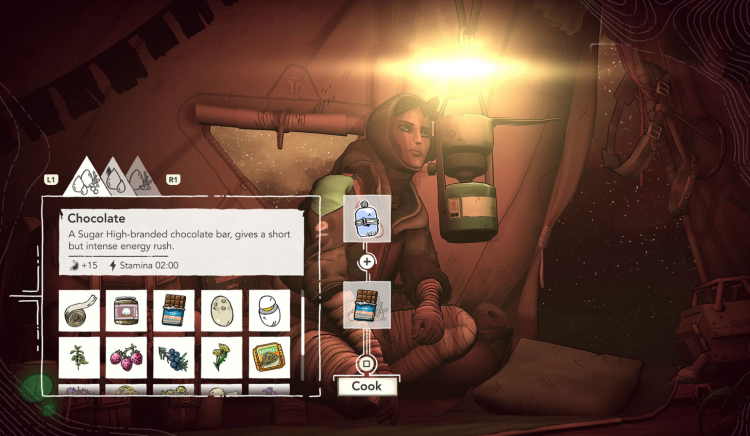
Rest comes only where the mountain allows it. Terraces, caves, and flat shelves provide space to establish bivouacs. These temporary camps allow cooking, inventory management, and sleep. They also function as save points. Resources are scarce enough that preparation matters. Food, water, and warmth are as critical as climbing skills.
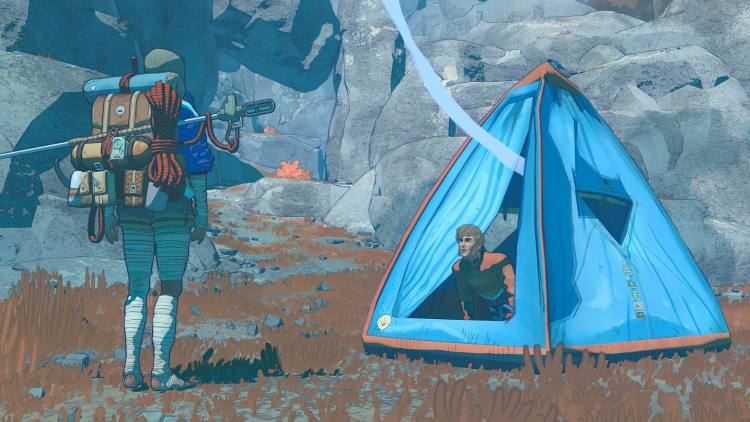
The mountain carries traces of prior attempts. Scribbled notes, abandoned tents, and skeletal remains appear without commentary. At one point, Aava encounters the body of another climber.
“Sometimes you come for the mountain. Sometimes the mountain comes for you.”— Aava
Cairn does not isolate its systems from its story. Audio messages, brief dialogue, and environmental detail build a narrative that unfolds quietly alongside the ascent. Aava’s motivations are not stated outright, but tension emerges through her reactions to messages from home and her increasingly strained exchanges with Climbot. The climb is personal, and whatever drives it seems unresolved.
“We might see some other climbers on our ascent.”— The Game Bakers
Mount Kami itself carries history. Cave dwellings carved into stone suggest earlier communities. Broken infrastructure, including a damaged cable car and an overturned vending machine, implies a mountain that was once accessible, then abandoned. The higher the climb goes, the more closed and hostile the environment becomes.
By the end of the demo, Cairn establishes a clear identity. It is not a power fantasy. It does not rush the player forward. It asks for patience, attention, and acceptance of loss. Progress is measured in meters, not moments.
Cairn is scheduled to release on January 29 for PS5 and PC (Steam).
Read also, Cairn’s Climbing Demo Feels Like a Real Survival Test, and It Works, which examines how the game’s brief Steam demo leaves a stronger impression through restraint, focus, and pure climbing tension without combat or spectacle.


 Successfully copied... Thank you for sharing our content!:



5% deposit bonus up to 100 gems

a free Gift Case





EGAMERSW - get 11% Deposit Bonus + Bonus Wheel free spin


EXTRA 10% DEPOSIT BONUS + free 2 spins

3 Free Cases + 100% up to 100 Coins on First Deposit


5 Free Cases, Daily FREE & Welcome Bonuses up to 35%

3 free cases and a 5% bonus added to all cash deposits.

+5% to deposit




Comments