




VHOLUME Turns Brutalist Dystopia Into A Precision Parkour Playground
 Games
Games Steam
SteamVHOLUME enters the conversation as a first-person parkour game shaped by Brutalist design and built by developers tied to Babbdi and Straftat. The project comes from Léonard Lemaitre, one of the creators behind Straftat, working alongside Nathan Grange and Niels Tiercelin. IronEqual is handling publishing. The game places VHOLUME firmly within a lineage of stark concrete worlds and mechanical spaces that prioritize movement, scale, and spatial tension.
Set in what is described as the derelict capital of Afro-Eurasia, VHOLUME casts players as Robert, a lone figure moving through a city ruled by a tyrannical Ministry. His stated objective is the restoration of his family’s revoked ration tickets. The setting appears empty of other people, emphasizing isolation and architecture rather than social interaction. The premise exists mainly as a framing device, with the focus resting on traversal rather than narrative complexity.
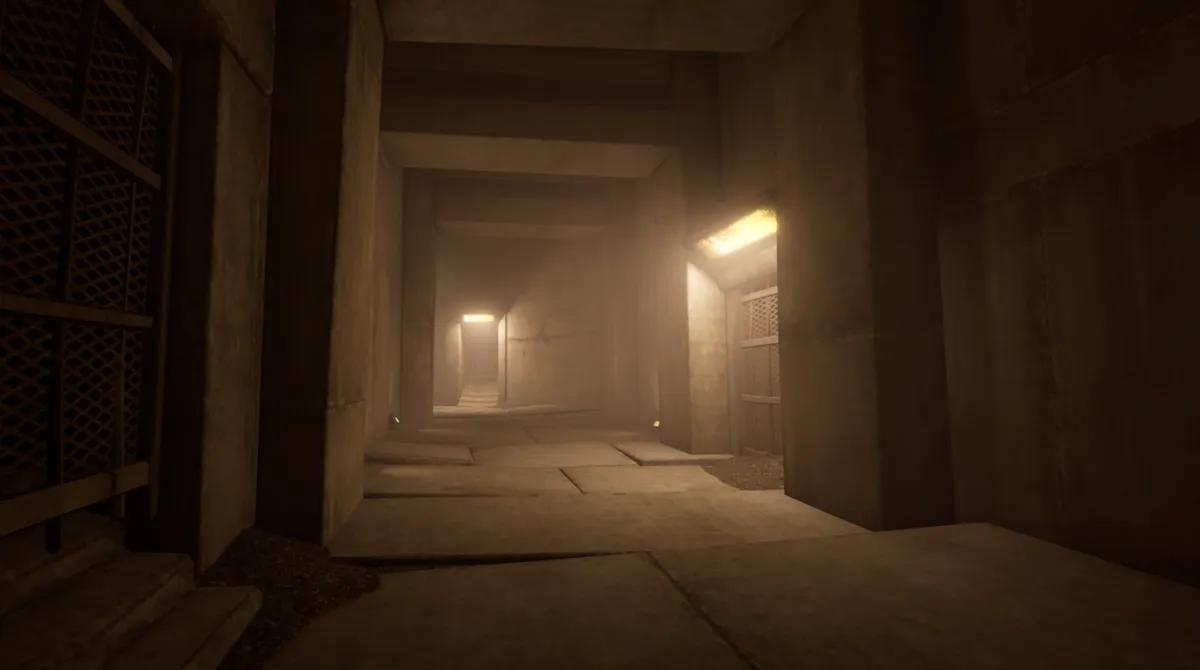
Visually, VHOLUME leans heavily into Brutalist imagery. Screens show vast slabs of concrete suspended over clouds, turbine vents embedded into monolithic structures, and narrow windows stacked in repetitive patterns. Some areas resemble abandoned civic housing or industrial infrastructure. Others dissolve into abstract arrangements of ramps and blocks emerging from mist, recalling Straftat’s collage-like level construction. The world alternates between spaces that suggest habitation and ones that feel intentionally hostile or impractical.
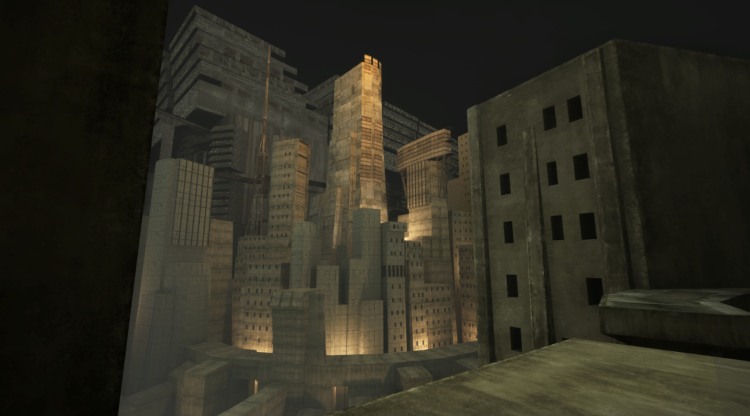
The technical presentation marks a shift from earlier work associated with the team. Lighting is softer, with diffuse shadows and a cleaner finish than the harsher, retro textures of Straftat or Babbdi. The result is a smoother and more polished surface, though still grounded in heavy geometry and scale. The environments remain imposing, but they appear more curated and controlled, favoring clarity over rawness.
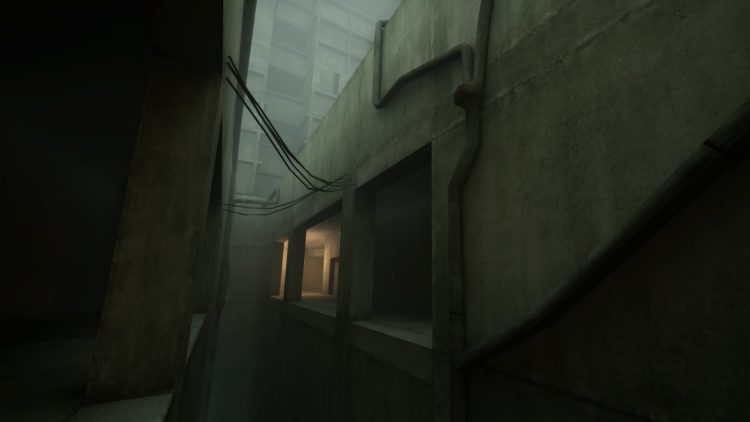
Gameplay centers entirely on movement. Players are given the ability to jump, run, climb, and slide freely across the environment. Momentum plays a central role, encouraging routes that reward speed and precision. The design supports experimentation, allowing skilled players to find shortcuts, bypass intended paths, and reduce completion times. Levels are described as labyrinthine but not restrictive, built to be learned, broken apart, and optimized through repeated runs.
“Movement-centric gameplay where the player can jump, run, climb and slide with great freedom.”— Edwin Evans-Thirlwell
“Players can exploit momentum, discover shortcuts, and break the labyrinthine design, making each run a test of skill and efficiency as they chase target times.”
At present, VHOLUME has no confirmed release date and no formal trailer. Animated clips are available through its Steam page, offering brief glimpses of traversal and environmental scale. Early impressions suggest the game will appeal to players drawn to Mirror’s Edge for its flow and verticality, though without that series’ bright, glass-and-steel aesthetic. Instead, VHOLUME favors mass, weight, and restraint.
The project continues a clear throughline from Babbdi and Straftat, reinforcing an interest in architecture as both obstacle and identity. VHOLUME does not attempt to broaden that formula. It refines it, aiming for a tighter, skill-driven experience shaped almost entirely by motion through space.


 Successfully copied... Thank you for sharing our content!:



5% deposit bonus up to 100 gems

a free Gift Case





EGAMERSW - get 11% Deposit Bonus + Bonus Wheel free spin


EXTRA 10% DEPOSIT BONUS + free 2 spins

3 Free Cases + 100% up to 100 Coins on First Deposit


5 Free Cases, Daily FREE & Welcome Bonuses up to 35%

3 free cases and a 5% bonus added to all cash deposits.

+5% to deposit




Comments