





Larian Sets Boundaries On AI As Divinity Moves Into Full Production
 Announcement
 Games
GamesNew Divinity production is now moving forward with clearer boundaries on how artificial intelligence will be used at Larian Studios. Following the announcement of Divinity at The Game Awards, the studio’s leadership has outlined a development approach that relies on generative AI for internal support while keeping all shipped content human-made. The stance comes as Larian shifts from Baldur’s Gate 3, one of the most successful role-playing games ever released, into a new phase defined by scale, pressure, and a return to a franchise the studio fully owns.
Swen Vincke, Larian’s founder and chief executive officer, confirmed that generative AI tools are part of the studio’s current workflow but said the upcoming Divinity will not contain AI-generated material. Speaking to Bloomberg, Vincke described AI as a background tool used to explore ideas, expand internal documents, create early concept art, and draft placeholder text during development. None of that material, he said, will appear in the final game.
“In Divinity, then, ‘everything is human actors; we’re writing everything ourselves,’” — Swen Vincke.
The clarification arrives at a moment when AI use in game development has become a flashpoint across the industry. Studios face increasing scrutiny from workers and audiences concerned about automation replacing creative labor. Vincke acknowledged that Larian’s internal adoption of AI tools has prompted some resistance but said the company has reached a working consensus.
“And while the use of AI has led to some pushback internally," Vincke believes, "at this point everyone at the company is more or less OK with the way we’re using it,’” — Swen Vincke.
The game tools have not delivered dramatic efficiency gains. Instead, they function as accelerators for early-stage ideation rather than replacements for designers, writers, or artists. Vincke emphasized that creative judgment and iteration remain human-led, and that AI has not solved the core challenge of making complex role-playing games faster.

That challenge looms large as Larian attempts to shorten its development cycles. Baldur’s Gate 3 took roughly six years to complete, a timeline extended by its ambition and by disruptions during the Covid-19 pandemic. With Divinity, the studio is aiming to finish production in significantly less time. Vincke has said a three- to four-year cycle is healthier, though he cautioned that creativity resists compression.
“I think three to four years is much healthier than six years,” — Swen Vincke.
One method Larian is using to reduce timelines is parallel development. Rather than building quests and storylines in sequence, multiple narrative teams are working simultaneously across different parts of the game. That shift requires larger writing and scripting departments than the studio has ever maintained before, even as it accepts that iteration still takes time.
“The creative process itself actually is something you cannot accelerate,” — Swen Vincke.
Divinity marks a return to Larian’s own dark fantasy universe after its detour into Dungeons & Dragons with Baldur’s Gate 3. That game, licensed from Hasbro and Wizards of the Coast, sold more than 20 million copies and won Game of the Year from numerous outlets. The success elevated Larian from a respected niche developer into one of the industry’s most visible studios. It also created expectations that now follow every move the company makes.
Vincke said the studio initially planned to continue working within the Dungeons & Dragons framework. After months of early development, the team stepped away. The systems were familiar, but the enthusiasm was gone.
“Conceptually, all of the ingredients for a really cool game were there except the hearts of the developers,” — Swen Vincke.
The pivot back to Divinity was driven by creative ownership and flexibility. Unlike Dungeons & Dragons, Divinity allows Larian to design mechanics specifically for digital play without adapting tabletop rules. Vincke has argued that this freedom makes the underlying systems easier to understand and more expressive in a video game context.
“Here, we’re making a system that’s made for a video game. It’s much easier to understand,” — Swen Vincke.
Technologically, the studio is also taking risks. Divinity is being built on a new engine, a move that has introduced early friction but is expected to pay off over time. The engine switch is intended to improve how content streams into the game world and to deepen the cinematic presentation that became a hallmark of Baldur’s Gate 3. Those ambitions align with Larian’s broader goal of expanding reactive storytelling, where player decisions create long-term consequences.
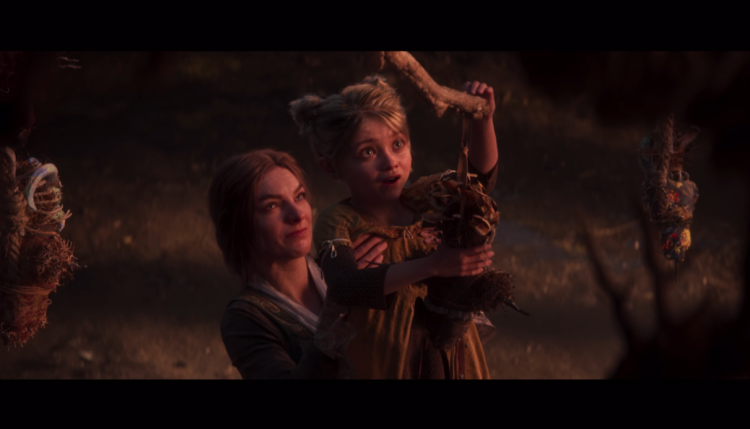
Vincke said the team wants to push that approach further than before. Players in Baldur’s Gate 3 often encountered radically different outcomes based on alliances, dialogue choices, and combat decisions. Divinity is designed to widen those divergences.
“The idea is that when you talk to fellow journalists about the game, you’ll have completely different stories,” — Swen Vincke.
“We’re doing a couple of things that you haven’t seen in RPGs before, I think.”
The studio’s growth underpins those ambitions. Larian now employs around 530 people across seven offices in Europe, North America, and Asia. The scale is a departure from the company’s earlier years, when it operated with far smaller teams and budgets. Vincke described the expansion as necessary but challenging, introducing layers of responsibility he had not anticipated.
“I think a lot of founders have the same problem,” — Swen Vincke.
“I have to be large, otherwise I can’t make my video game. With growth suddenly comes a whole bunch of responsibilities that you didn’t necessarily think you were ever gonna have.”
Ownership structure has also evolved. Vincke and his wife remain majority shareholders, while Tencent holds a significant minority stake. Vincke said Tencent has board representation but does not influence day-to-day operations or creative direction. The partnership provided financial stability that enabled Larian to commit to a project as large as Baldur’s Gate 3 without risking the studio’s survival.
“It gave me the confidence to say, OK, I’m never gonna end up at the fuel station anymore, calling my wife to say I can’t pay,” — Swen Vincke.
That financial security now feeds directly into New Divinity production. Vincke said the revenue from Baldur’s Gate 3 allows Larian to invest more heavily in narrative experimentation, even as it tries to control scope. Early access is planned, continuing a release strategy Larian has used for previous games, though the studio does not expect Divinity to be ready in 2026.
AI remains a background consideration throughout this process. Vincke has repeatedly framed it as an additive tool rather than a transformative one. At GDC and in later interviews, he rejected the idea that AI could replace developers, arguing instead that it may help teams explore more options before committing resources.
“So, we certainly don’t see it as a replacement for developers,” — Swen Vincke.
“But we do see it as something that allows us to do more stuff.”
Read also, interest in Larian’s earlier catalog has surged since the announcement, with Divinity: Original Sin and other older entries seeing a renewed rise in concurrent players on Steam. Activity data shows that the reveal of a new Divinity RPG has driven players back to the studio’s previous games, extending the momentum created by Baldur’s Gate 3 and reinforcing the lasting pull of Larian’s earlier systems and worlds.


 Successfully copied... Thank you for sharing our content!:

Comments