




Global Jury Expansion Contrasts With Narrower Game Awards Nominee Field
 Game Awards
The Game Awards jury has expanded again, widening its international reach while producing a slate of nominees that reflects a tightening field dominated by large productions. New figures published by The Game Awards show the voting body has grown from 134 to 154 member organizations over the past year, continuing a pattern of steady expansion that has shaped the show since 2019. The broader coalition includes specialist gaming outlets, mainstream publications, and select influencers across multiple regions.
The organization’s website hosts the annually updated full jury list, which illustrates how representation has shifted. Growth is uneven across regions, and the numbers show where influence is rising and where it is flattening. France nearly doubled its presence, increasing from five to nine outlets. Brazil, Mexico, and the United Kingdom also gained ground. The U.S., despite remaining the single largest national bloc with 24 outlets, did not add new members. Its share now represents 16 percent of the vote. When combined with English-language media from Canada, Australia, and the U.K., that bloc forms 30.5 percent of ballots cast. Europe follows closely with 26.6 percent, a gap smaller than in previous years.
Several territories appear for the first time. Hungary joins the voting pool, and both Hong Kong and Taiwan enter as new representatives of the Chinese-language press. Their arrival enlarges that linguistic group but does not signal uniform preferences, as each market maintains distinct cultural and gaming traditions. Japan, China, and South Korea recorded no growth, reducing their proportional influence within an expanding roster.
Mainstream media participation rose slightly with the addition of outlets such as Esquire, Wired, The London Times, and Le Devoir. Specialist publications still dominate the field. Two U.K. sites focused on mobile gaming, Pocket Gamer and Pocket Tactics, were added, partly counterbalanced by the departure of Touch Arcade. This shift indicates limited movement toward improving mobile expertise, an area The Game Awards has historically struggled to represent.
The scale and diversity of the voting body resemble the broader approach taken by large arts institutions, but the results differ. A larger, more internationally distributed panel has not produced broader nomination choices. Instead, the selections are consolidating around a narrower range of high-budget releases. Pre-2019 ballots leaned more frequently toward independent titles in categories such as Art Direction and Narrative. Winners included Ori and the Blind Forest, Cuphead, and Return of the Obra Dinn in visual categories, while Her Story and Disco Elysium earned recognition for writing.
Recent trends run in the opposite direction. Art Direction now typically honors major productions such as Ghost of Tsushima, Elden Ring, and Alan Wake 2. Narrative awards favor large-scale franchises, including The Last of Us Part 2, God of War Ragnarök, and Guardians of the Galaxy. With more international voters, the outcome has tilted toward consensus-driven recognition of globally marketed releases rather than the risk-taking work of smaller studios.
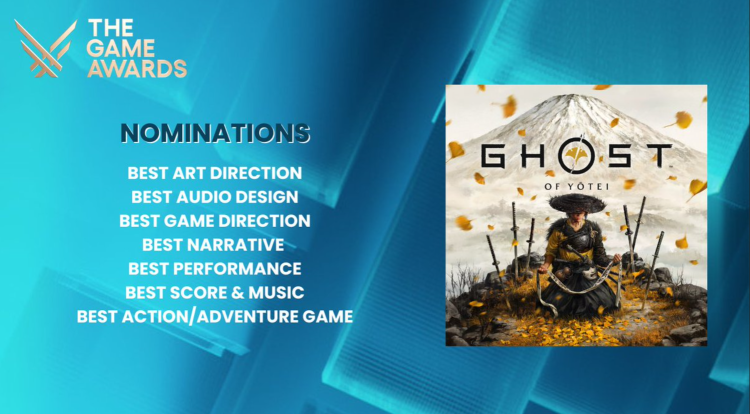
This year’s distribution underscores the shift. Clair Obscur: Expedition 33, Death Stranding 2: On the Beach, and Ghost of Yōtei appear across Best Game Direction, Best Narrative, Best Art Direction, Best Score and Music, and Best Audio Design. Three titles occupy three of the five slots in every major craft award. The remaining two places in each category leave limited room for smaller projects, constraining visibility for independent developers at the nomination stage.
The pattern does not point to diminishing quality in AAA development but rather to the difficulty smaller games face in gaining traction among a large, internationally dispersed electorate. The homogenization of selections raises questions about whether the current nomination method suits the jury’s size. The Game Awards already uses small specialist panels for esports and accessibility categories, and a similar structure for craft awards may offer a way to broaden the field without reducing the jury’s global scope.
As the voting body continues to grow, pressures on the nomination slate will persist. The gap between an increasingly diverse group of voters and an increasingly uniform set of nominees is becoming more visible, and the organization will likely confront this imbalance as the awards evolve.
Read also, Megabonk returns to contention through Players’ Voice, the show’s sole fan-driven category. The game sold a million copies in two weeks, keeping it among the year’s most prominent indie releases. Developer Vedinad withdrew the title from Best Debut Indie earlier this month, stating it did not meet category criteria, but announced its reentry on X with news of the Players’ Voice nomination. Public voting begins with 30 titles and progresses across three rounds until a single winner is decided.


 Successfully copied... Thank you for sharing our content!:

Comments