




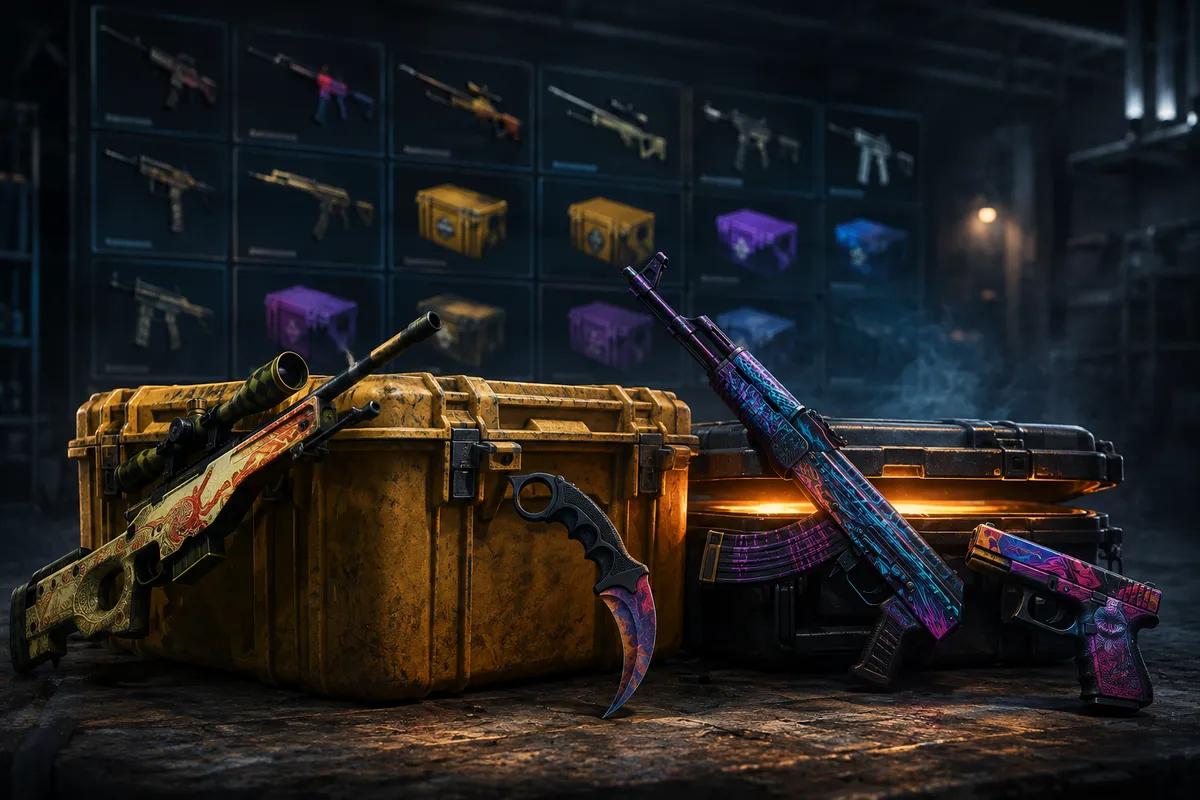
How CS2 Case Culture Has Changed Since the CS:GO Days
Counter-Strike was not always the game we know today. Sometimes, we play so much that we forget what it was like in the good old days. But every change has a reason, and the evolution of Counter-Strike’s elements, including skins and cases, has brought plenty of new opportunities. Cases have changed quite a bit over the years, from their design and contents to the way players collect and trade them. In this article, however, we will focus on cases, looking at how they have changed and what they look like today.
How Cases Have Changed from CS:GO to CS2
Understanding how cases have evolved over time can help us better understand how they work and identify the broader trends shaping Counter-Strike. Here is what you need to know about cases in Counter-Strike:
One Universal Key
In CS:GO, many cases used their own separate key, so players often ended up holding several key types they couldn't use elsewhere. CS2 simplified this by moving toward one shared key priced at $2.49, which opens most current cases. This made the whole system easier to follow, since you no longer need to track which key matches which case before buying one.
Choice Based Drops
In CS:GO, ranking up each week gave you one random item automatically, a skin or a piece of graffiti, with no say in what you got. CS2 changed this with the Weekly Care Package, introduced in 2023, which shows you four possible items and lets you pick two. This small shift gave players real control over their weekly rewards instead of leaving the result entirely up to chance.
Armory Cases with Stars
CS2 also introduced a new way to get cases that didn't exist in CS:GO at all, through the Armory. Instead of relying only on drops, players can earn Stars through gameplay and use them to purchase certain cases directly. This adds a second path alongside regular drops, giving players more control over which cases they end up with instead of leaving it entirely up to random drops from matches.
The Best Cases Introduced in CS2
Now, let’s leave the past behind and focus on the present. While CS:GO had plenty of legendary cases, CS2 introduced several new ones that have become just as memorable and popular, including:
Kilowatt Case
Released on February 6, 2024, Kilowatt was the first case built specifically for CS2, using the newer Source 2 visuals rather than reused CS:GO assets. As a container, it carries a Base Grade rarity classification, and it's stayed cheap throughout its lifespan, trading in the $0.12 to $0.50 range depending on the market. It holds 17 weapon skins across the usual rarity tiers, with the Kukri Knife serving as its special item, the only case that offers this specific knife model.
- AK-47 Inheritance
- Zeus x27 Olympus
- Kukri Knife Fade
Gallery Case
Launched in October 2024 through the Armory system rather than a standard weekly drop, Gallery brought a distinct, community driven visual style to the case lineup. It shares its Kukri Knife pool with Kilowatt, though its 17 weapon skins lean toward bolder, more artistic designs. Getting into a Gallery Case requires Armory Credits along with the usual $2.49 key.
- M4A1-S Vaporwave
- Glock-18 Gold Toof
- MP5-SD Statics
Fever Case
Fever arrived on March 31, 2025, also through the Armory, and stands out for using gloves as its special item instead of a knife. Its weapon skin lineup is known for strong visual detail, and its price has stayed low and accessible, generally sitting under a dollar.
- AWP Printstream
- FAMAS Bad Trip
- Glock-18 Shinobu
Future Trends to Watch in CS2 Cases
We have looked at the past and the present, but what can we expect from cases in the future? Understanding potential changes can help us plan our trading activities more effectively. Here are some trends and developments to keep an eye on:
Growth of The Armory System
The Armory, which already delivers cases like Gallery and Fever outside the standard weekly drop pool, appears to be an area Valve keeps expanding. As more cases move toward this Credit based access model instead of relying purely on drops or direct purchases, it's worth watching whether this becomes the primary way new cases are introduced going forward, rather than a secondary system alongside traditional releases.
Case Battles
One trend to watch is the continued growth of case battles on third party trading sites, a feature that lets several players pool money to open the same set of cases and compares who ends up with the most value. This exists entirely outside Valve's official systems, and its popularity has grown alongside third party platforms in general. Given how much it depends on unpredictable item values, it's worth watching how platforms and regulators treat this format going forward, since it sits in a gray area that increasingly draws outside attention.
More Terminal Style Releases
Valve has been shifting some of its newer releases toward the terminal format, seen with the Genesis Terminal and later the Dead Hand Terminal in March 2026, where you can see the specific item you're about to receive before committing to it. This is a notable departure from the traditional fully hidden case, and if Valve continues down this path, future releases may increasingly favor this more transparent structure over the older random reveal format.
Conclusion
In conclusion, this article explored Counter-Strike cases by comparing CS:GO and CS2, explaining what has changed and how cases have evolved over time. We also highlighted some of the best cases introduced during the CS2 era and looked at future trends to watch. Overall, we can say that CS2 cases remain an important part of the economy, with new releases continuing to shape the market.


 Successfully copied... Thank you for sharing our content!:



5% deposit bonus up to 100 gems

a free Gift Case





EGAMERSW - get 11% Deposit Bonus + Bonus Wheel free spin


EXTRA 10% DEPOSIT BONUS + free 2 spins

3 Free Cases + 100% up to 100 Coins on First Deposit


5 Free Cases, Daily FREE & Welcome Bonuses up to 35%

3 free cases and a 5% bonus added to all cash deposits.

+5% to deposit




Comments