




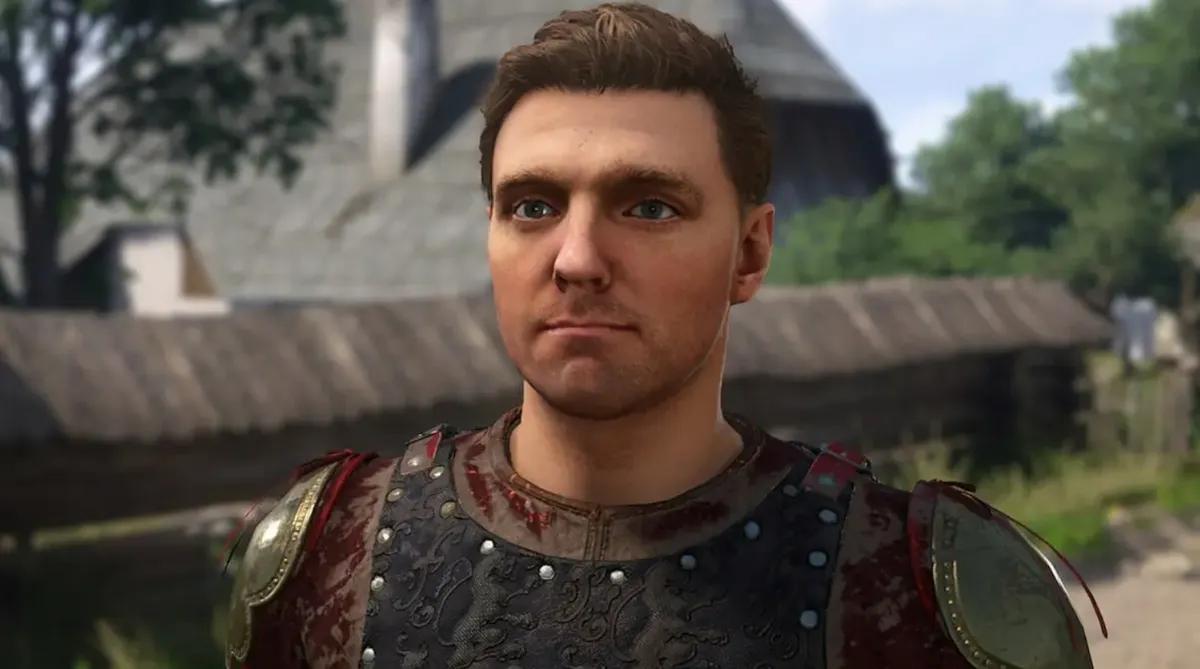
Warhorse Built KCD2's Photo Mode Lines as a Trap for Stealth Cheaters
 Steam
Steam PlayStation
 Xbox
XboxKingdom Come Deliverance 2 lead designer Prokop Jirsa has confirmed that Henry's chatty voicelines on exit from photo mode were written specifically to stop players using the feature as a stealth tool. Guards in the world can hear the lines, so a player who pops the camera to look around a corner during a stealth mission ends up triggering NPCs the same as if Henry had spoken aloud. The system uses KCD2's existing audio detection rather than blocking the camera or disabling the mode in restricted zones.
The reveal came in a conversation with new creative director Prokop Jirsa, who was promoted to one of two creative director seats at Warhorse Studios after Daniel Vávra stepped away from leading the studio's next game to make a Kingdom Come film. Jirsa told PC Gamer's Joshua Wolens that a "big discussion" inside the studio shaped the design, since KCD2's photo mode has a wide enough freelook to expose information the player would not otherwise have access to during stealth segments.
The same logic produced the KCD stolen boots episode in 2018, when PC Gamer's Chris Livingston wrote about an NPC apparently taking his shoes overnight in Talmberg. Jirsa later told the same outlet that no theft system existed in the first game, and that the boots had simply despawned during a scene transition. Livingston had searched the castle and inspected the clothing of NPCs on the assumption that the simulation handled it. That belief convinced the studio to build the real version of the mechanic in KCD2, where guards and drunks now steal Henry's shoes and cap and wear the stolen clothes themselves.
"In KCD2, we improved our photo mode, and there was a big discussion, because we didn't want people to cheat with the photo mode! Because, for example, in a stealth mission, you could start photo mode and look around corners and everything."
— Prokop Jirsa
Jirsa is aware Henry's photo mode affirmations cause more chaos than they prevent. He told Wolens the team accepted the trade-off because the resulting clips fit the kind of community the studio has built around the series.
"I still think it's quite a clever way to solve the cheating issue, but we also knew that it would create these weird, 'what the fuck' moments that are funny and shareable, and that work in our community."
— Prokop Jirsa
Henry's "I'm quite hungry" battlecry came out of the same design instinct. Jirsa said the team knew it sounded absurd before they shipped it and pushed it through anyway.
"The 'I'm quite hungry' battlecry was exactly this. We knew it's just insane, but yeah, we're playful like this."
— Prokop Jirsa
Jirsa described Warhorse's approach as a deliberate refusal of standard playtesting practice. Playtesters typically flag friction points, and most studios respond by smoothing them away. Warhorse does not.
"The usual answer is, 'Okay, let's get rid of the friction.' We don't work like that. We feel if you overcome the friction, or the friction is intentionally there… then the friction helps you! Because you overcome the friction, you feel better about yourself, you feel that you've actually overcome some actual problem or difficulty."
— Prokop Jirsa
I think that single line explains why a deliberately obtuse RPG about a Czech peasant learning to read has sold past five million copies, and why a smoother version of the same game would have shipped to a much smaller audience. The friction is the product, not the obstacle.
Jirsa offered specific examples from the KCD2 community to back the position. He cited posts of the form "I finally have my own bed," "I finally beat that one bandit," and "I finally know how to make a sword in blacksmithing, I no longer make only horseshoes." He pointed out that these would read as parodies in most modern RPGs, where the protagonist slays a dragon in the first two minutes.
He acknowledged the cost of the approach.
"You will lose some players that are really not there for any friction, they just want to have this smooth experience. And there's nothing bad about smooth experiences! They have their place… but we are intentionally different."
The studio Jirsa now helps run is not the one he joined. Warhorse was three years old in 2014, when he applied during his final months at university with a degree in economics and business administration. The hiring page listed engine programmers, character artists, and other specialists he had no training for. He scrolled until he hit a generic "Designer" listing, which existed before the studio split narrative, systems, and open-world design into separate disciplines. The studio hired him. He asked about his pay roughly two weeks later. The Czech Republic had almost no university programs in game development at the time, so most of his colleagues had come into the studio the same way and were trained on the job.
The Kickstarter for the first Kingdom Come Deliverance launched soon after he joined. Jirsa recalled the founders had pitched publishers across the globe with a vertical slice and got nothing back, since no publisher wanted to fund an RPG where the protagonist has to learn to read. Kickstarter was, in his words, "plan D, or F, or G, or something like that." The studio had cash for several months at most.
"Basically they really, honestly didn't have money for more than several months. So they were hiring me, but if the Kickstarter didn't go through successfully, it would be, like, a two or three-month job."
— Prokop Jirsa
The campaign hit its £300,000 goal and closed at £1.1 million, with pre-orders adding more on top. The figure was not enough to fund development on its own, but it convinced an angel investor to cover the rest. Jirsa spent his first months at the studio helping run the Kickstarter rather than designing quests.

Image: Prokop Jirsa, Warhorse Studio
KCD1 launched in 2018 to a mixed reception. Vávra's earlier alignment with the Gamergate movement, in answer to critics who flagged the game's monoethnic 15th-century Bohemian cast, drew political coverage. Jirsa told PC Gamer the more pressing problem for sales was the bug count, and Warhorse spent 14 months after launch finishing systems that had shipped half-implemented. He described the post-release cleanup as the work that shifted the game's reputation from a buggy curiosity into something players trusted.
The sequel shipped with the same systems-driven approach and far fewer bugs. Jirsa attributed the success to the studio keeping its recipe rather than smoothing it. "I think the fact that Kingdom Come 2 is basically a bigger and better version of KCD1 is what drove the success." He worked on a large portion of the systems and quests himself, since Warhorse runs lean even at its current scale of roughly 240 staff, two to three times smaller than the teams behind Assassin's Creed and comparable open-world projects. KCD2 has cleared five million copies sold since launch.
Wolens raised the AI question during the conversation, before the news broke in March that a Warhorse translator had publicly stated he had been fired and replaced with AI. Jirsa drew a line between art-generation use and development-tool use. He said he and many colleagues hate AI-generated art, but he is comfortable with non-programmers using AI to write small internal scripts or generate quick concept references to brief artists more clearly. He framed the concept-art case as additive, a way to brief a human artist with a rough reference image rather than to skip the artist altogether.
He pushed back on the wider hype around the technology. He compared the current moment to the early World Wide Web, when commentators predicted immediate transformation and got the dot-com bubble instead. He said AI would eventually change a lot of things, but at a slower pace than the loudest voices expect.
I see no clean way to square that measured stance with the public dismissal of a long-serving translator in favour of AI output a few weeks later, since the two positions sit in different rooms. The interview gives the philosophy. The translator firing gives the practice.
Jirsa did not address the translator decision in the conversation, which took place before the news broke. He also declined to discuss what Warhorse is working on next. He committed only to the design principle: friction stays in, even when playtesters mark it as a problem, because friction is what makes the small wins register.
The photo mode case is the cleanest live demonstration of that principle in KCD2. The cheap fix is restricting the camera or disabling it in stealth zones. The Warhorse fix is to keep the camera open, attach a vocal trigger to its exit, and let the player's choices ripple through the audio detection system the same way any other in-world action would. The community gets clips of guards charging Henry mid-photoshoot. The studio gets a closed exploit.
Read also, Kingdom Come Deliverance lead actor Tom McKay told Radio Times Gaming at the BAFTA Gaming Awards 2026 that he would pick Aragorn if cast in the rumoured Lord of the Rings RPG reportedly in development at Warhorse. McKay said he would steer the performance away from Henry, citing a preference for a broad range of roles, and the rumour itself remains unconfirmed by the studio. A parallel Lord of the Rings project at Crystal Dynamics, reported by Insider Gaming, sits alongside the Warhorse rumour and the studio's two announced Tomb Raider titles, Catalyst and Legacy of Atlantis.


 Successfully copied... Thank you for sharing our content!:



5% deposit bonus up to 100 gems

a free Gift Case





EGAMERSW - get 11% Deposit Bonus + Bonus Wheel free spin


EXTRA 10% DEPOSIT BONUS + free 2 spins

3 Free Cases + 100% up to 100 Coins on First Deposit


5 Free Cases, Daily FREE & Welcome Bonuses up to 35%

3 free cases and a 5% bonus added to all cash deposits.

+5% to deposit




Comments