




KuloNiku: Bowl Up! Review
 Review
 Steam
SteamKuloNiku: Bowl Up!, developed by Gambir Studio and published by Raw Fury, launched on Steam on April 7, 2026, priced at £9.99. The game places players behind the counter of a shuttered meatball restaurant in the fictional town of KuloNiku, combining point-and-click cooking simulation with life-sim relationships and competitive cook-offs. It holds Steam Deck Verified status and offers both a timed standard mode and a pressure-free Cozy Mode toggle. The storyline runs roughly ten hours, but the sandbox of daily cooking, shopping, and socializing extends well beyond that.
Reopening Grandma's Restaurant

The premise follows a well-worn path. A young protagonist leaves a previous career — the specifics of which the game treats as a slow-burn reveal — and returns to a small town to reopen a deceased grandmother's restaurant, Bakosu. A childhood friend joins as an assistant. The grandmother's cooking was beloved locally, which saddles the player with inherited expectations from day one.
A rival chef named Stella has already filled the gap, running a popular competing restaurant. She carries a confrontational personality rooted partly in genuine admiration for the grandmother's legacy, and she warms up over time without fully admitting it. Other townspeople fill out the cast: Ume, the shy shopkeeper with an unsettling fascination with knives; a strange entrepreneur who references knowing the protagonist "from Marrakesh" and promises discretion about whatever happened there. These characters lean on recognizable archetypes — the introverted merchant, the brash competitor — but their individual quirks tend to stand above the templates they start from.
The story stays deliberately lean, functioning more as connective tissue between gameplay segments than as a central hook. Characters reveal backgrounds through daily conversations and friendship milestones rather than extended cutscenes. That restraint works in the game's favor. The narrative never competes with the cooking for attention, and it gives the daily routine a sense of purpose without demanding investment.
The Daily Grind at Bakosu

Each in-game day follows a fixed structure. The restaurant opens in the morning, customers file in with orders, and the shift ends when the last one leaves. After closing, the player can visit Ume's shop for ingredients, tools, bowls, and decorations. The shop inventory refreshes every Friday, creating a weekly purchasing rhythm. Players can also talk to NPCs on the sidewalk, set up a Meatball Brawl at the studio, or go to bed.
Cooking operates on a clear mechanical foundation. Orders consist of three components: a base of meats and noodles, add-ins like chili pepper or bok choy, and seasonings. Every ingredient shifts a dish's flavor profile across multiple dimensions — salty, sweet, spicy — and customers arrive with specific preferences and hard restrictions. A customer who loves sweetness but hates salt creates a concrete problem when the obvious sweetener, sweet soy sauce, also adds salt. The player has to scan available ingredients and find a workaround.
The opening days feel deliberately constrained. A tiny pantry limits output to basic meatball soups, which means repetition while the game teaches its fundamentals. That tedium has a payoff: once the cooking becomes reflexive, the extra mental bandwidth lets players accommodate increasingly demanding customer requests without burning through the patience timer.
Bowls create an early strategic decision. Bakosu starts with only two, requiring constant washing between customers. Buying extra bowls reduces downtime, but spending that money on ingredients instead expands the menu and adds order variety. That trade-off — efficiency versus expansion — echoes across most purchasing choices in the game and gives even small shopping decisions a tactical dimension.
Meatball Brawls

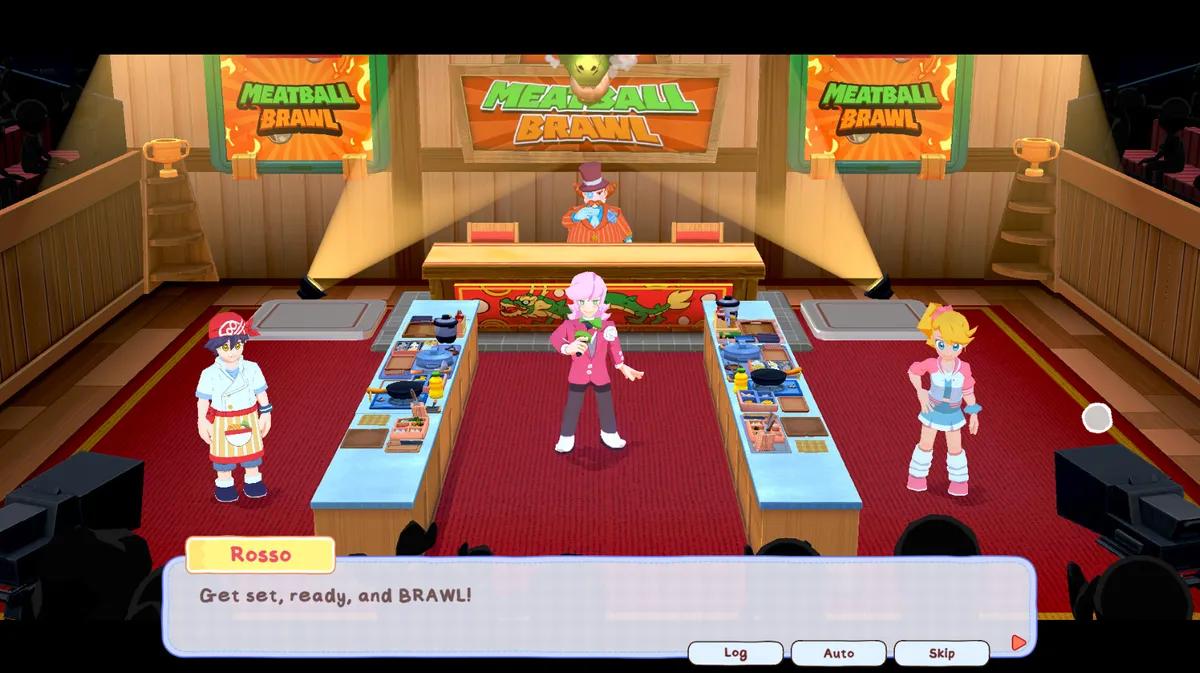
The competition system carries the game's most ambitious design. Meatball Brawls occur on Mondays and Thursdays, pitting the player against another chef in a three-round cook-off. Each round provides a limited pool of action points. Boiling meatballs costs one point. Adding noodles costs one. Seasoning costs one. There is no room for waste.
A panel of judges evaluates each dish based on personal taste preferences, adherence to recipe requirements, and use of designated bonus ingredients. Audience reactions contribute additional points, though their weight is noticeably smaller than judge scores. As the game advances, the panel grows, which multiplies competing preferences the player must reconcile within a single bowl.
The constraints demand lateral thinking. One judge might dislike tendon meatballs, but adding them could satisfy a second judge, meet a bonus ingredient requirement, and shift the overall flavor profile enough to please the first judge anyway — all for a single action point. I think this system is where the game's design is at its sharpest, converting cooking into genuine tactical decision-making rather than memorized sequences. Players eventually unlock the ability to bring a friend into competitions, with each character providing a unique buff that adds another variable to pre-round planning.
Brawls also serve as the primary story progression mechanic. Winning advances the plot, introduces new rivals, and raises the restaurant's standing in town. They punctuate the weekly rhythm with something that feels meaningfully different from the daily service loop.
Balancing the Calendar

The schedule creates a persistent resource tension. Meatbrawls and character hangouts both occupy Mondays and Thursdays. Choosing to socialize or compete on any other day causes the game to skip forward to the next available slot. The restaurant generates passive income during skipped days, but at a reduced rate compared to days the player works directly.
Friendships unlock concrete rewards: new ingredients, recipes, and cooking tools. Building them requires time away from the restaurant. Skipping work days to hang out creates a cash shortfall that limits the player's ability to buy the items those friendships unlock. The system forces a constant weighing of short-term income against long-term progression, and neither path is clearly dominant.
Saturdays introduce weekly festivals with specific cooking constraints. A festival might require every order to include a featured ingredient or use a particular cooking method, like frying. Participation is optional. Skipping turns the day into a standard shift. For players who engage, the restrictions force rethinking habitual approaches and push the cooking system into less familiar territory.
The game handles the passage of time in a way that rewards planning across the full week rather than optimizing individual days. Buying ingredients on Friday, competing on Monday, socializing on Thursday, and working the remaining days creates a cadence that feels natural once it clicks — but reaching that understanding takes experimentation and a few lean stretches of low funds.
Presentation and Sound

The art direction uses a colorful, cartoon-adjacent style with mild anime influences. Character designs read as expressive and distinct. Dishes are detailed enough to feel grounded while fitting the game's exaggerated visual identity. Relationship milestones unlock hand-drawn illustrations added to an in-game gallery, and these images show a noticeable level of craft that makes collecting them a tangible reward rather than a cosmetic afterthought.
Sound design works through specificity rather than ambition. Ingredients popping in and out of the hotpot produce a satisfying, tactile audio cue that reinforces the physical sensation of cooking. The soundtrack stays unobtrusive — upbeat and thematically consistent without fighting for attention during complex orders. Nothing in the audio layer competes with gameplay, which suits a game built on focused, repetitive cooking tasks where concentration matters.
Cozy Mode removes all timers and patience meters, eliminating time pressure from cooking and customer satisfaction entirely. I find it reshapes the experience completely, turning a mildly demanding simulation into something closer to a meditative loop where the only goal is getting the flavor right. The toggle sits in the settings menu rather than functioning as a separate difficulty track, so players can switch freely without restarting or losing progress.
Where the Design Thins Out

Recipe unlocking relies on a crafting system that never reaches the depth of the game's other mechanics. Early unlocks require little more than repeated button clicks. Later recipes add minor steps, but the process stays well below the engagement threshold set by daily cooking or Brawl competitions. It feels like a placeholder in an otherwise carefully assembled design.
Dialogue repetition becomes noticeable after extended play. NPC conversations cycle through the same lines, which gradually erodes the sense of community the game builds effectively through its other systems. Some character personalities also lean heavily on visual-novel archetypes — the tsundere rival, the shy shopkeeper — without always pushing far enough past the archetype to feel fully distinct.
Daily restaurant orders are generated randomly based on available ingredients. Returning customers never develop recognizable preferences or ordering habits. For a game centered on small-town bonds, the absence of personalized order patterns disconnects its cooking and social systems in a way that feels like a missed opportunity.
The day-skipping mechanic, while strategically interesting, can also disrupt pacing. Losing several days of full income for a single hangout creates situations where early-game progress stalls, particularly when cash reserves are already thin and the shop just restocked with items the player cannot afford.
Verdict
KuloNiku: Bowl Up! builds a cooking simulation with real mechanical depth beneath its cozy surface, and the Meatball Brawl system alone delivers enough strategic variety to carry the experience. The life-sim layer stays light enough to avoid distraction while still giving the daily routine a personal stake beyond pure efficiency.
KuloNiku: Bowl Up! is an 8/10 game.
Pros:
- Meatball Brawls deliver genuine strategic depth within strict action-point limits.
- Custom orders create meaningful daily variation without overcomplicating the base cooking mechanics.
- Cozy Mode provides a fully pressure-free alternative that preserves the complete gameplay experience.
Cons:
- Recipe crafting lacks the engagement and complexity present in the game's other systems.
- Random order generation prevents returning customers from developing recognizable habits or preferences.
KuloNiku: Bowl Up! fills a specific niche — cooking sim with competitive strategy and light social mechanics — and occupies it with precision. Gambir Studio built a game where seasoning a single bowl of soup carries tactical weight, and where one meatball can swing a three-round competition. At £9.99 with roughly ten hours of storyline and an open-ended sandbox beyond that, the value exceeds the asking price.


 Successfully copied... Thank you for sharing our content!:



5% deposit bonus up to 100 gems

a free Gift Case





EGAMERSW - get 11% Deposit Bonus + Bonus Wheel free spin


EXTRA 10% DEPOSIT BONUS + free 2 spins

3 Free Cases + 100% up to 100 Coins on First Deposit


5 Free Cases, Daily FREE & Welcome Bonuses up to 35%

3 free cases and a 5% bonus added to all cash deposits.

+5% to deposit




Comments