




South of Midnight (PS5) Review
 Review
 PlayStation
Compulsion Games spent years building a world most studios would never attempt, and the result is a game that looks unlike anything else on PlayStation 5. South of Midnight launched first on Xbox and PC in 2025, then arrived on PS5 as an identical port with no additional content, modes, or graphical options. The stop motion animation style, the Southern Gothic folklore, and a blues-soaked soundtrack do heavy lifting for an experience where the actual act of playing rarely matches the ambition of the presentation. That tension between visual craft and mechanical simplicity defines every hour of this 10-to-12-hour adventure.
A Storm, a Weaver, and the Deep South
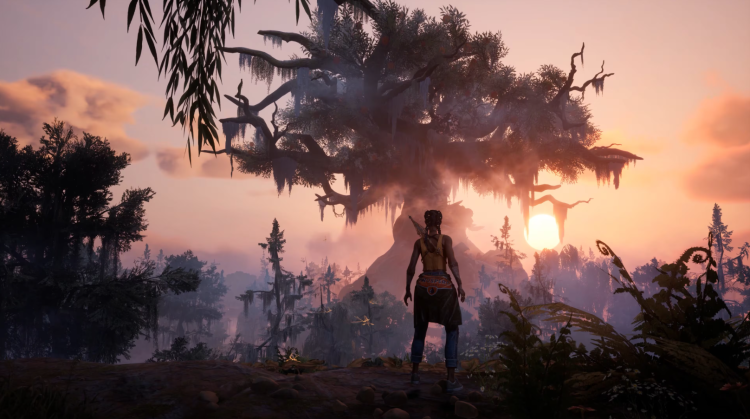
The setup is quick. A hurricane tears through the fictional town of Prospero, sweeping away the home of protagonist Hazel and trapping her mother inside the flood-carried house. Hazel discovers she is a Weaver, a kind of spiritual healer who can see memory strands from another dimension, manipulate them to reveal past events, and cleanse manifestations of pain and sorrow. This premise sends her across a waterlogged version of the American Deep South, through swamps, bayous, forests, and countryside inspired by Louisiana, Mississippi, and Alabama.
Prospero is not an open world. The game moves chapter by chapter along a linear path, and while short optional trails branch off toward collectibles or upgrade currency, they always dead-end and funnel the player back to the main route. That structure feels deliberate. Compulsion Games does not pad the runtime with fetch quests or map markers. Every area exists to tell a specific story, introduce a character, or stage a fight, and then the game moves on.
Folklore That Earns Its Place
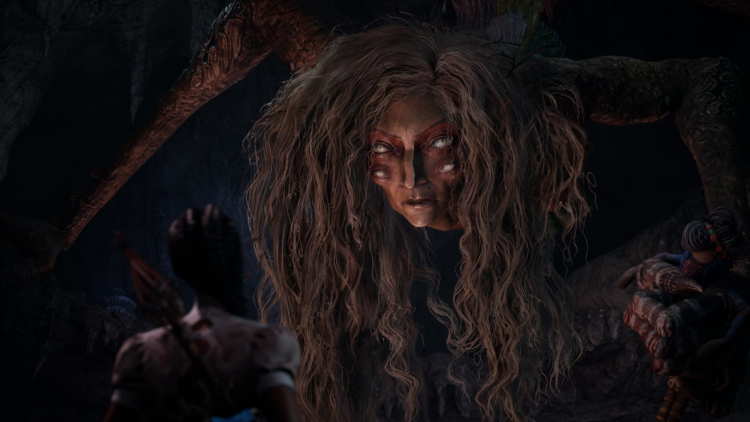
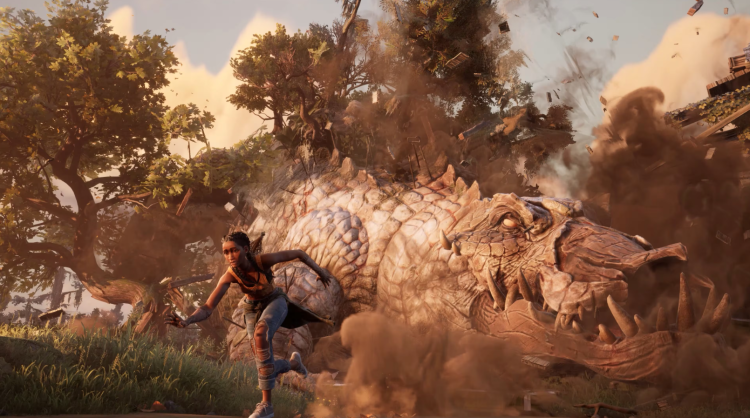
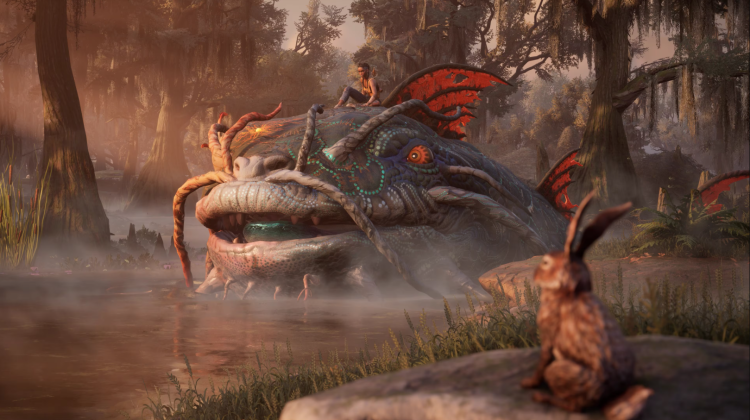
The real draw is Prospero's cast. South of Midnight pulls from actual Southern folklore to populate its world with creatures and characters that rarely appear in games. Two-Toed Tom is an enormous island-sized alligator. The Rougarou is a were-owl. Huggin' Molly lurks in the margins. A talking catfish serves as both narrator and Hazel's transport across the flooded landscape, and the performance behind that character is one of the best in the game.
These figures are not decoration. Each one anchors a story about trauma, betrayal, sibling rivalry, or grief. The citizens of Prospero carry deep wounds, and Hazel's role as a Weaver is to ease that pain by confronting its physical manifestation. The game does not shy away from the region's history either. Signs of slavery, eviction notices from greedy landowners, and memories of desperate people trying to survive are scattered through the environments. The writing treats this material with care, grounding the fantasy in real cultural weight without turning it into spectacle.
The main plot, Hazel searching for her mother, almost functions as a secondary thread. The individual stories of Prospero's residents are more compelling, and they kept the pace moving even when the gameplay settled into routine.
Combat That Does Enough
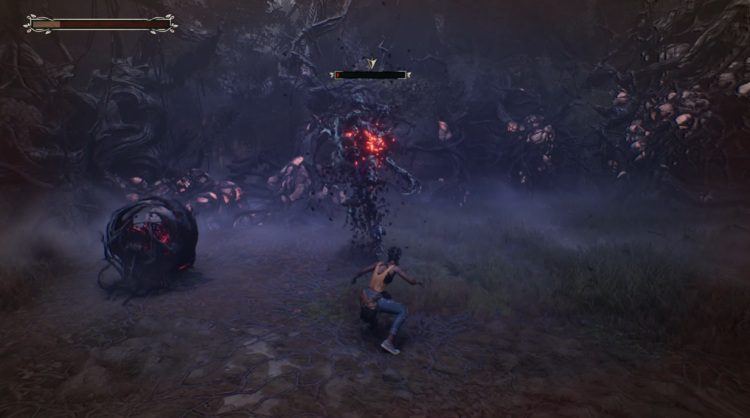
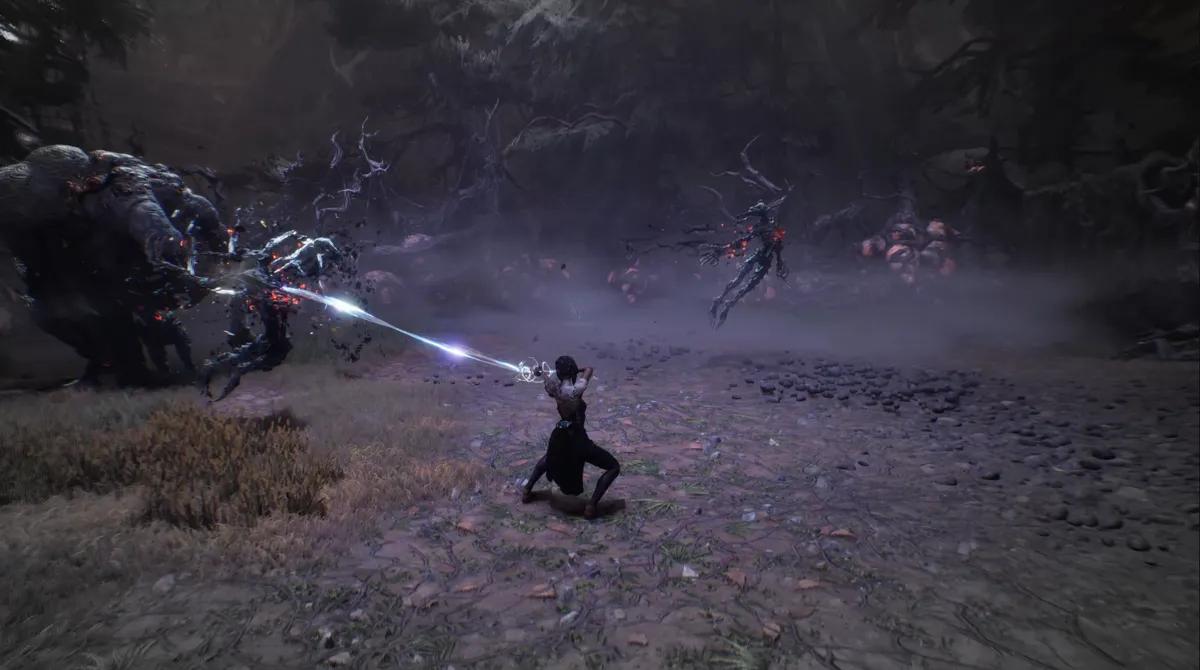
Hazel fights enemies called the Haint, demonic looking creatures that represent the physical form of people's suffering. They appear in specific combat arenas scattered along the path, not as random encounters. Once Hazel clears the corruption from an area, she moves forward.
The combat system is simple. Hazel has a basic melee combo, and her Weaver abilities add a force push, a force pull, a hookshot to close distance, and a voodoo doll that temporarily possesses an enemy and turns it against the others. These abilities operate on cooldowns and can be woven into attack strings.
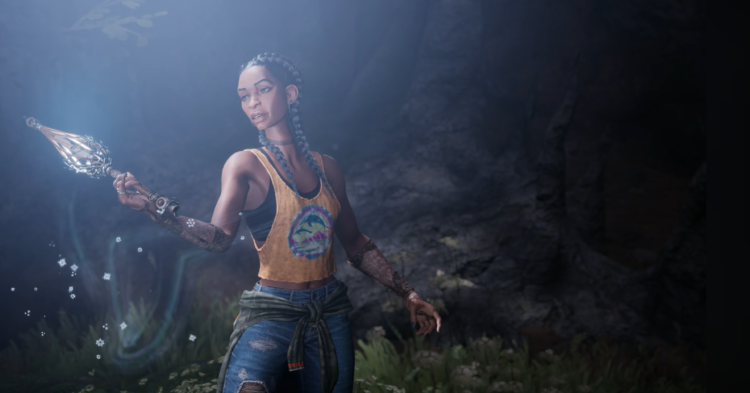
The problem is stiffness. Animations do not flow naturally from one move to the next, and building any kind of combo rhythm is difficult. The system is functional and occasionally satisfying when the spacing works out, but it never reaches the depth of a God of War or Devil May Cry. The enemy variety is limited too. Bulky brutes that slam the ground, fly-nest monsters that spit out projectiles, and a handful of other types repeat across the game. Compulsion Games spaces the encounters well enough that fatigue does not fully set in, but the combat is clearly not the reason to play this game.
Movement and Exploration Along a Narrow Path
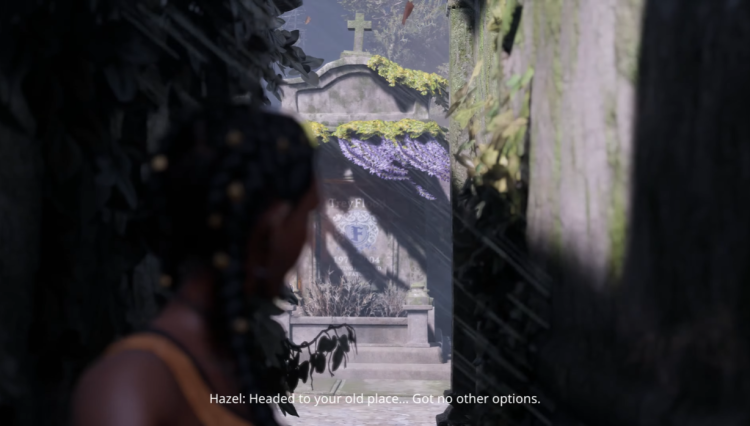
Hazel gains traversal abilities at a fast clip. Double jump, air dash, wall run, glide, and climbing all arrive within the first few hours, and the developer clearly wanted players to have the full toolkit early rather than drip-feeding powers across the whole runtime. I think this was the right call, because the platforming sequences benefit from having options, even if the level design rarely demands creative use of them.
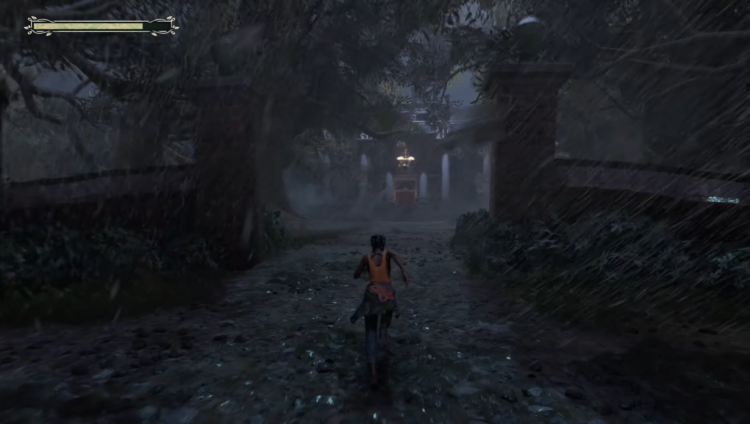
Movement is precise. Hazel responds well to inputs when flipping between platforms, and the wall running in particular gives some sequences a sense of flow that the combat lacks. Light environmental puzzles appear regularly, asking the player to push, pull, or throw objects using Weaver strands, or to construct physical structures from past memories like bridges and boxes. None of these puzzles are difficult. They function as pacing tools between combat arenas and story beats, and they work fine in that role.
The linearity will either appeal to a player or not. There are some wider environments, but they still serve as corridors leading to the next objective. A magical trail can be activated to point the way forward if a player gets turned around while hunting for hidden notes or skill points. This is a throwback to a PS3-era design sensibility, closer to the original Uncharted than to anything built around modern open-world conventions.
A Visual Identity That Carries the Game
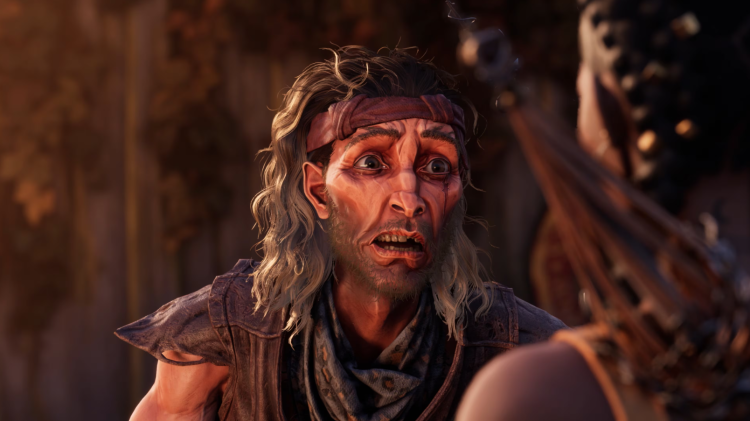
I see very few games this generation that match South of Midnight's visual identity when the whole package is in motion. Compulsion Games built the art direction around stop motion and claymation techniques, and the result is that character animations deliberately contrast with the environment around them. Characters move at a slightly different cadence than the world, which creates a tactile, handcrafted quality that no filter or post-processing effect could replicate.
The environments themselves lean into classic Deep South imagery. Swamps, antebellum houses, flooded countryside, and abstract nightmare realms all receive the same level of visual attention. Character models have a quality that resembles cel shading without the heavy outlines, blending with the stop motion style in a way that stays consistent across the full runtime.
Texture pop-in is the main visual flaw. Objects and surfaces load in visibly as the player moves through areas, and for a game that depends so heavily on its visual craft, the effect is jarring. Indoor environments suffer from flickering textures when the camera swings, a common Unreal Engine issue that still has not been solved. The default camera speed is also too slow and requires manual adjustment in the settings to feel responsive.
A Soundtrack Built Into the Storytelling
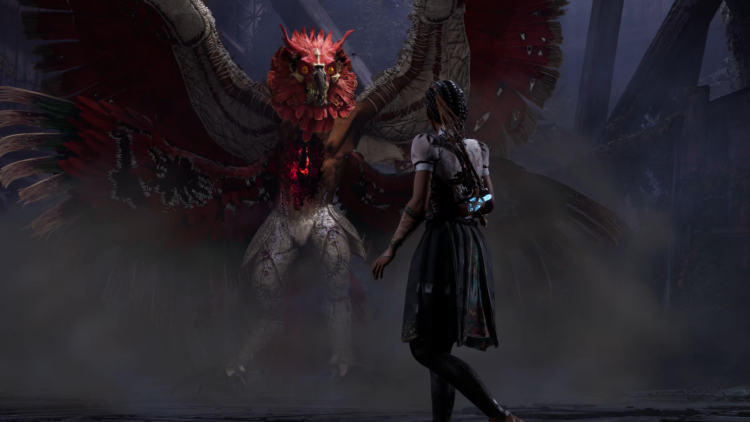
The music is not background filler. Before each boss encounter, the game plays a full folk, jazz, or blues song that summarizes the story of the character the player is about to fight. These tracks serve a narrative function, providing context and emotional framing that dialogue alone does not deliver. The effect is something rare in games: music that is part of the storytelling rather than accompaniment to it.
Outside of boss fights, the soundtrack matches the regional tone without overselling it. Southern instrumentation and vocal styles run through the score, and the overall sound design reinforces the sense of place that the visuals establish. Voice performances are strong across the board. The catfish narrator stands out, and the regional accents add personality that generic voice direction would have flattened.
Verdict
South of Midnight asks players to accept a tradeoff: average gameplay in exchange for exceptional presentation and a setting that almost no other studio has explored. That tradeoff works more often than it does not. South of Midnight is an 8/10 game to play on PlayStation 5.
Pros:
- Outstanding visual identity built on stop motion and claymation techniques.
- A soundtrack that functions as narrative storytelling, not just background music.
- Rich Southern Gothic folklore brought to life through well-written characters.
Cons:
- Combat is stiff and lacks depth, with limited enemy variety.
- Frequent texture pop-in and camera issues undercut the visual presentation.
Compulsion Games built something with a clear identity and the confidence to keep it focused at 10 to 12 hours. The PS5 port is barebones, running at a locked 60 frames per second on PS5 Pro with minimal DualSense features and no graphical mode options. For players who want a linear, story-driven action adventure that respects their time, South of Midnight delivers on that specific promise.


 Successfully copied... Thank you for sharing our content!:



5% deposit bonus up to 100 gems

a free Gift Case





EGAMERSW - get 11% Deposit Bonus + Bonus Wheel free spin


EXTRA 10% DEPOSIT BONUS + free 2 spins

3 Free Cases + 100% up to 100 Coins on First Deposit


5 Free Cases, Daily FREE & Welcome Bonuses up to 35%

3 free cases and a 5% bonus added to all cash deposits.

+5% to deposit




Comments