





NVIDIA Introduces NTC Technology That Can Reduce VRAM Usage by Up to 7x
 Nvidia
Nvidia has unveiled a new technology called NTC (Neural Texture Compression) that could dramatically change how games use video memory. According to the company, the new system can reduce VRAM usage by up to seven times without noticeable loss in image quality.
This technology uses artificial intelligence to compress textures much more efficiently than traditional methods. Instead of storing large high-resolution textures directly in memory, the system stores compressed neural data and reconstructs textures in real time using AI. This allows games to maintain high visual quality while using significantly less video memory.
During the demonstration, Nvidia showed an example where a scene that normally required 6.5 GB of VRAM was rendered using only 970 MB of memory with NTC enabled. The visual difference was minimal, which suggests the technology could be extremely useful for modern games with high-resolution textures and detailed environments.
How Neural Texture Compression Works
Traditional texture compression methods reduce file size but often lower image quality or introduce visual artifacts. Neural Texture Compression works differently - it trains a neural network to recreate textures from compressed data. When the game runs, the GPU reconstructs the texture using AI instead of loading a full texture file into memory.
This approach not only reduces VRAM usage but can also reduce game file sizes. If textures are stored in compressed neural format instead of large image files, games themselves could become much smaller without sacrificing visual quality.
Could Make Games Smaller and More Optimized
Nvidia also stated that after developers implement NTC technology, game install sizes may become significantly smaller. Modern AAA games often take 100–200 GB of storage, largely because of high-resolution textures. Neural compression could reduce these sizes dramatically.
This would be especially important for players with limited SSD storage and for consoles where storage space is often a major limitation.

Coming With DLSS 5
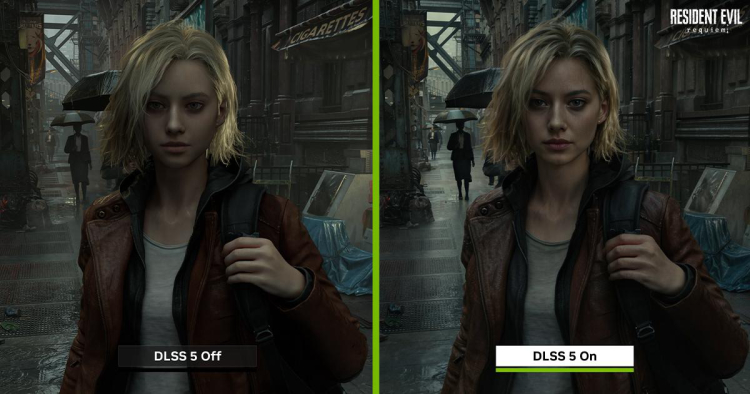
The new technology will be part of DLSS 5, the next version of Nvidia’s AI-based graphics technology, which is expected to release this autumn. DLSS already improves performance by using AI to upscale images, and with DLSS 5, Nvidia is expanding AI usage beyond upscaling into memory optimization and texture handling.
If widely adopted by game developers, Neural Texture Compression could become one of the most important graphics technologies in the coming years. Lower VRAM usage means better performance on mid-range GPUs, smaller game sizes, and more detailed game worlds without requiring expensive hardware.
Why This Is Important for Gamers
This technology could significantly reduce VRAM usage and game file sizes, making modern games more accessible to players with mid-range or older graphics cards. It also allows developers to create more detailed worlds and higher-quality textures without increasing hardware requirements. In the long term, this could help solve one of the biggest problems in modern gaming -have rapidly increasing hardware requirements.
If this technology becomes standard in game development, it could lead to several major improvements:
- Games using less VRAM
- Smaller game download sizes
- Better performance on older GPUs
- More detailed textures and environments
- Faster loading times
- Better optimization overall
Another important benefit is that developers may be able to focus more on world design and visual quality instead of constantly optimizing textures to fit memory limits. This could result in more detailed open worlds, more realistic environments, and better overall graphics without massive performance drops.
Overall, Nvidia’s NTC technology, especially when combined with DLSS 5, could change how games handle textures, memory, and performance in the future, making high-quality graphics more efficient and accessible for more players.


 Successfully copied... Thank you for sharing our content!:



5% deposit bonus up to 100 gems

a free Gift Case





EGAMERSW - get 11% Deposit Bonus + Bonus Wheel free spin


EXTRA 10% DEPOSIT BONUS + free 2 spins

3 Free Cases + 100% up to 100 Coins on First Deposit


5 Free Cases, Daily FREE & Welcome Bonuses up to 35%

3 free cases and a 5% bonus added to all cash deposits.

+5% to deposit




Comments