




Best Gaming Laptops July 2026: Ranked From Premium to Budget
The gaming laptop market in 2026 runs deep — from $6,000 desktop-replacing slabs to surprisingly capable sub-$1,000 machines that push RTX 50-Series graphics into budget territory. Nvidia's RTX 50-Series Blackwell mobile GPUs now anchor most new releases, with Intel Core Ultra and AMD Ryzen AI processors dividing the performance conversation at the top end. Choosing the right machine means reconciling GPU wattage, display technology, chassis weight, and thermal headroom against a price tag that can swing wildly even between configurations of the same model. I see the G14 and the Asus TUF F15 (2021) as the kind of budget machines that deserve more credit than they typically get — playing Death Stranding Director's Cut on medium settings on either one is an okay experience, though only if you have decent headphones, because the fans are relentlessly loud under sustained load.
Tier-S Laptops
Tier-S holds the MSI Titan 18 HX AI, Razer Blade 18 (2025), MSI Raider A18 HX A9W, Asus ROG Strix Scar 18 (2025), and MSI Titan 18 HX — machines configured with RTX 5090 and RTX 5080 GPUs, paired with Intel Core Ultra 9 or AMD Ryzen 9 processors, and priced between roughly $4,000 and $6,400. At this tier, titles like Cyberpunk 2077 at Ultra ray tracing settings, Black Myth: Wukong, and Doom: The Dark Ages run at triple-digit framerates in QHD+ and 4K without frame generation assistance. These laptops exist for buyers who want a complete desktop replacement with no thermal compromises and no GPU bottleneck within the current game library.
MSI Titan 18 HX AI
(Image: TechRadar)
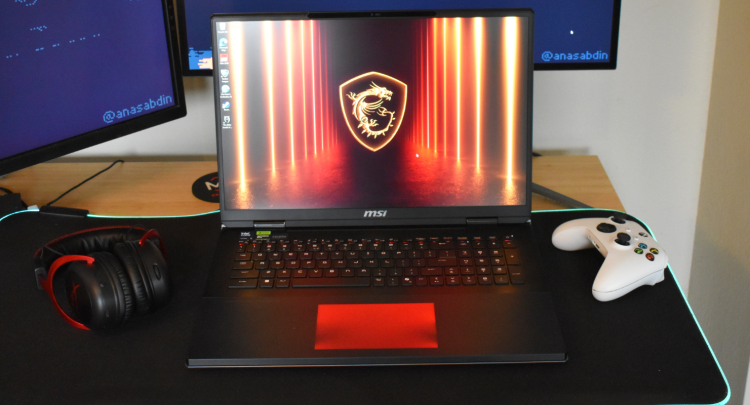
The MSI Titan 18 HX AI is the most extreme factory configuration money can currently buy in a gaming laptop.
- Pros: PCIe Gen 5 SSD, 64GB RAM, three storage slots
- Cons: $6,379 price, fan noise, no dual-mode display
MSI packed this machine with an RTX 5090, 64GB of DDR5 RAM, and three SSD slots — one of which runs on PCIe Gen 5, a spec almost impossible to find in any other gaming laptop currently on the market. The chassis carries the same build language as the previous Titan generation, using premium materials throughout, though the weight and dimensions make it a permanent desk fixture for the vast majority of buyers. Thunderbolt 5 ports land here, putting it among the small group of laptops ready for the fastest current external storage and display peripherals. Tom's Hardware desk tested this laptop and listed it as a former top pick, noting it was displaced only by the Razer Blade 18 — a machine reviewed alongside it — with the Titan's PCIe Gen 5 storage remaining the single specification the Blade 18 cannot match out of the box.
Spec | Details |
Display | 18-inch, dual-mode UHD+/ FHD+ |
CPU | Intel Core Ultra 9 275HX |
GPU | RTX 5090 Laptop GPU |
RAM | 64GB DDR5 |
Storage | Up to 3x SSD (PCIe Gen 5 available) |
Weight | Not specified |
Verdict: Baldur's Gate 3 at Ultra settings in 4K runs without a frame dip on this machine; something like Vampire Survivors will never stress it — but a title like Microsoft Flight Simulator 2024 pushing full photogrammetry at 4K will finally find the ceiling.
Razer Blade 18 (2025)
(Image: Engadget)
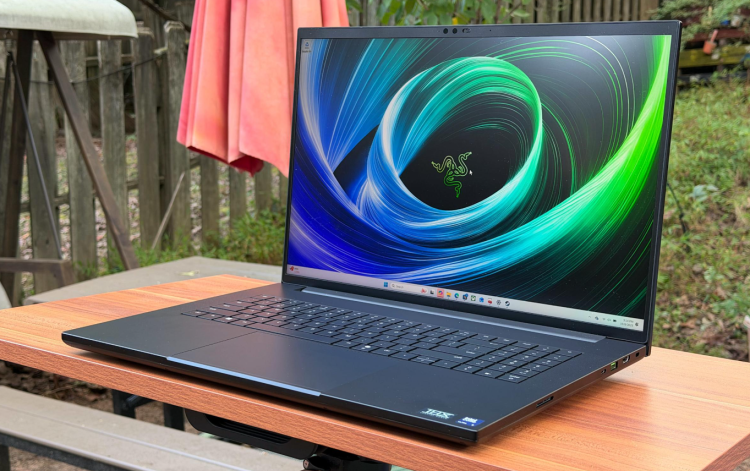
The Razer Blade 18 (2025) delivers the strongest tested gaming performance in a laptop form factor across the reviews consulted for this article.
- Pros: Dual-mode display (4K/240Hz or FHD/440Hz), Thunderbolt 5, exemplary build quality
- Cons: $5,199.99 price, PCIe 4.0 SSD only, audible fan noise
Razer's 18-inch flagship uses a dual-mode IPS panel that switches between 3840x2400 at 240Hz and 1920x1200 at 440Hz — a feature that covers both immersive single-player campaigns and competitive esports in one screen. The chassis construction sits at the top of what any reviewer has encountered in this category, and the keyboard and touchpad draw consistent praise. Thunderbolt 5 connectivity puts it in a very short list alongside MSI and Apple for advanced peripheral support. The publication placed it first overall in their 2026 ranking, specifically citing its lead over the MSI Titan 18 HX in Shadow of the Tomb Raider at 1080p by a measurable margin, while noting the PCIe 4.0 storage as the one area where the Titan retains an edge.
Spec | Details |
Display | 18-inch IPS, 16:10, dual-mode 3840x2400/240Hz or 1920x1200/440Hz |
CPU | Intel Core Ultra 9 275HX |
GPU | RTX 5090 Laptop GPU |
RAM | Up to 64GB |
Storage | Up to 4TB (PCIe 4.0) |
Weight | 7.06 lbs (3.10 kg) |
Verdict: Red Dead Redemption 2 at its highest preset runs at 132fps on this machine according to benchmark data — but Escape from Tarkov, which depends heavily on CPU single-thread performance and RAM latency rather than raw GPU throughput, would not deliver proportionally scaled gains even at this price point.
MSI Raider A18 HX A9W
(Image: GamesRadar+)
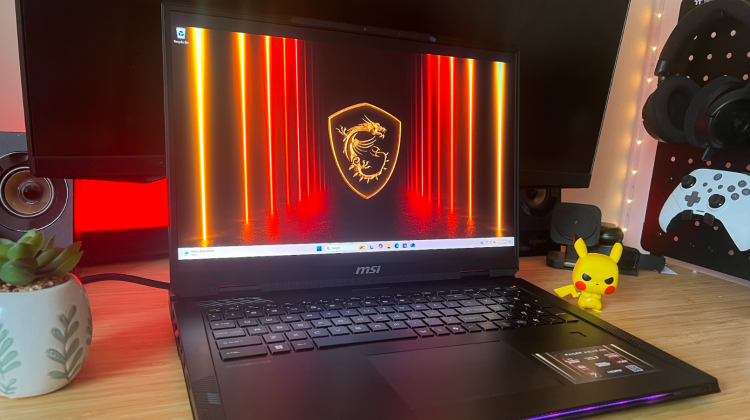
The MSI Raider A18 HX A9W broke benchmark records at the time of its testing and remains the only laptop reviewed across all three sources to pair the AMD Ryzen 9 9955HX3D processor with an RTX 5090.
- Pros: Gen 5 SSD, record benchmark scores, 4K Mini LED display
- Cons: Plastic chassis despite flagship pricing, keyboard and trackpad quality below expectations, fixed 120Hz refresh rate
AMD's 3D V-Cache processor inside this machine posts the highest PC Mark 10 productivity score in the reviewed pool, and the RTX 5090 leads every FHD and QHD benchmark result in the outlet's testing pool, with the exception of some Shadow of the Tomb Raider anomalies. The 4K UHD+ Mini LED panel delivers the resolution and contrast depth suited to cinematic single-player titles, though the fixed 120Hz cap disadvantages players who prioritize competitive frame rates. The build uses a plastic chassis — a notable regression from the aluminum MSI Titan — while the keyboard and trackpad quality drew explicit criticism despite the machine selling at a price exceeding $5,000. The outlet awarded it 3.5 out of 5 stars, recommending it narrowly to 4K gaming specialists while steering most buyers toward QHD alternatives with better build quality.
Spec | Details |
Display | 18-inch UHD+ Mini LED, 120Hz |
CPU | AMD Ryzen 9 9955HX3D |
GPU | RTX 5090 Laptop GPU |
RAM | 64GB |
Storage | 2TB Gen 5 SSD |
Weight | 3.6 kg (7.94 lbs) |
Verdict: Indiana Jones and the Great Circle renders with full detail and fluidity at 4K on this machine, which the site specifically cited during testing — while Star Wars Outlaws at 4K Ultra ray tracing will still push frame rates into uncomfortable territory without frame generation enabled.
Asus ROG Strix Scar 18 (2025)
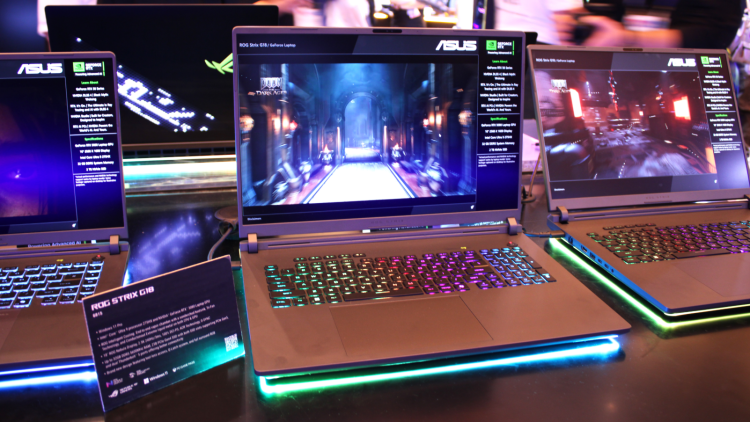
(Image: Laptop Mag)
The Asus ROG Strix Scar 18 (2025) balances raw power with display quality and port specification better than any other 18-inch machine reviewed across the three sources.
- Pros: Mini LED QHD+ display at 240Hz, two Thunderbolt 5 ports, extended RGB light strip
- Cons: Generational performance gains are incremental, new cable design is flagged as potentially problematic
The 2025 Scar 18 advances the previous generation primarily through its updated Thunderbolt 5 implementation — two ports versus the Thunderbolt 4 found in last year's MSI competitors — and an expanded RGB perimeter that runs across the chassis edge. The ROG Nebula HDR Mini LED panel runs QHD+ at 240Hz, a combination that prioritizes the balance between resolution and speed rather than pushing to 4K at lower refresh rates. The publication's testing placed it above the MSI Vector A18 HX A9W on display merit, noting Cyberpunk 2077 running at 212fps with Frame Generation and Super Resolution set to Quality as a representative benchmark. The reviewers gave it 4.5 out of 5 stars, positioning it as the correct choice for buyers who want desktop-replacement scale without the build quality and display compromises found in MSI's performance-first 18-inch alternatives.
Spec | Details |
Display | 18-inch Mini LED ROG Nebula HDR, QHD+ at 240Hz |
CPU | Intel Core Ultra 9 275HX |
GPU | RTX 5080 or RTX 5090 |
RAM | 16GB–64GB |
Storage | 2TB–4TB |
Weight | 3.3 kg (7.28 lbs) |
Verdict: Horizon Zero Dawn Remastered runs well above 60fps at QHD+ Ultra on this machine, as confirmed in the site's benchmark data — while Alan Wake 2 at full ray tracing path-traced lighting in 4K will exhaust even this configuration without frame generation support.
MSI Titan 18 HX
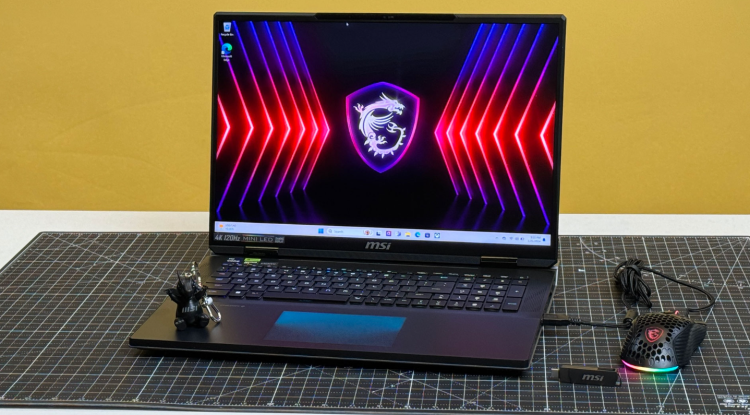
(Image: Tom's Hardware)
The MSI Titan 18 HX held the record for the most powerful tested gaming laptop before both the Asus ROG Strix Scar 18 (2025) and the MSI Raider A18 HX displaced it.
- Pros: Aluminum build quality, PCIe Gen 5 SSD, premium construction
- Cons: High price, now outperformed by newer machines, lofty cost relative to current alternatives
This machine launched as the flagship reference point for maximum gaming laptop performance and its aluminum chassis — a specification the newer MSI Raider abandoned — continues to set it apart from the Raider from a build quality perspective. PCIe Gen 5 storage remains among this machine's distinguishing features in a market where most competitors still ship with Gen 4 drives. At over $6,000 in its top configuration, it now sits in a difficult value position given the performance advancements in the 2025 generation, though its material quality and port selection still justify consideration for buyers who prioritize build longevity. The hardware desk at the publication tested this laptop in the same comparative pool as the Razer Blade 18 and noted the Blade displaced it specifically due to higher benchmark results, while acknowledging the Titan retains PCIe Gen 5 speeds for buyers who require that capability.
Spec | Details |
Display | 18-inch, 4K Mini LED |
CPU | Intel Core Ultra 9 275HX |
GPU | RTX 5090 Laptop GPU |
RAM | Up to 64GB |
Storage | Up to 3x SSD including PCIe Gen 5 |
Weight | Not specified |
Verdict: Dying Light 2 at 4K with maximum detail and ray tracing runs without throttling on the Titan's RTX 5090 — but a simulation title like Cities: Skylines 2 with large city populations will stress the CPU rather than the GPU, delivering inconsistent frame rates regardless of GPU tier.
Tier-A Laptops
Tier-A contains the Razer Blade 16 (2025), Gigabyte Aorus Master 16, Alienware 16 Area-51, Asus ROG Strix Scar 18 (2024), and MSI Vector A18 HX A9W — machines built around RTX 5080 and RTX 5090 configurations in 16-inch and 18-inch chassis, priced between approximately $2,500 and $4,500. Cyberpunk 2077 at Ultra ray tracing, Black Myth: Wukong at maximum settings, and Far Cry 6 at Ultra all run comfortably at QHD+ on these machines, with frame generation further extending headroom. These are the machines for buyers who want flagship performance without committing to the absolute top tier of the market.
Razer Blade 16 (2025)
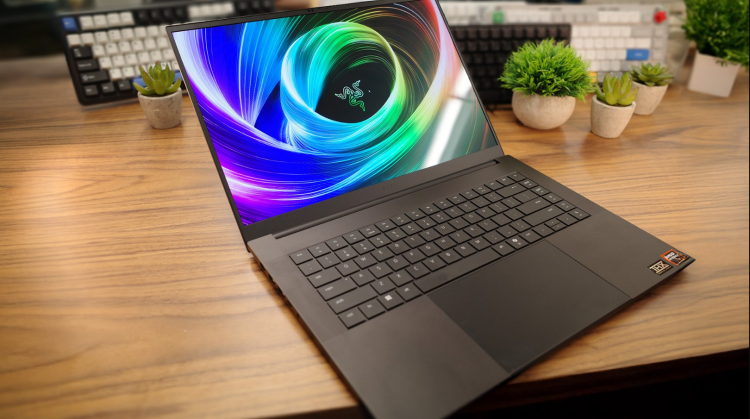
(Image: IGN)
The Razer Blade 16 (2025) is the thinnest and lightest RTX 50-Series flagship reviewed across all three sources, measuring 0.59 inches at its thinnest point.
- Pros: OLED 240Hz 1600p display, slimline chassis, per-key RGB with SOCD support
- Cons: Power-capped GPU reduces native performance, AMD CPU trails Intel in some scenarios
Razer milled the chassis from a single aluminum block, and the result is a machine that weighs 4.7 pounds at its heaviest RTX 5090 configuration — a number that puts it in direct competition with productivity ultrabooks rather than gaming laptops of comparable specification. The OLED panel runs at 2560x1600 and 240Hz, which reviewers at both outlets cite as the best gaming laptop display they have encountered. The scissor-switch keyboard was updated to 1.5mm key travel for this generation, producing a typing feel described as precise and energetic. The gaming publication named it the best overall gaming laptop of 2026, specifically praising its portability, noise levels during gaming, and factory display calibration, while noting that the power-capped RTX 5090 configuration loses benchmark ground to machines like the Gigabyte Aorus Master 16's RTX 5080.
Spec | Details |
Display | 16-inch OLED, 2560x1600, 240Hz |
CPU | AMD Ryzen AI 9 HX 370 |
GPU | RTX 5070 Ti/ RTX 5080/ RTX 5090 |
RAM | 32GB–64GB |
Storage | 1TB–4TB |
Weight | 2.14 kg (4.71 lbs) |
Verdict: Black Myth: Wukong at 1600p with DLSS Quality enabled runs fluidly on the RTX 5090 configuration, as noted in the site's benchmark results — while DCS World at maximum terrain and object detail will tax the power-capped GPU disproportionately, dropping below smooth frame rates faster than the raw GPU tier would suggest.
Gigabyte Aorus Master 16
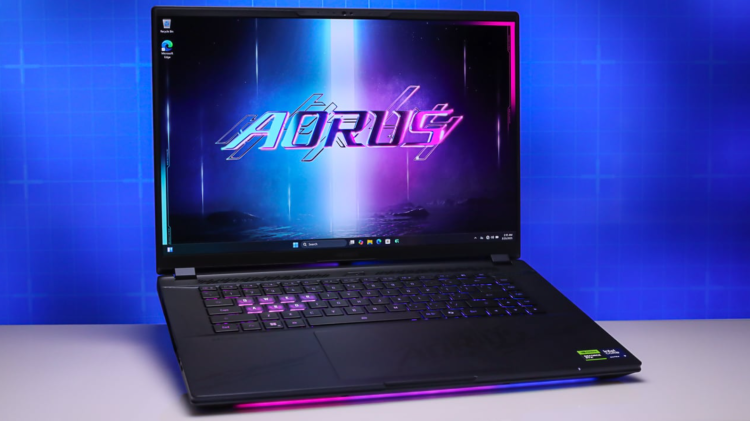
(Image: PCMag)
The Gigabyte Aorus Master 16 outperformed the Razer Blade 16's RTX 5090 configuration in every formal benchmark test the gaming publication ran during its review.
- Pros: Highest benchmark results among 16-inch machines tested by the publication, OLED display, GiMate AI configuration tool
- Cons: Loud under sustained load, heavier than Blade 16, GiMate adds limited practical value per the hardware desk's findings
The Windforce cooling system uses chambered high-fin fans and a vapor chamber, giving the RTX 5080 inside this machine the thermal headroom to sustain performance across extended sessions in a way that thinner chassis designs cannot. Intel's Core Ultra 9 275HX runs at up to 5.4GHz across 24 cores, which ensures the processor does not bottleneck GPU throughput in CPU-dependent titles. The GiMate AI assistant allows natural language configuration — telling it you are entering a meeting drops fan speeds while maintaining balanced performance — though the hardware desk found the feature added less practical utility than Gigabyte's marketing suggested. The testing team found the RTX 5080 configuration outpacing the Razer Blade 16's RTX 5090 across all formal benchmark tests, attributing the result to higher GPU sustained wattage rather than any difference in raw GPU silicon.
Spec | Details |
Display | 16-inch OLED, 2560x1600 |
CPU | Intel Core Ultra 9 275HX |
GPU | RTX 5080 or RTX 5090 |
RAM | Up to 64GB DDR5 |
Storage | Up to 2TB |
Weight | 5.51 lbs |
Verdict: Borderlands 3 at Badass preset in QHD runs at very high frame rates on this machine according to published benchmark data — while Forza Horizon 5 in Extreme graphical preset at 1600p will still deliver comfortable performance, though the fan noise will be noticeable during those sustained load periods.
Alienware 16 Area-51
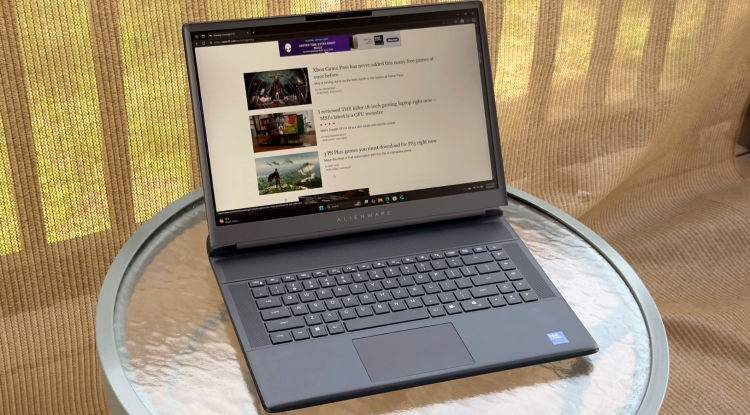
(Image: T3)
The Alienware 16 Area-51 offers a $50 mechanical keyboard upgrade — Cherry MX switches — a specification essentially unique among 16-inch gaming laptops.
- Pros: Mechanical keyboard option, three M.2 SSD slots, rear-exhausted thermals, novel liquid teal colorway
- Cons: 7.49 pounds, no OLED display options, 4 hours and 10 minutes battery life
Dell routed most of the thermal exhaust through the rear of the chassis, keeping hot air away from the mouse hand and improving the consistency of cool air intake — a design decision both reviewed outlets specifically highlighted as functionally significant. The system carried an RTX 5080 paired with Intel Core Ultra 9 275HX in review configurations and delivered benchmark results that regularly exceeded the Razer Blade 16's RTX 5090 configuration at both 1080p and 1600p, a result attributable to the higher sustained TGP enabled by the larger chassis. Three M.2 slots allow for substantial storage expansion, and the Wi-Fi card is soldered — a limitation worth knowing before purchase. The site named it the best desktop replacement in their 2026 ranking, citing strong gaming performance and the optional Cherry MX keyboard as distinguishing factors, while flagging the absence of OLED as a meaningful omission at this price.
Spec | Details |
Display | 16-inch, 2560x1600, 240Hz, G-Sync, Advanced Optimus |
CPU | Intel Core Ultra 9 275HX |
GPU | RTX 5080 Laptop GPU |
RAM | 16GB–64GB |
Storage | 1TB–12TB |
Weight | 7.49 lbs (3.4 kg) |
Verdict: Shadow of the Tomb Raider at Highest preset runs at 183fps at 1080p on this machine, a figure from published benchmark testing — while a title like Kerbal Space Program 2 with large rocket assemblies will struggle with frame consistency due to its CPU-intensive physics simulation regardless of GPU power.
Asus ROG Strix Scar 18 (2024)
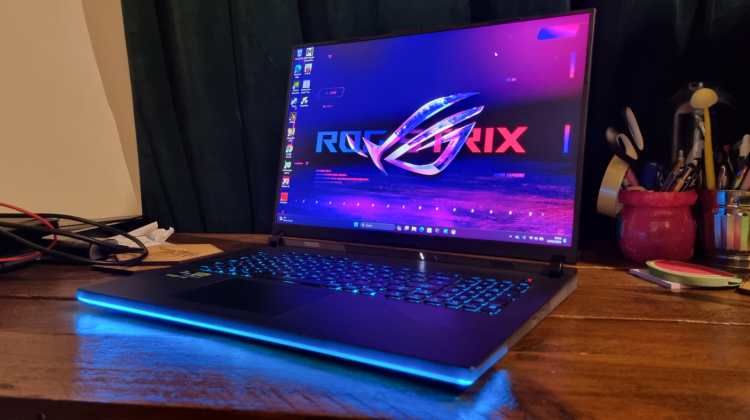
(Image: PC Gamer)
The Asus ROG Strix Scar 18 (2024) represented an iterative update over its 2023 predecessor rather than a generational step, and its current market position reflects the availability of the 2025 model at comparable prices.
- Pros: ROG Nebula HDR display, established thermal performance, strong build quality
- Cons: Outperformed by 2025 model, performance per dollar weaker given current pricing
The 2024 version of the Scar 18 maintained the ROG Nebula HDR display standard that defined its predecessor while updating internal components incrementally. The site reviewed it and concluded the performance gains over the 2023 model did not justify a full-price purchase, particularly given that the 2023 machine was available at significantly lower prices at the time of comparison. The comparative benchmarking pool shows the 2024 Scar 18 trailing behind the 2025 generation on all comparable metrics, with the Thunderbolt 4 port specification now a relative disadvantage against the Thunderbolt 5 found in the 2025 version. That review noted it exists in an awkward pricing position — more than the 2023 version while delivering performance gains that don't proportionally justify the difference.
Spec | Details |
Display | 18-inch Mini LED ROG Nebula HDR, QHD+ |
CPU | Intel Core Ultra 9 |
GPU | RTX 4090 Laptop GPU |
RAM | Up to 64GB |
Storage | Up to 4TB |
Weight | Approximately 3.1 kg |
Verdict: Total War: Warhammer III at Ultra in QHD runs smoothly on the RTX 4090 configuration — while Hogwarts Legacy at 4K with ray tracing and volumetric fog at maximum will reveal the performance gap between this machine and the 2025 generation in sustained outdoor sequences.
MSI Vector A18 HX A9W
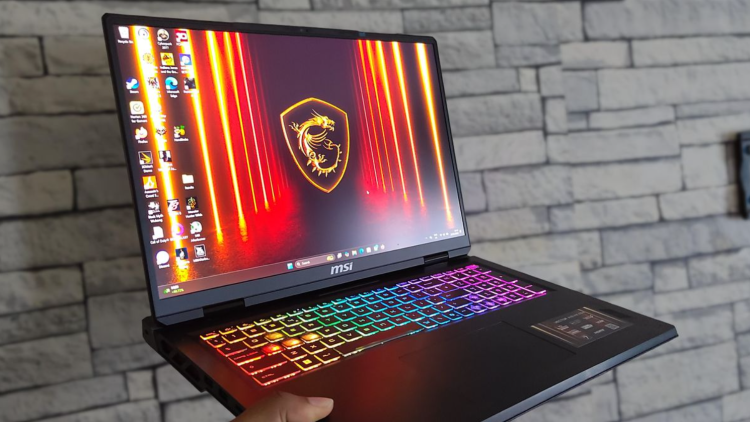
The MSI Vector A18 HX A9W is a performance-first 18-inch machine that deprioritizes display technology and chassis rigidity in favor of delivering the highest possible frame rates within its price bracket.
- Pros: High sustained GPU performance, Thunderbolt 5, strong raw benchmark output
- Cons: IPS panel rather than Mini LED or OLED, chassis flex noted during review
MSI's decision to retain an IPS panel in the Vector distinguishes it from the ROG Strix Scar 18 and positions the machine at buyers who prioritize frame rates over display quality — a tradeoff that makes competitive sense only at a price point below the Scar. The RTX 5080 configuration inside delivers strong QHD benchmark numbers and competes directly with the Asus ROG Strix Scar 18 in several synthetic tests, while falling behind on the Scar's Mini LED display and Thunderbolt 5 port count. The hardware team compared it directly to the Scar 18 and found Asus performed better from a display perspective in every measured dimension, recommending the Vector only to buyers for whom raw frame rate output is the single purchase criterion. The outlet listed it in the also-tested section, describing it as a performance-first device that sacrifices other luxuries to give users the highest possible frame rates.
Spec | Details |
Display | 18-inch IPS, QHD+ |
CPU | AMD Ryzen 9 |
GPU | RTX 5080 Laptop GPU |
RAM | Up to 64GB |
Storage | Up to 2TB |
Weight | Approximately 3.3 kg |
Verdict: Doom: The Dark Ages at Ultra settings in QHD runs at high frame rates on this machine, while a visually dense open-world title like Assassin's Creed Shadows at maximum shadow and texture settings in 4K will expose the IPS panel's contrast limitations and push the GPU toward its ceiling simultaneously.
Tier-B Laptops
Tier-B covers the Asus ROG Zephyrus G16 (2025), Acer Predator Helios Neo 16S AI, Alienware Aurora X16, HP Omen Max 16, and Asus ROG Strix G16 — machines running RTX 5070 Ti through RTX 5080 in 16-inch chassis, priced from roughly $1,800 to $2,800. Titles like Horizon Zero Dawn Remastered, Far Cry 6 at Ultra, and Cyberpunk 2077 with DLSS Quality enabled run at comfortable QHD frame rates on these machines. This tier represents the upper mid-range, where performance is strong enough to handle the current game library without needing frame generation as a baseline requirement.
Asus ROG Zephyrus G16 (2025)
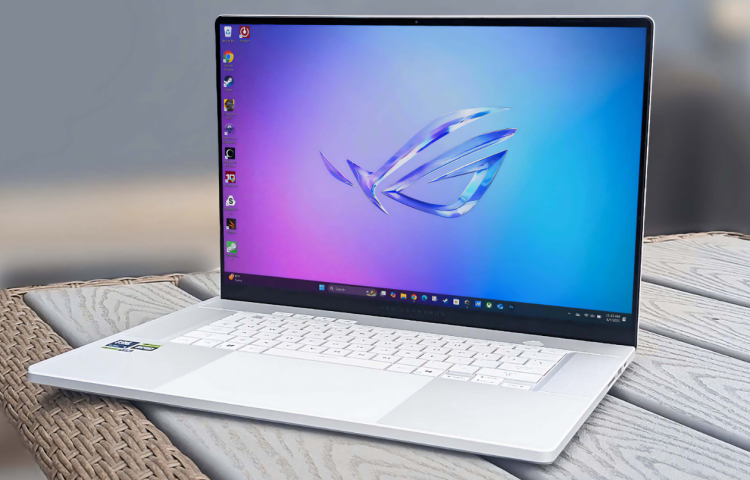
(Image: WindowsCentral)
The Asus ROG Zephyrus G16 (2025) carries a hard competitive disadvantage — it sits near the Razer Blade 16 in price without consistently matching it in benchmark output.
- Pros: Slimline design, strong display, Zephyrus build quality
- Cons: Price-to-performance ratio undercut by the Razer Blade 16, smaller generational gains
The G16 continues the Zephyrus design language — premium aluminum, clean lines, minimal branding — and pairs it with a strong OLED or IPS panel depending on configuration. The games desk reviewed it alongside the Razer Blade 16 and found the G16 coming in only slightly cheaper on a like-for-like basis while trailing in benchmark output, a position that weakens its value argument considerably. The RTX 5080 configuration delivers QHD+ performance that handles most current titles without difficulty, and the chassis construction remains among the more refined in the 16-inch category. The publication placed it in the also-tested section rather than the main ranking, concluding the pricing proximity to the Razer Blade 16 without a corresponding performance match removes it from contention for the top 16-inch slot.
Spec | Details |
Display | 16-inch OLED or IPS, QHD+ |
CPU | AMD Ryzen AI 9 |
GPU | RTX 5080 Laptop GPU |
RAM | Up to 32GB |
Storage | Up to 2TB |
Weight | Approximately 2.1 kg |
Verdict: Ghost of Tsushima PC at max settings in QHD runs smoothly on the RTX 5080 inside this machine — while Cyberpunk 2077 at Overdrive ray tracing mode in native QHD+ without DLSS will drop below playable frame rates consistently.
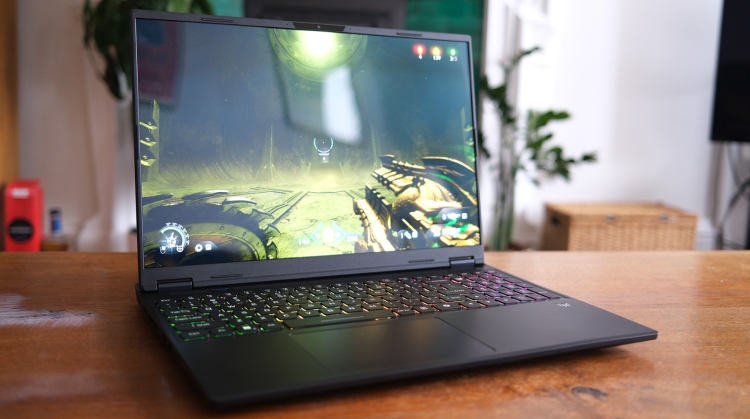
Acer Predator Helios Neo 16S AI
(Image: T3)
The Acer Predator Helios Neo 16S AI entered direct competition with the Lenovo Legion 5 Gen 10 for best value but landed at a higher price that ultimately cost it the ranking position.
- Pros: RTX 5070 Ti exceeds Legion 5's RTX 5070 cap, strong build, solid display
- Cons: Higher price than Legion 5, OLED panel carries more glare than premium alternatives
Acer's decision to offer the RTX 5070 Ti in this chassis gives it a hardware ceiling above the Lenovo Legion 5 Gen 10's RTX 5070 cap, and the build quality and chassis design stand on par with the site's mid-range benchmarks. The OLED panel shares the glare characteristics found on the Legion 5 — brighter environments reduce its visual advantage — but the color quality and contrast remain well above IPS alternatives in the same price range. The hardware team compared it directly against the Legion 5 in its review cycle and found the Helios Neo only marginally more expensive while delivering meaningfully better GPU ceiling, yet the price difference was enough to keep the Legion 5 in the top three of the main ranking. The reviewer noted it as a strong machine that sits just above its closest rival in price, acknowledging the RTX 5070 Ti as its most concrete differentiator.
Spec | Details |
Display | 16-inch OLED, QHD+ |
CPU | Intel Core Ultra 9 |
GPU | RTX 5070 Ti Laptop GPU |
RAM | Up to 32GB |
Storage | Up to 2TB |
Weight | Approximately 2.3 kg |
Verdict: The Witcher 3 Next-Gen at Ultra+ with ray tracing in QHD runs at stable frame rates on the RTX 5070 Ti — while Starfield at 4K Ultra with all effects enabled will drop frame rates below smooth performance without DLSS engagement.
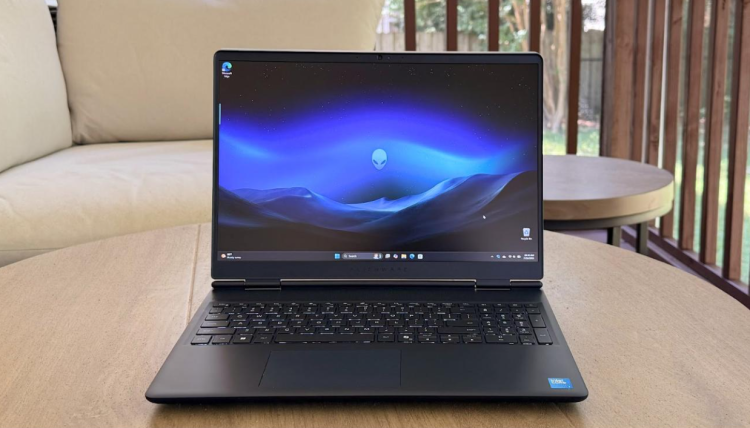
Alienware Aurora X16
(Image: Tom's Hardware)
The Alienware Aurora X16 carries a strong 240Hz IPS display with up to 500 nits of brightness and a clean aesthetic, but its value proposition at full MSRP sits in difficult territory.
- Pros: Fast, bright IPS display, Intel Core Ultra 9, DLSS multi-frame generation support
- Cons: Expensive at MSRP, no OLED or mini-LED, RTX 5070 ceiling limits 4K ambitions
Alienware's Aurora X16 uses a 2560x1600 240Hz panel described as impressive in color reproduction, smooth motion, and peak brightness, though the absence of OLED or mini-LED positions it below peers at its MSRP. The RTX 5070 ceiling means the machine is not designed for 4K gaming and targets high-refresh-rate QHD performance as its primary use case. DLSS multi-frame generation addresses the frame rate gap that the RTX 5070 creates at 240Hz targets in demanding titles, and Nvidia's suite of upscaling tools is well-suited to the high refresh rate panel. The review gave it an honorable mention rather than a ranked position, explicitly noting that it earns its place on the list only when found at sale prices around $1,649, with the full $1,999 MSRP making the value argument harder to sustain.
Spec | Details |
Display | 16-inch IPS, 2560x1600, 240Hz, G-Sync |
CPU | Intel Core Ultra 9 275HX |
GPU | RTX 5070 Laptop GPU |
RAM | Up to 64GB |
Storage | 1TB NVMe |
Weight | 5.7 lbs |
Verdict: Rainbow Six Siege at Ultra in 1600p runs well above 200fps on this machine, making full use of the 240Hz display — while Cyberpunk 2077 at Ultra ray tracing in native QHD without upscaling will not sustain smooth frame rates, requiring DLSS to function acceptably.
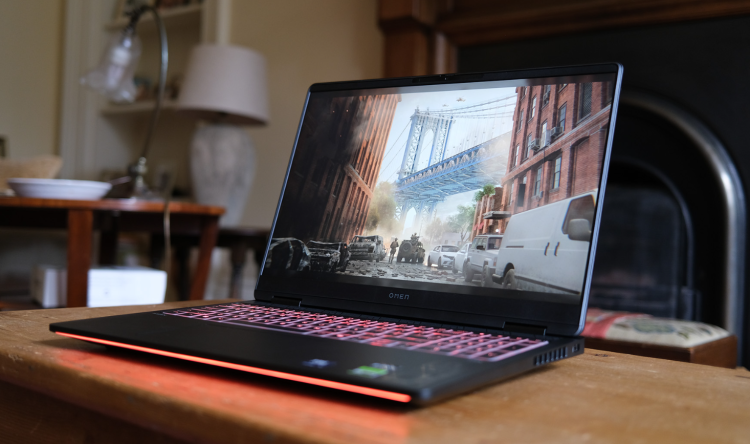
HP Omen Max 16
(Image: T3)
The HP Omen Max 16 reached benchmark parity with RTX 5090 configurations in the Razer Blade 16 during QHD testing, despite shipping with an RTX 5080.
- Pros: White chassis option, rear-facing ports on a 16-inch machine, strong software control suite
- Cons: Low battery life, minor keyboard flex
The outlet's testing showed the RTX 5080 Omen Max 16 trading benchmark results with the RTX 5090 Razer Blade 16 at QHD settings, a result that speaks to the higher sustained TGP enabled by the Omen's larger cooling system relative to Razer's slimmer chassis. The all-white model uses a soft-touch aluminum surface and rear-mounted ports — a feature the reviewers noted as rare among 16-inch machines, which typically place all connections on the sides. Two Thunderbolt 4 ports land at the rear alongside HDMI 2.1 and an RJ-45 Ethernet port, giving it a cleaner desk cable arrangement than most competitors. The outlet awarded it 4.5 out of 5 stars, making it the top overall pick in their 2026 ranking and recommending the OLED panel configuration over the tested IPS version.
Spec | Details |
Display | 16-inch, 2560x1600 at 240Hz (IPS or OLED) |
CPU | Intel Core Ultra 9 275HX |
GPU | RTX 5080 Laptop GPU |
RAM | Up to 64GB |
Storage | 512GB–2TB |
Weight | 2.7 kg (6.1 lbs) |
Verdict: Horizon Zero Dawn Remastered at Ultra in QHD runs at triple-digit frame rates on this machine, as confirmed in the outlet's benchmark data — while Microsoft Flight Simulator 2024 at maximum settings with live weather and photogrammetry enabled will pull frame rates well below the 240Hz display's ceiling regardless of GPU tier.
Asus ROG Strix G16
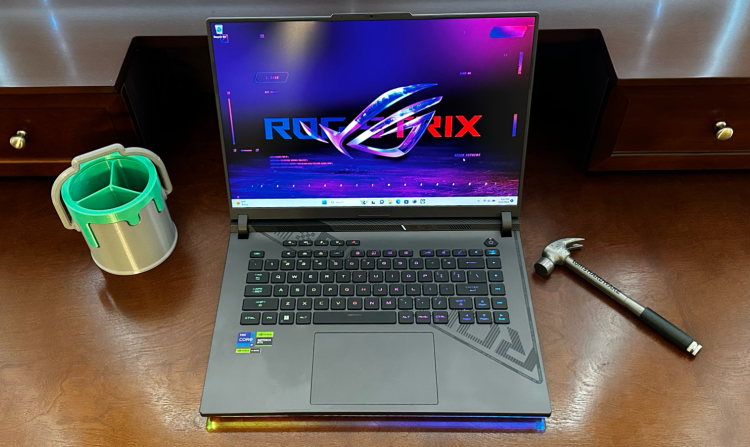
The Asus ROG Strix G16 combines the AMD Ryzen 9995HX3D processor with an RTX 5070 Ti, a pairing that delivers strong productivity throughput but yields more incremental gaming gains than the CPU's X3D designation implies.
- Pros: Colorful fast display, strong CPU multi-core performance, solid gaming output
- Cons: X3D benefit is more pronounced in productivity than gaming, not a top ranking pick
The 3D V-Cache in AMD's Ryzen 9995HX3D benefits gaming frame rates most in CPU-bound scenarios, which are relatively infrequent in modern gaming laptop workloads — the GPU almost always sets the ceiling first. The hardware desk reviewed this machine and found the X3D cache contributed more meaningfully to productivity and creative benchmarks than to gaming frame rates, a finding consistent with how 3D V-Cache performs in desktop comparisons. The RTX 5070 Ti handles QHD gaming at high settings without difficulty, and the display runs at a fast refresh rate with vivid color reproduction, keeping the machine competitive within its price tier. The testing team placed it in the also-tested section, describing it as a powerful machine worth consideration but one that did not displace the ranked entries primarily due to the modest gaming benefit derived from the X3D processor premium.
Spec | Details |
Display | 16-inch, QHD+, high refresh rate |
CPU | AMD Ryzen 9 9995HX3D |
GPU | RTX 5070 Ti Laptop GPU |
RAM | Up to 32GB |
Storage | Up to 2TB |
Weight | Approximately 2.5 kg |
Verdict: Elden Ring at 4K with mods and maximum draw distance holds consistent frame rates on the RTX 5070 Ti — while Avatar: Frontiers of Pandora at maximum ray tracing settings in native QHD will require DLSS assistance to sustain smooth gameplay.
Tier-C Laptops
Tier-C holds the Lenovo Legion 7i Gen 10, Asus ROG Zephyrus G14, Razer Blade 14, Gigabyte Aorus 16X, and Lenovo Legion 5 Gen 10 — machines configured with RTX 5060 through RTX 5070 GPUs across 14-inch and 16-inch chassis, priced from approximately $1,300 to $2,500. Titles like Total War: Three Kingdoms, Horizon Zero Dawn Remastered at high settings, and Red Dead Redemption 2 at medium to high presets run reliably at 1080p and achievable QHD frame rates. Buyers at this tier receive capable gaming performance for the current mainstream library without the thermal and price overhead of the top tiers.
Lenovo Legion 7i Gen 10
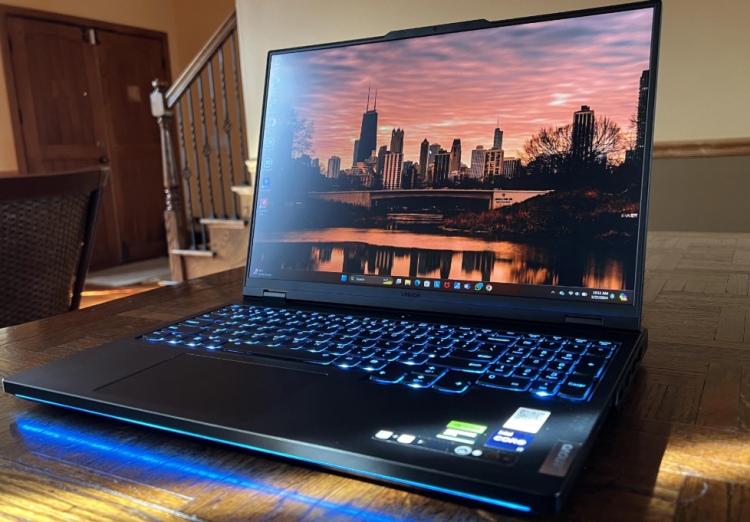
(Image: user2709/Reddit)
The Lenovo Legion 7i Gen 10 sits at a price point that directly challenges the Legion 5 Gen 10 below it while failing to deliver the value gap that would justify the premium.
- Pros: Premium design, strong build quality, reliable Lenovo Legion software
- Cons: RTX 5060 configuration undercut by the cheaper Legion 5 in some benchmark comparisons
Lenovo built the Legion 7i on the same design language that distinguishes the Legion range — a clean, professional chassis with restrained branding — and configured it with RTX 5060 and RTX 5070 GPU options. The outlet's testing found the RTX 5060 Legion 7i Gen 10 losing benchmark comparisons against the cheaper RTX 5060 Legion 5 Gen 10 in several QHD tests, a result that significantly weakens the 7i's case at its higher price. The build quality and aesthetic remain strong, and the machine handles the mid-range game library without difficulty, but the absence of an OLED panel option at this price point — a feature the cheaper Legion 5 includes — compounds the value problem. The site listed it in the also-tested section, noting it looks and feels fantastic in the hands while acknowledging it does not offer enough of a value boost to displace the Legion 5 Gen 10 from the main ranking.
Spec | Details |
Display | 16-inch QHD+, IPS, high refresh rate |
CPU | Intel Core Ultra 7 or 9 |
GPU | RTX 5060 or RTX 5070 Laptop GPU |
RAM | Up to 32GB |
Storage | Up to 2TB |
Weight | Approximately 2.5 kg |
Verdict: Far Cry 6 at Ultra in 1080p runs comfortably above 90fps on the RTX 5070 configuration — while A Plague Tale: Requiem at Ultra settings in native QHD will push frame rates below the 60fps threshold without DLSS enabled on the RTX 5060 version.
Asus ROG Zephyrus G14
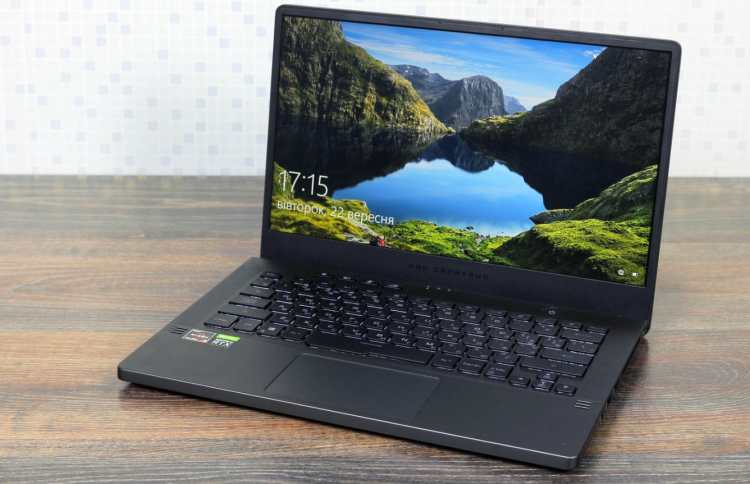
(Image: GECID)
The Asus ROG Zephyrus G14 packs an RTX 5080 option into a chassis that weighs 1.57kg and measures 0.72 inches at its thickest point — specifications that place it among ultrabooks rather than gaming laptops on a size chart.
- Pros: OLED QHD+ display, ultrabook weight, CNC-milled aluminum alloy build, strong portability
- Cons: RTX 5080 wattage constrained by thin chassis, 120Hz refresh rate below competing 16-inch OLED options
Asus chose a 2880x1800 OLED panel at 120Hz rather than a faster IPS display, prioritizing immersion and color quality over refresh rate — a deliberate choice that suits single-player and creative workloads better than competitive multiplayer. The CNC-milled aluminum alloy chassis produces a build quality that one reviewer compared directly to MacBook construction, and the rounded corners distinguish it from the sharper industrial aesthetic of the Razer Blade 14. The games publication's testing showed this machine keeping pace with larger RTX 4090 gaming laptops in 1600p benchmarks in lighter titles and staying above 60fps in Horizon Zero Dawn Remastered, with adjustments needed for Cyberpunk 2077 and Black Myth: Wukong. The publication awarded it 4.5 out of 5 stars, naming it the best 14-inch gaming laptop and recommending the RTX 5080 configuration for buyers who want maximum performance within the form factor.
Spec | Details |
Display | 14-inch OLED, 2880x1800, 120Hz |
CPU | AMD Ryzen AI 9 HX 370 |
GPU | RTX 5070 Ti or RTX 5080 |
RAM | Up to 32GB DDR5 |
Storage | 1TB or 2TB NVMe |
Weight | 1.57 kg (3.46 lbs) |
Verdict: I think the G14 earns its place for players who move between a desk setup and daily carry — Death Stranding Director's Cut at medium settings runs acceptably on this machine, though the fan noise becomes intrusive during traversal sequences with sustained GPU load, and you will want headphones.
Razer Blade 14
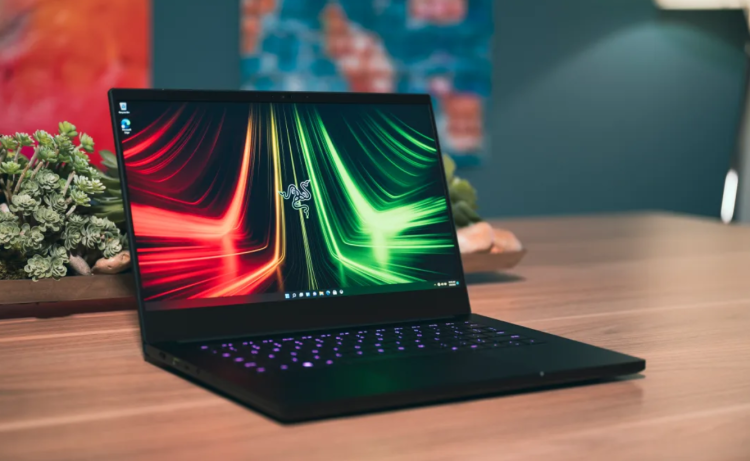
(Image: Reviewed)
The Razer Blade 14 is Razer's thinnest release to date and carries an OLED display, but its GPU ceiling stops at RTX 4070 in the configurations available at time of review — a specification the Asus ROG Zephyrus G14 surpasses.
- Pros: OLED display, thinnest Razer chassis ever, strong build quality
- Cons: Spec sheet capped at RTX 4070 where G14 reaches RTX 5080, price remains high relative to GPU offering
Razer's design philosophy applied to the 14-inch form factor produces the same premium material quality and refined aesthetic found in the Blade 16, but the thermal constraints of the smaller chassis limit GPU options more aggressively than the G14's equivalent footprint. At a price point where the Asus ROG Zephyrus G14 can be configured with an RTX 5080, the Blade 14's RTX 4070 ceiling creates a performance gap that is difficult to justify through design merit alone. The OLED panel and keyboard quality remain strong, and for buyers within the Apple ecosystem who want equivalent build quality in Windows, the Blade 14 delivers that aesthetic. The site noted it in the also-tested section, describing it as let down by a constrained spec sheet compared to the G14, which can push to RTX 5080 configurations.
Spec | Details |
Display | 14-inch OLED, QHD+ |
CPU | AMD Ryzen AI 9 |
GPU | RTX 4070 Laptop GPU |
RAM | Up to 32GB |
Storage | Up to 2TB |
Weight | Approximately 1.7 kg |
Verdict: Stardew Valley and similar low-demand titles run at maximum settings without any fan noise on the Blade 14 — while Returnal at Ultra settings in QHD will push the RTX 4070 to its ceiling, requiring significant graphics adjustments to maintain smooth frame rates.
Gigabyte Aorus 16X
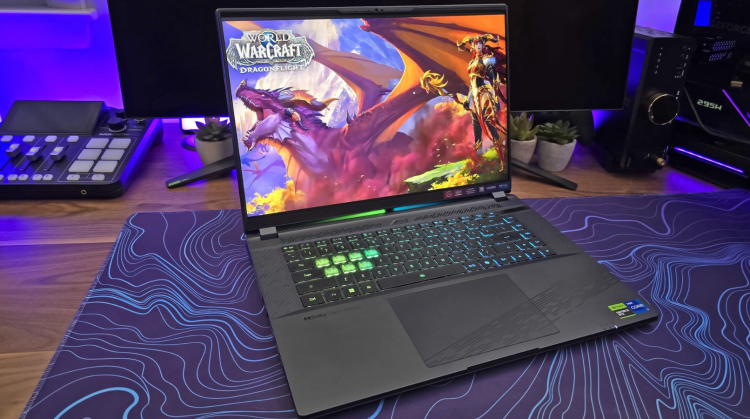
(Image: IGN)
The Gigabyte Aorus 16X carries a 2560x1600 IPS display described as vibrant during testing, with Thunderbolt 4, Wi-Fi 7, and an IR webcam at a $1,599 price point when found on sale.
- Pros: Vibrant QHD display, Thunderbolt 4, Wi-Fi 7, dual SSD slot support, biometric security
- Cons: Mediocre battery life, Gigabyte Control Center software is unintuitive
The IPS panel covers a wide color gamut and runs at 165Hz — a refresh rate suited to mid-range GPU output without requiring frame generation to reach — and the built-in speakers were good enough that the reviewer did not require headphones for casual use. Thunderbolt 4 and Wi-Fi 7 connectivity place this machine above most competitors at the $1,599 price point, where many manufacturers still ship with older port standards. The second M.2 slot allows future storage expansion, which extends the useful life of the base configuration. The hardware desk placed it third overall in their 2026 ranking at the reviewed sale price of $1,599, noting that the combination of a vibrant display, solid connectivity, and mid-range GPU performance made it difficult to argue against at that price.
Spec | Details |
Display | 16-inch IPS, 2560x1600, 165Hz, 16:10, Advanced Optimus |
CPU | Intel Core i7-14650HX |
GPU | RTX 4070 Laptop GPU |
RAM | 32GB |
Storage | 1TB |
Weight | 5.07 lbs (2.3 kg) |
Verdict: Red Dead Redemption 2 at medium settings in QHD runs at 73fps on this machine, a figure from the outlet's benchmark pool — while Cyberpunk 2077 at Ray Tracing Ultra in native QHD will drop to near-unplayable frame rates without DLSS.
Lenovo Legion 5 Gen 10
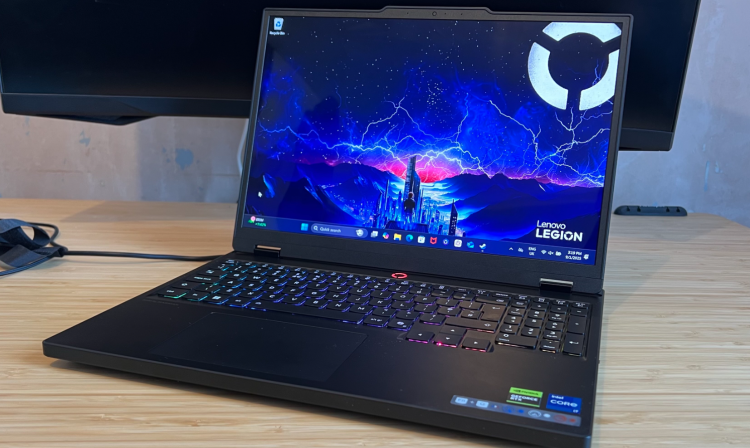
(Image: GamesRadar+)
The Lenovo Legion 5 Gen 10 delivers an OLED QHD+ panel at 165Hz in a chassis that starts below most premium gaming laptops, and the site placed it third overall in their 2026 ranking on that basis.
- Pros: OLED display at an accessible price, slimline form factor, wide port selection including two USB-C with DisplayPort
- Cons: Reflective OLED screen, GPU ceiling capped at RTX 5070, glare in bright environments
Lenovo's decision to include an OLED panel at this price tier is the machine's clearest differentiator — OLED is typically reserved for flagship pricing, and the Legion 5 brings that technology to the mainstream mid-range. The RTX 5060 configuration the publication tested outperformed the RTX 4070 HP Omen 17, a machine that launched above $2,000, and traded results with the Alienware 16X Aurora. The chassis carries a slim, professional aesthetic with restrained branding, suiting the hybrid work-and-gaming use case. The publication awarded it 4.5 out of 5 stars, recommending it specifically for buyers who prioritize display quality and hybrid productivity use, noting that demanding games in QHD+ benefit from DLSS frame generation to reach comfortable frame rates.
Spec | Details |
Display | 15-inch QHD+ OLED, 165Hz |
CPU | AMD Ryzen AI 7 or Intel Core Ultra |
GPU | RTX 5050 through RTX 5070 |
RAM | Up to 32GB |
Storage | 512GB–2TB |
Weight | 5.5 lbs (2.5 kg) |
Verdict: Horizon Zero Dawn Remastered at high settings in QHD runs at smooth frame rates on the RTX 5060 configuration — while Cyberpunk 2077 at Ray Tracing Ultra in native QHD+ without DLSS will drop below 30fps on the same configuration, requiring upscaling to function.
Tier-D Laptops (But Good Device Still)
Acer Nitro V 16S AI
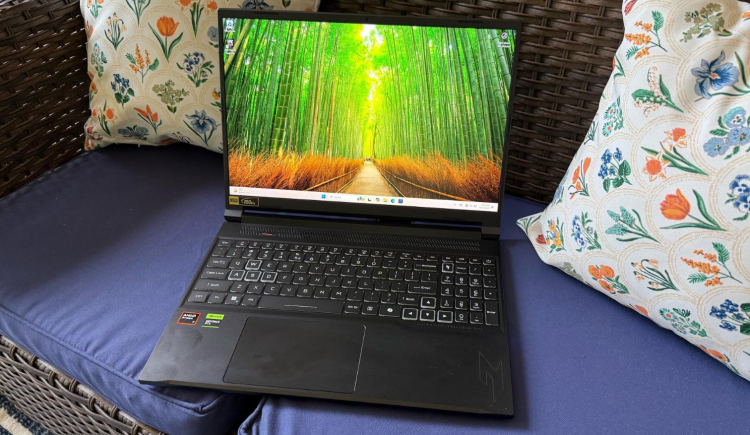
(Image: Tom's Hardware)
The Acer Nitro V 16S AI achieves a one-inch chassis profile — a slimline measurement unusual for a 16-inch gaming laptop — by accepting trade-offs in GPU sustained wattage and processor generation.
- Cons: 85W RTX 5060 underperforms full-wattage equivalent, last-gen Ryzen 7 260, outclassed in gaming
- Pros: Thin profile for a 16-inch machine, reasonable $1,299 price, adequate connectivity
Acer's choice to limit the RTX 5060 to 85W — well below the maximum TGP available in competing machines — means the performance gap between this laptop and a full-wattage RTX 5060 system is measurable in demanding titles. The Ryzen 7 260 is a last-generation processor, a specification that does not meaningfully affect gaming frame rates today but reduces the machine's standing against current-generation AMD and Intel competition. The hardware desk reviewed it and noted it was outclassed in gaming by other machines in the same price range, attributing the underperformance directly to the power-limited GPU rather than any other system component. The publication placed it in the also-tested section, describing it as impressively portable for a 16-inch gaming rig at a reasonable price, but acknowledging the 85W GPU and older processor make it a compromised choice when compared against full-wattage alternatives at similar prices.
Spec | Details |
Display | 16-inch, 1080p or QHD, IPS |
CPU | AMD Ryzen 7 260 |
GPU | RTX 5060 at 85W |
RAM | Up to 16GB |
Storage | Up to 1TB |
Weight | Approximately 2.1 kg |
Verdict: Fortnite at high settings in 1080p runs smoothly at above 100fps on this machine, while Control at 1080p Ultra with ray tracing enabled will push the power-limited RTX 5060 beyond comfortable frame rates consistently.
Lenovo LOQ 15
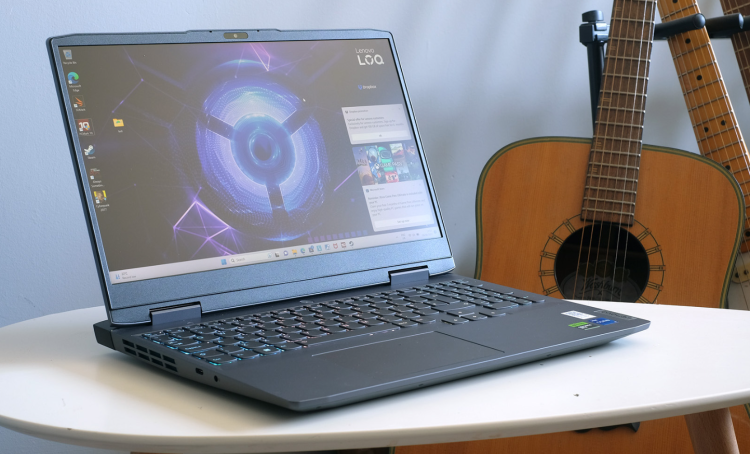
(Image: T3)
The Lenovo LOQ 15 starts at $1,299 with an AMD Ryzen 7 250 and RTX 5060, and the reviewer described it as a laptop that does not compromise on power, only on battery life.
- Pros: RTX 5060 with full DLSS support, 144Hz display, solid value overall, fair size and weight
- Cons: 60Wh battery, 300-nit screen brightness, base configuration limited to 16GB and 512GB
Lenovo's decision to fit the LOQ 15 with a 60 watt-hour battery delivers only moderate unplugged endurance, and the 300-nit display brightness limits usability in outdoor or strongly lit environments. Both trade-offs are consistent with a machine designed to be used plugged in at a desk rather than carried between locations. The RTX 5060 handles 1080p gaming at high-to-ultra settings without difficulty in the majority of current titles, and Nvidia's DLSS multi-frame generation extends that performance headroom into more demanding scenarios. IGN ranked it as the best budget gaming laptop in their 2026 list, specifically praising its straightforward execution — strong GPU for the price, reasonable weight, adequate connectivity — while confirming battery life as the expected concession.
Spec | Details |
Display | 15.6-inch FHD, 1920x1080, 144Hz, IPS |
CPU | AMD Ryzen 7 250 |
GPU | RTX 5060 Laptop GPU |
RAM | 32GB DDR5 |
Storage | 512GB NVMe |
Weight | 5.1 lbs |
Verdict: Cyberpunk 2077 at medium settings with DLSS Balanced in 1080p runs at playable frame rates on this machine — while Warhammer 40,000: Space Marine 2 at Ultra settings in QHD will exceed the RTX 5060's comfortable performance range, requiring either resolution drops or DLSS to function smoothly.
Acer Nitro V 16 AI
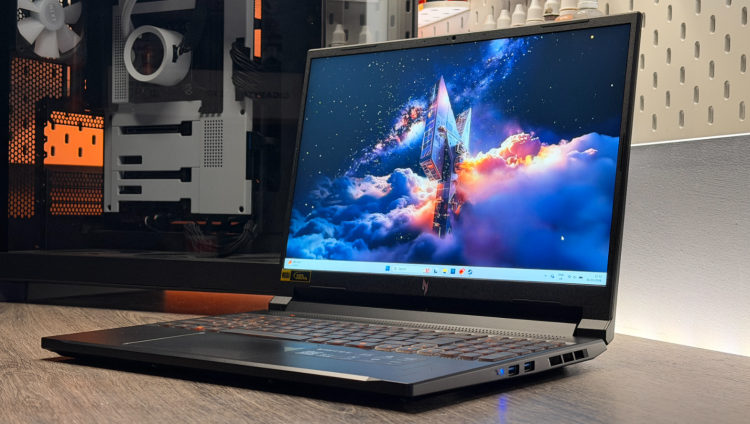
(Image: PC Gamer)
The Acer Nitro V 16 AI is the cheapest gaming laptop the outlet had reviewed at the time of publication, though the reviewer noted that low price and strong value are not the same measure.
- Pros: Lowest price point tested, slimmer form factor than most budget gaming laptops, work-play hybrid viability
- Cons: Performance tests raised reliability concerns for demanding titles, battery and screen quality limited
The reviewer found benchmark results from the Nitro V 16 AI inconsistent, with performance in demanding titles falling short of what the GPU specification would suggest — a finding attributed to thermal and power management constraints within the thin chassis. The slim profile distinguishes it from thicker budget competitors like the MSI Katana, and the form factor is more suited to the dual work-and-gaming use case than most machines in this price range. Its position in the ranking — placed in the also-tested section after losing the best budget title to the MSI Katana 15 HX B14W — reflects that the Katana offers better pure gaming performance, while the Nitro V 16 AI competes on portability and price. The site noted it lost the budget gaming laptop comparison primarily due to performance inconsistencies, while acknowledging its slimmer form factor as a meaningful advantage for buyers prioritizing portability over raw frame rates.
Spec | Details |
Display | 16-inch, 1080p or QHD, IPS |
CPU | AMD or Intel mid-range |
GPU | RTX 5060 Laptop GPU |
RAM | Up to 16GB |
Storage | Up to 1TB |
Weight | Approximately 2.0 kg |
Verdict: Minecraft Java Edition with a high-resolution texture pack runs without difficulty at high frame rates on this machine — while The Last of Us Part I at high settings in native 1080p will trigger thermal throttling during sustained combat sequences on this chassis.
MSI Katana 15 HX B14W
(Image: GamesRadar+)
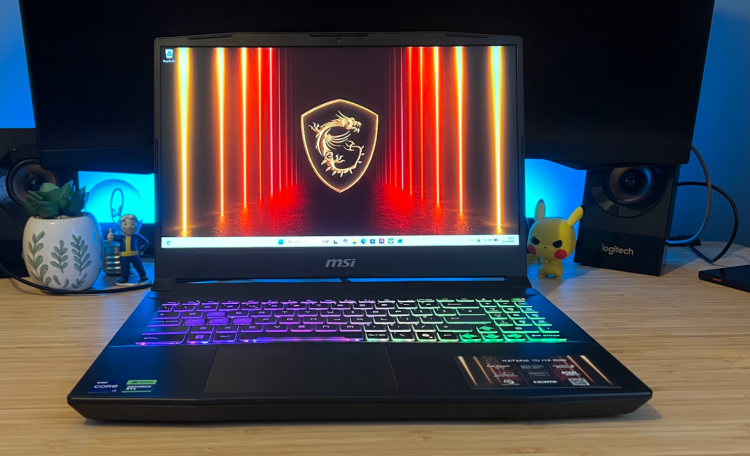
The MSI Katana 15 HX B14W reaches QHD resolution at the sub-$1,000 price point — a specification the publication described as rare in today's budget gaming laptop market.
- Pros: QHD display option at a budget price, durable chassis, tight keyboard feel, clean design without excessive branding
- Cons: Ports side-mounted only, less power behind the display than higher-tier machines
MSI designed the Katana 15 with a keyboard that surprised reviewers at both outlets — where budget gaming laptops typically deliver mushy, imprecise key response, the Katana's deck produces a springy feel with a satisfying click. The chassis avoids the garish stamps and icons common to budget gaming machines, presenting a relatively clean visual identity. The RTX 5060 configuration posted benchmark results matching the Lenovo Legion 5 Gen 10 and Legion 7i Gen 10 in multiple QHD tests, a result above what its price tier would suggest. The outlet awarded it 4.5 out of 5 stars, naming it the best budget gaming laptop and the best cheap gaming machine for those seeking RTX 50-Series performance without a four-figure outlay.
Spec | Details |
Display | 15.6-inch QHD at 165Hz or FHD at 144Hz |
CPU | Intel Core i7-14650HX |
GPU | RTX 5060 Laptop GPU |
RAM | 16GB or 32GB |
Storage | 512GB or 1TB |
Weight | 2.4 kg (5.29 lbs) |
Verdict: Shadow of the Tomb Raider at Highest preset in 1080p ran at 91fps on the MSI Katana 15 HX according to published benchmark data — while Hogwarts Legacy at Ultra settings in native QHD will drop below smooth frame rates consistently, making DLSS a practical necessity rather than an optional enhancement.d
(Image: Laptop Mag)
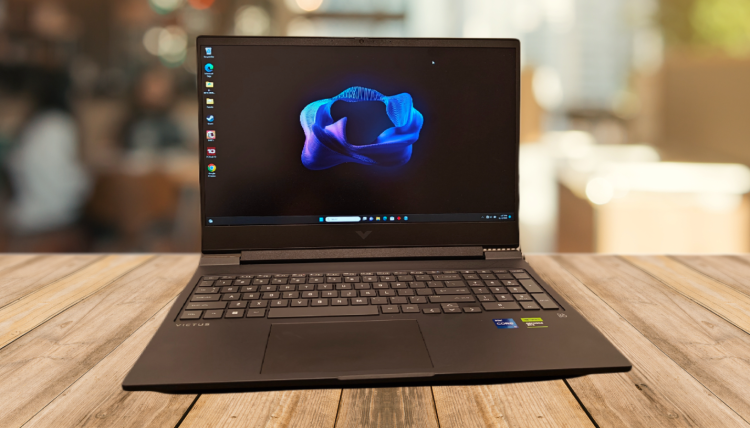
The HP Victus 16 delivers strong RTX 4050 performance at a price below most competitors in its GPU tier, but the display and keyboard quality fall short of what the Asus TUF A15 offers at comparable or lower pricing.
- Pros: Strong raw GPU performance for price, accessible entry point into dedicated graphics gaming
- Cons: Display and keyboard quality cut more corners than Asus TUF A15, chassis build below competing alternatives
The reviewer tested the RTX 4050 Victus 16 and found the GPU performance itself impressive within its tier, but concluded the main chassis makes too many material and feature compromises to recommend it above the Asus TUF A15 or TUF A14. The display quality and keyboard construction are the two most visible areas where HP reduced costs to reach the Victus 16's price, and in a competitive budget segment where Asus's TUF range offers better builds at similar or lower prices, those differences are deciding factors. The machine suits buyers whose primary concern is GPU performance and who will use an external monitor and keyboard — in that configuration, the Victus 16's performance per dollar argument is stronger. The review placed it in the also-tested section, concluding it would be the best pick for budget gamers only if it matched the display and keyboard quality found in Asus's competing models.
Spec | Details |
Display | 16-inch, FHD, IPS, 144Hz |
CPU | Intel Core or AMD Ryzen mid-range |
GPU | RTX 4050 Laptop GPU |
RAM | Up to 16GB |
Storage | Up to 512GB |
Weight | Approximately 2.3 kg |
Verdict: Forza Horizon 5 at medium-high settings in 1080p runs at comfortable frame rates on the RTX 4050 — while Palworld with a large base and many active NPCs will push this GPU to frame rate drops below 30fps at higher settings in crowded scenes.
Testing Methods
The three sources used for this article — GamesRadar, Tom's Hardware, and IGN — each run distinct but partially overlapping testing methodologies, and understanding those differences matters when weighing their conclusions.
GamesRadar benchmarks Shadow of the Tomb Raider, Total War: Three Kingdoms, Horizon Zero Dawn Remastered, and Cyberpunk 2077 across FHD and QHD resolutions, running each test three times and averaging the result, while also conducting real-world two-week extended use periods that include off-desk travel, coffee shop sessions, and full monitoring setup integration via a Razer USB 4 docking station.
Tom's Hardware runs a broader game suite — Shadow of the Tomb Raider, Grand Theft Auto V, Cyberpunk 2077, Far Cry 6, Red Dead Redemption 2, and Borderlands 3 — supplemented by a Metro Exodus stress test looped 15 times under HWInfo monitoring, display colorimetry measured with a physical light meter, and a standardized Wi-Fi battery test that cycles web browsing, OpenGL graphics tests, and video streaming simultaneously.
IGN pulls from the same general game pool and combines formal test results with extended hands-on use, while also opening each system reviewed to document user-replaceable components and upgrade accessibility — a practical dimension neither of the other two publications makes a primary focus.
Comparing the three approaches directly, the hardware outlet produces the most technically granular data with the widest game suite and hardware-level display measurement, the games publication provides the most consistent real-world lifestyle testing over the longest hands-on period, and the third source adds the most explicit repairability and upgradeability documentation. For buyers whose primary concern is raw benchmark comparison across a range of titles, Tom's Hardware's methodology is the most useful reference point in this article's source pool — its standardized multi-game suite, measured display data, and stress test loop produce the most reproducible and directly comparable numbers across the machines reviewed.


 Successfully copied... Thank you for sharing our content!:


5% deposit bonus up to 100 gems

a free Gift Case





EGAMERSW - get 11% Deposit Bonus + Bonus Wheel free spin


EXTRA 10% DEPOSIT BONUS + free 2 spins

3 Free Cases + 100% up to 100 Coins on First Deposit


5 Free Cases, Daily FREE & Welcome Bonuses up to 35%

3 free cases and a 5% bonus added to all cash deposits.

+5% to deposit




Comments