




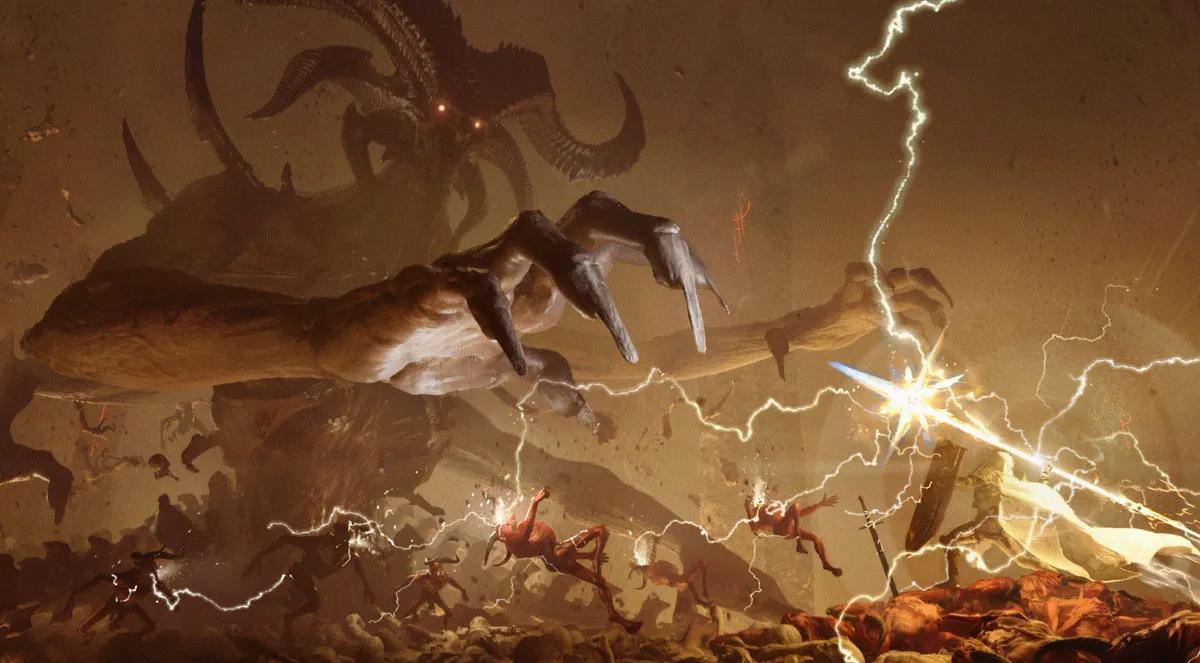
Diablo 4 Is Getting Its Most Ambitious Overhaul Yet With Lord of Hatred
 Diablo
Blizzard's Diablo 4 is set to receive its second major expansion, Lord of Hatred, on April 28, introducing two new playable classes, a sweeping skill tree redesign, and a cluster of new endgame systems. The expansion brings a new Mediterranean-inspired region called Skovos, a storyline built around the demon lord Mephisto, and mechanics including War Plans, item sets via talismans, and the returning Horadric Cube.
Alongside the expansion, Blizzard is rolling out a comprehensive skill tree overhaul to all players, regardless of whether they purchase Lord of Hatred. The levelling curve is also being rebalanced to distribute progression more evenly across the full level range, with the cap rising from 60 to 70. Two classes — the paladin and warlock — headline the new content, with the paladin already available to test for anyone who has preordered, and a free trial period running from March 11 to 18.
Warlock — Diablo 4 New Class
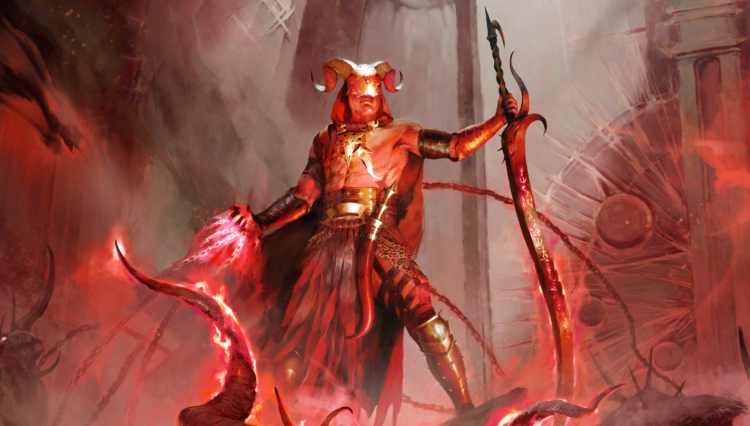
The warlock arrives with four distinct specialisations — Legion, Ritualist, Vanguard, and Mastermind — each generating a different flavour of visual chaos. Legion is built around summoning demons from Hell and deploying them as weapons: imp-like creatures, a slithering Gorgon-type demon, handfuls of crawling demons thrown at enemies, walls of mashed-together demons, and a boss-scale demon that erupts from the ground, swinging an enormous sword. At full capacity, a Legion warlock operates with upwards of a dozen creatures at once.
Ritualist and Vanguard both operate in fire. The Ritualist lobs fiery projectiles and triggers area eruptions, including one ability that ignites a circle large enough to fill the screen. It can also chain enemies in place. The Vanguard transforms into a demon form and belches fire, positions floating demonic heads around the battlefield, and can summon a hellhound. The Mastermind shifts into shadow, calling silhouetted demons from swirling mist to devour or dominate enemies, with a stealth-based Shadowform and a suggested mind-control mechanic that wasn't accessible during the hands-on preview.
Players can combine abilities across specialisations and apply one of four shards tied to specific specs to amplify their chosen build. The warlock was previewed in a Vessel of Hatred area rather than the new Skovos region, limiting the context available, but the class itself made an impact within the first session. I think the warlock represents the clearest signal yet that Blizzard is willing to push Diablo 4's class design well past the visual restraint of its launch roster.
The Skill Tree Update
Blizzard has acknowledged the existing skill trees were underpowered, referring to them internally as a "skill twig" in a Diablo Spotlight video. The revised system gives each ability up to 12 points of investment — compared to five in the current version — followed by a choice of three active modifications and four additional options. Every ability in every class receives this expanded treatment, including ultimates.
Each class receives 40 reworked skill choices and over 80 additional options. Players who purchase Lord of Hatred get 20 more on top of that, enabled by the expanded level cap. The rework emphasises active transformation of abilities rather than passive stat increases. The standard example Blizzard uses is the sorcerer's fire hydra being convertible to cold damage, enabling cold-build configurations that previously weren't viable.
"The top-line goal is we want way more build variety. We want a much deeper, much broader set of builds in the game."
— Colin Finer, Associate Game Director
Passive abilities formerly scattered through the skill tree have been moved primarily into the Paragon tree, which unlocks at maximum level and has not been substantially redesigned for this expansion. Finer flagged the Paragon tree as an area likely to receive future attention.
"Don't get me into trouble on this — it's me musing on things I think we could really improve, but Paragon is probably something we think a lot about, especially now that we're changing the skill tree for Lord of Hatred — we're more tuning it to be a little bit more healthy and create more interesting choices across the builds. But Paragon I think is ripe for it."
— Colin Finer
Keywords like Overpower are also changing across the game, becoming stackable damage buffs rather than fixed effects. Different classes will consume these stacks in different ways, and the standardisation creates a consistent framework for itemisation. Cold skills, for instance, will now apply a chill that increases damage from all sources, not only cold ones, which enables better cross-class synergy in group play.
Horadric Cube, Talismans, and the Push for More Player Power
Lord of Hatred introduces two additional systems that contribute to character power beyond the skill tree. The first is a talisman that functions as a dedicated inventory slot for charms, which can now form sets with associated bonuses. Each class has sets built around specific playstyles: the barbarian set is oriented around stacking Fury past 100, at which point the character grows in size, slows attack speed, and deals increased damage.
"The Barbarian has a set that's all about being huge, like the Hulk — and having a ton of Fury. When you're past 100 Fury, you become bigger and all your skills should be bigger and you attack slower and you deal more damage. We are trying to really hone in the fantasy within the sets so you have a really clear playstyle you can chase after."
— Colin Finer
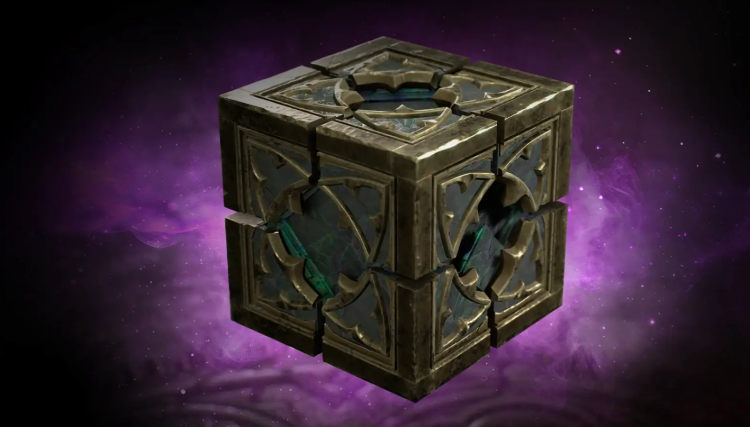
The Horadric Cube, a staple of the franchise, returns as a crafting tool. It allows players to combine items with ingredients to raise their power and rarity, with a path that can take a low-rarity item all the way to legendary. Blizzard has wanted to give lower-rarity items more purpose for some time, and the Cube provides the mechanical framework to do that.
Game designer Aislyn Hall described the cumulative effect of the new skill system, talismans, and the Cube together: players will be able to push characters further than has been possible in any previous version of the game.
War Plans Replace the Endgame's Informal Playlist
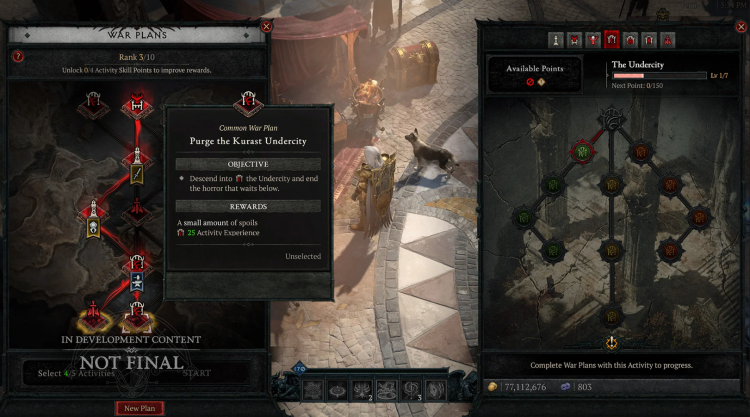
War Plans address a structural gap in Diablo 4's endgame, specifically the absence of a coherent system for stringing activities together once the main campaign ends. The system works like a roguelike map, presenting a sequence of linked activities that players either configure manually or have auto-generated. Completing the plan yields rewards calibrated to the activities chosen.
The feature wasn't available to try during the press visit, but its design is described in detail. A meta-levelling layer within War Plans allows players to raise the difficulty of the challenges they're assigned over time, adjusting monster types, loot distributions, and risk-reward balancing as the character grows. One functional feature that received less attention is the ability to teleport directly to wherever a given activity is located in the world, removing the navigation friction that currently interrupts endgame play.
War Plans function as the structural logic layer sitting on top of Diablo 4's existing systems, connecting dungeons, world events, and other pursuits into a directed sequence. They're the closest the game has come to a formal endgame mode that scales with the player.
Levelling Curve, Fishing, and the Larger Ambition
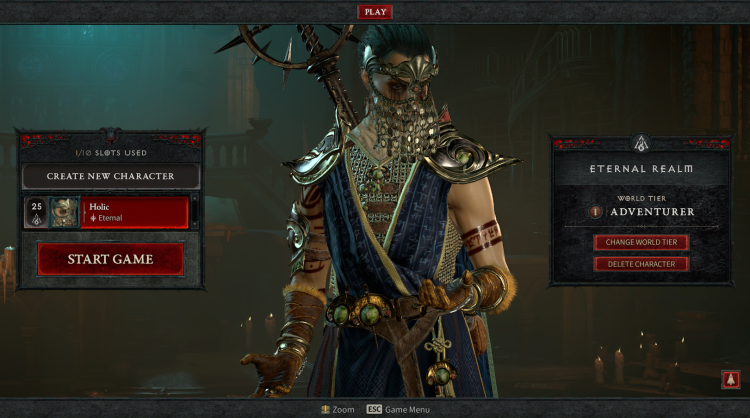
The pace of levelling is being recalibrated alongside the expansion. Blizzard's goal is to keep the total time to reach maximum level the same while redistributing how that time is spent. Currently, the first 20 to 25 levels pass quickly enough to blur together. I see this in practice — during a recent reinstall to test the paladin, levelling from one to 30 took roughly half an hour, driven largely by a respawning world boss, and produced almost no understanding of how the class functioned.
Under the revised curve, early levels will take longer and later levels will move faster. The rationale is to let players acquire skills and systems at a pace that allows them to actually process what each new addition does. The level cap rising to 70 absorbs some of the expansion, but the overall time investment to reach it is not intended to increase.
Blizzard is also adding fishing to the game, available across the entire world of Sanctuary and not restricted to the new Skovos region. It is not a primary loot source and will not yield mythic-tier items. Its intended function is a low-stakes reason to revisit older areas of the world, particularly ones that players only experienced in the context of combat.
"It's a great excuse to sightsee because there's all these awesome places in the world and you typically only experience them through carving your way through millions of demons. But this lets you stop and smell the roses a little bit more."
— Aislyn Hall
Lord of Hatred arrives 18 months after Vessel of Hatred rather than the originally planned 12. The delay, combined with the breadth of changes now confirmed — skill tree overhaul, new classes, new systems, rebalanced levelling, and endgame restructuring — positions the expansion as more than an incremental content drop. Whether it achieves the kind of resurgence that Overwatch experienced when it relaunched as Overwatch 2 remains to be seen, but the scope of what Blizzard is delivering suggests they're treating it as exactly that kind of moment.
A recent group interview at Blizzard with the Diablo Legacy team revealed that Diablo 3 continues to maintain a player base counted in the millions, contradicting the common assumption that its audience has fully migrated to Diablo 4 or Diablo 2: Resurrected, with Legacy executive producer Matthew Cederquist describing the Diablo 3 player count as "massive."


 Successfully copied... Thank you for sharing our content!:



5% deposit bonus up to 100 gems

a free Gift Case





EGAMERSW - get 11% Deposit Bonus + Bonus Wheel free spin


EXTRA 10% DEPOSIT BONUS + free 2 spins

3 Free Cases + 100% up to 100 Coins on First Deposit


5 Free Cases, Daily FREE & Welcome Bonuses up to 35%

3 free cases and a 5% bonus added to all cash deposits.

+5% to deposit




Comments