




Hungarian Chef Turned Developer Prioritizes Interactive Physics Over Static Fidelity In New RPG
 Steam
SteamCsaba "ForestWare" Székely is building Sword Hero, an ambitious open-ended RPG that leans heavily into complex NPC behaviors and physics interactions. He describes the project as a "eurojank" title, a term often used for ambitious but technically flawed games from European studios in the 2000s. While the label carries a slightly derogatory history, it also represents a specific design philosophy that values depth over polish. Larian, CD Projekt, and GSC Game World started as second-tier outfits producing these cult classics and now dominate the industry while former titans of the console generations struggle to maintain relevance.
ForestWare questioned the current state of single-player games, where high production values often mask a lack of systemic depth. He noted that as studios moved resources toward visual fidelity and texture resolution, the industry lost elements like physics. He pointed to Nvidia PhysX as a prime example of a technology that allowed for rich interactions in games like Mirror's Edge, but eventually took a backseat to static, highly detailed scenes. The focus shifted entirely to visual presentation, leaving the environment as a mere backdrop rather than a playground.
"But you can't interact with it, so it's just sort of moving around in a static 3D environment which happens to have collision,"
— ForestWare.
"And you're lucky if you have a bullet hole when you shoot a wall, for example, and things like that. It looks very nice in screenshots and trailers and whatnot, and I understand that nowadays this is very important. But people have been craving this sort of experience, which was offered by Larian and CD Projekt, which were moving the scale a bit back to these more interactive experiences."
I see the validity in his argument when I look at modern cinematic triple-A console action games that suffer from an uncanny valley effect, where environments look realistic but forbid granular interaction. This results in a stiff experience where players encounter scripted environmental interactions rather than emergent ones. A camera zooming in for a character to pick up an object creates a distinct separation between gameplay and the world, whereas titles like The Elder Scrolls or Baldur's Gate 3 allow players to physically manipulate items in real-time.
The path to creating this system-heavy RPG began in an unlikely place. Székely worked full-time as a chef until the COVID-19 lockdowns provided him with an abundance of free time. He had previously dabbled in modding for Gothic and Dungeon Siege but had no formal background in programming. Starting from scratch, he decided to create his own ode to the messy cult classics of the 2000s. In a recent interview with PC Gamer, he explained that his lack of experience made the pitch a tall order, yet he managed to handle programming, art, design, and scripting largely by himself.
"One of the big things I discovered in this journey was the devious thing called logistical costs, and the fact that, with more team members, progress may not necessarily become quicker."
— ForestWare.
"It may get more economical, but it's not necessarily quicker, because with more people, you get vision fractures, people you need to work around, occasionally work together."
He emphasized that meetings and administrative tasks cost time that adds up quickly, suggesting a thin line exists where adding people actually speeds up work. Despite the solo label, the project lists Discord moderators, voice actors, and playtesters in the credits, and publisher Crytivo assists with marketing. The funding secured will allow for the hiring of an artist and a musician to bolster the production, but the core development remains a singular vision focused on systems that interact with one another.
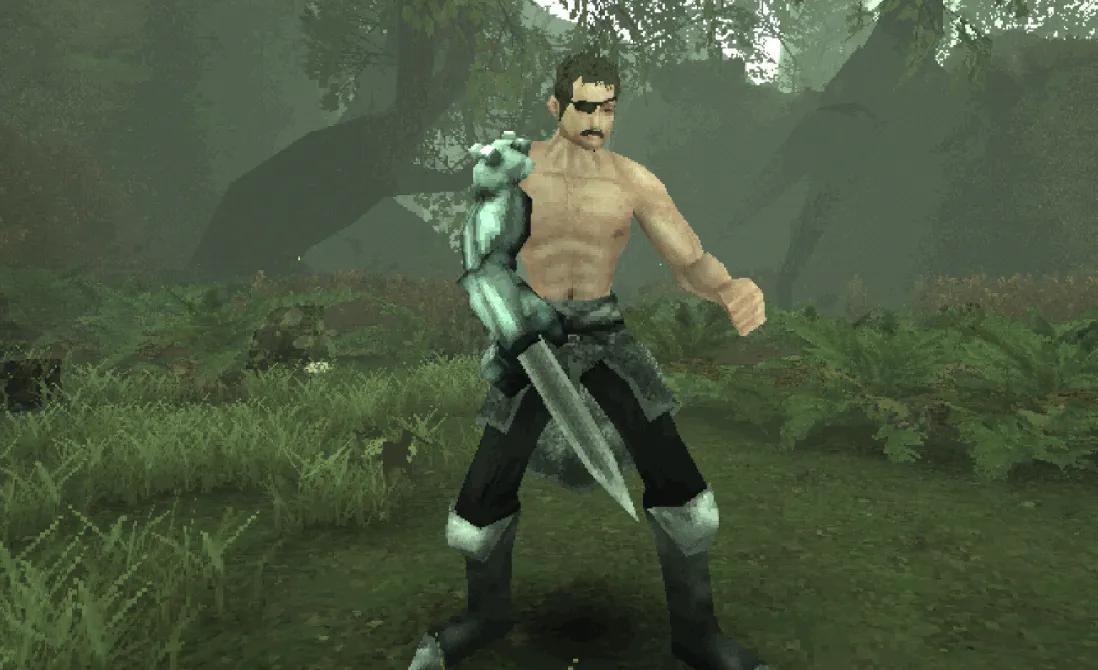
The game features procedural dismemberment and prosthetics reminiscent of the unforgiving survival game Kenshi. One trailer depicts a hero losing an arm to bandits and subsequently taking on adventuring work to afford a mechanical replacement. This event is not a scripted intro, but an example of the emergent narrative players might encounter. ForestWare clarified that prosthetics represent only one method of limb replacement, noting that the Peltfolk faction possesses a spell capable of regenerating lost limbs entirely.
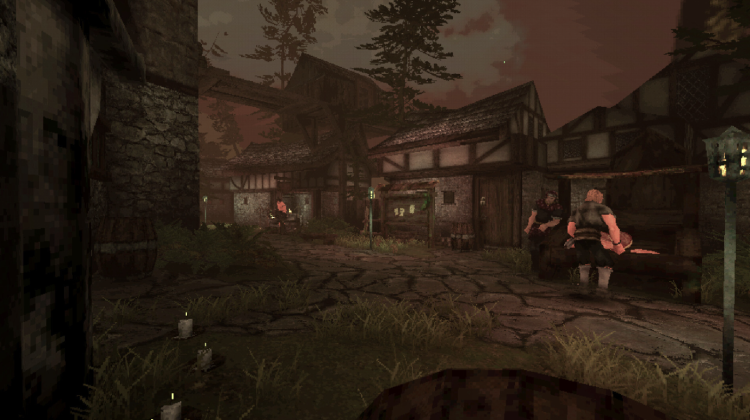
Mechanics extend to traversal and stealth as well. A Prince of Persia-style wall run appeals to those investing in specific optional perks, allowing for movement on any wall with challenges designed for the ability. The stealth system relies on custom lighting code that allows creatures to detect the exact amount of light they stand in. Players can shoot down torches to put out light sources, causing enemies to react to the darkness and lose sight of the player character.
"The routine system of the NPCs is tailored towards stealth, so the NPCs aren't roaming randomly, but they have a set schedule,"
— ForestWare.
"You can plan ahead with these schedules, and they go to sleep at night. So you can use your knowledge of these systems to plan ahead and just sneak into a rich merchant's house, and just grab up everything and sell it in the next city."
I find these specific details about light detection and NPC scheduling suggest a return to the immersive sim elements that defined early PC gaming. The combat demos display a weightiness similar to FromSoftware titles coupled with the snappy aiming found in the Jedi Knight series. The developer’s diaries further reveal the intricacies of programming these physics interactions and a procedural vengeance system where minor NPCs might seek retribution for petty thefts or the death of a spouse.
Public interest in this design philosophy is evident in the project's crowdfunding performance. The campaign on Kickstarter blew past its initial $35,000 goal, amassing over $223,000. With the extra funds, the developer plans to expand the open world significantly if the campaign reaches the $400,000 mark. The financial support validates the theory that players are hungry for complex, systemic single-player games rather than just polished linear experiences.
Players interested in testing these systems can download the demo currently available on Steam. The demo credits reveal the community effort behind the solo developer, listing the support staff that helps maintain the project's momentum. As the industry continues to chase graphical fidelity, this project stands as a counter-argument that prioritizes the chaotic, interactive physics that once defined the most ambitious PC role-playing games.


 Successfully copied... Thank you for sharing our content!:



5% deposit bonus up to 100 gems

a free Gift Case





EGAMERSW - get 11% Deposit Bonus + Bonus Wheel free spin


EXTRA 10% DEPOSIT BONUS + free 2 spins

3 Free Cases + 100% up to 100 Coins on First Deposit


5 Free Cases, Daily FREE & Welcome Bonuses up to 35%

3 free cases and a 5% bonus added to all cash deposits.

+5% to deposit




Comments