




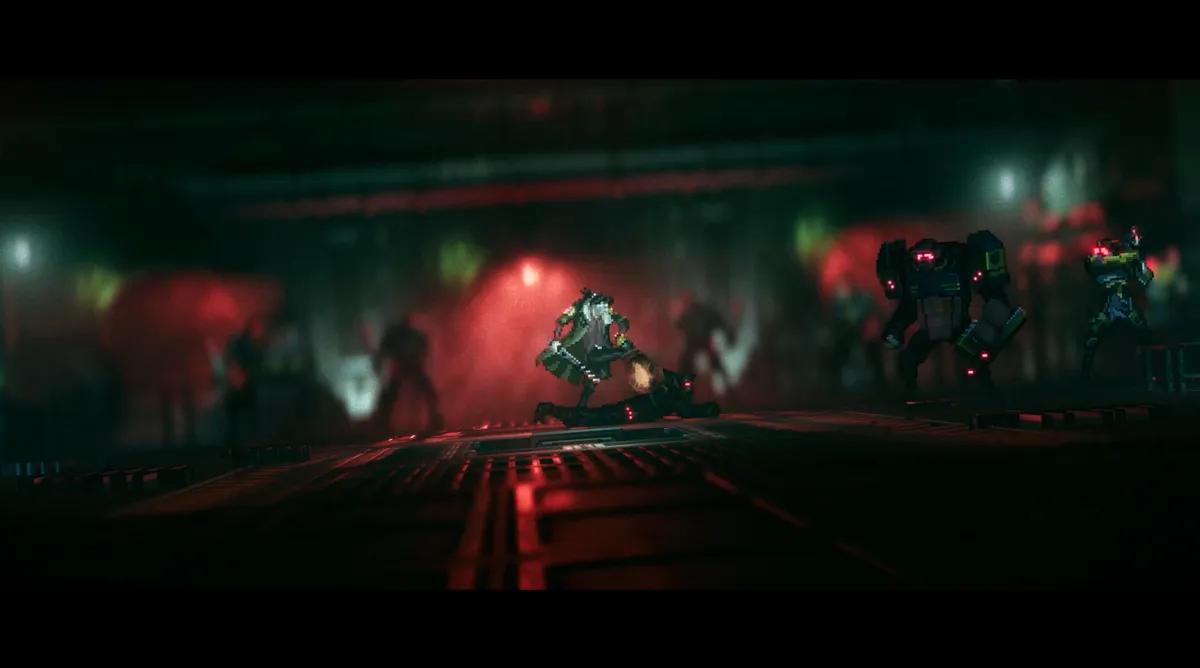
Replaced Hands-On: A Stylish But Simplistic Start To A Long-Awaited Journey
 Games
Games Review
 Steam
SteamSad Cat Studios’ debut game, the cyberpunk action-platformer Replaced, has had a long journey since its 2018 reveal and initial 2022 target. Development was marked by significant challenges, including the Russo-Ukrainian war, which prompted the studio to move from Belarus to a remote-first structure. The team also re-envisioned the game's art style twice before settling on the distinctive 2.5D pixel art that captured attention during its 2021 E3 reveal. With a release date now set for March 12, a recent two-hour hands-on demo provided a glimpse into the final product. I see the potential in its unique visual presentation, but the initial gameplay loop feels repetitive at times.
The game unfolds in an alternative 1980s where a nuclear explosion on U.S. soil led to a partnership between the government and the powerful Phoenix Corporation to rebuild society. The story begins in Phoenix City, the center of the corporation's influence. One of the company's leaders, Warren, has been excessively interfacing his brain with his AI assistant, Reach. An accident results in Reach becoming trapped inside Warren’s body. The naive AI initially believes the police will provide assistance, but they attempt to execute him instead, forcing Reach to escape the corporate headquarters. According to Polygon, this initial setup provides a strong hook into the game's cyberpunk world, establishing the core conflict between the individual and an oppressive entity. The escape sequence introduces the player to the basic movement and immediate threat posed by authorities within Phoenix City.
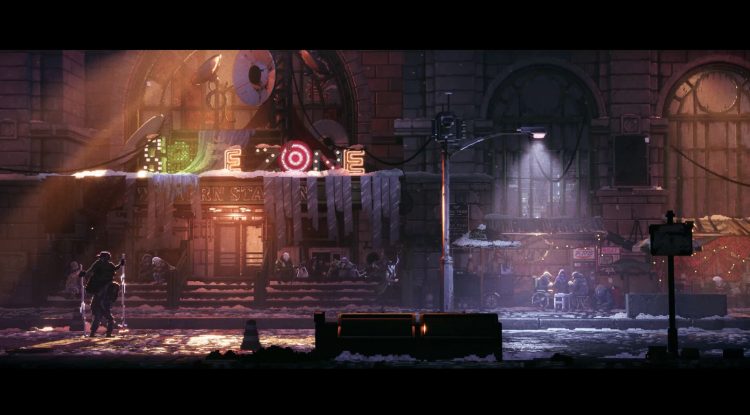
The experience shifts dramatically once Reach escapes the city. The initial cyberpunk themes give way as he flees into the surrounding woods, engaging in platforming challenges to evade his pursuers. His escape leads him to a grim discovery: a pile of bodies, victims of an organ harvesting operation conducted by Phoenix Corp. He is then rescued by Tempest, a more conventional protagonist who plays guitar, drives a distinctive car, and wields a katana. Tempest is a rebellious figure within his own community of outcasts.
The narrative then follows Reach as he finds himself among the discarded population living outside Phoenix City's walls. Instead of a dense urban environment filled with hackers and surveillance, the early hours are set in a post-apocalyptic landscape. Here, the primary adversaries are a gang known as The Ticks, whose aesthetic feels heavily inspired by Mad Max. The developers did offer a look at gameplay set within Phoenix City, where Reach must manipulate traffic lights to blend into crowds and evade drones, which felt more aligned with the initial cyberpunk promise. Throughout the demo, a synth-heavy score consistently maintained the intended atmosphere.
The refugee community that Tempest helps manage contains scattered lore that explains the state of the world, but meaningful interactions in the early game are limited. The characters feel underdeveloped; Reach is portrayed as naive but is gradually learning about the world's dark realities. Tempest’s allies are depicted as fundamentally good people, their personalities defined by their exhaustion from living on the fringes. Two side quests in this area offer extra health, but they are simple diversions: one a basic fetch quest, the other a minigame challenge. I found myself more inclined to return to fighting The Ticks than to pursue these objectives at length. The world feels detailed, but lacks interactive depth in these early stages.
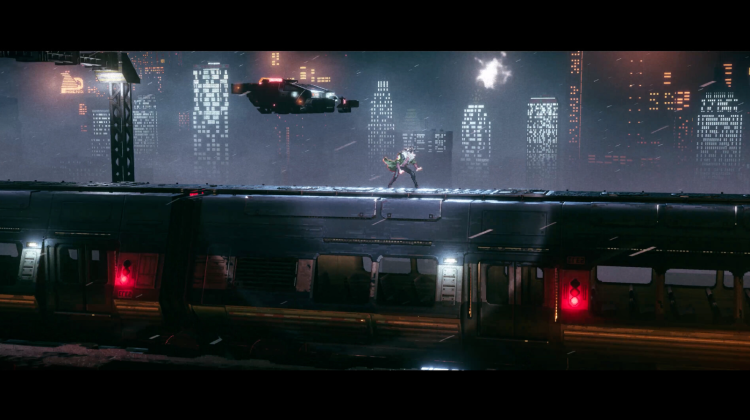
Developer and Sad Cat co-founder Igor Gritsay pointed to the Uncharted and Arkham series as key inspirations for the game's design. This influence is apparent in the platforming sections, where Reach navigates precarious environments, grabbing marked handholds and using a pickax to latch onto specific wall surfaces. While the pickax controls felt somewhat sluggish, successfully traversing a complex structure while avoiding patrols proved satisfying. The game’s visual design is most effective when it transitions from a standard side-scroller to 2.5D, allowing Reach to move through corridors that highlight the contrast between the highly detailed backgrounds and his simple pixel art representation.
"I think pixel art is a great art style because it allows people to imagine things that are not there. They are upscaling it in their minds. At the same time, with the backgrounds, we can be however sophisticated as we want with it because those are supporting the main cast."
— Igor Gritsay
The combat system is straightforward. Reach uses a stun baton to attack, building a charge that can be unleashed for a powerful strike. Enemies signal their intentions clearly: a yellow flash indicates a counterable move, while a red flash warns of a powerful hit that must be dodged. More formidable opponents can execute two consecutive red-flash moves, demanding quick reactions. This system was meant to be tested against the leader of The Ticks, but a significant lighting bug, which affected roughly half the players at the event, prevented reaching the demo's final boss.
The development team is aware of these technical issues and is working on fixes ahead of the launch. The cyberpunk genre feels particularly relevant today, which makes the apparent underutilization of its core themes in the early hours of Replaced disappointing. While the pixel art is stylish and the soundtrack is effective, the story and gameplay presented in the demo felt overly simplistic. It remains to be seen if the experience deepens significantly once players get to explore Phoenix City more thoroughly later in the game.


 Successfully copied... Thank you for sharing our content!:

Comments