




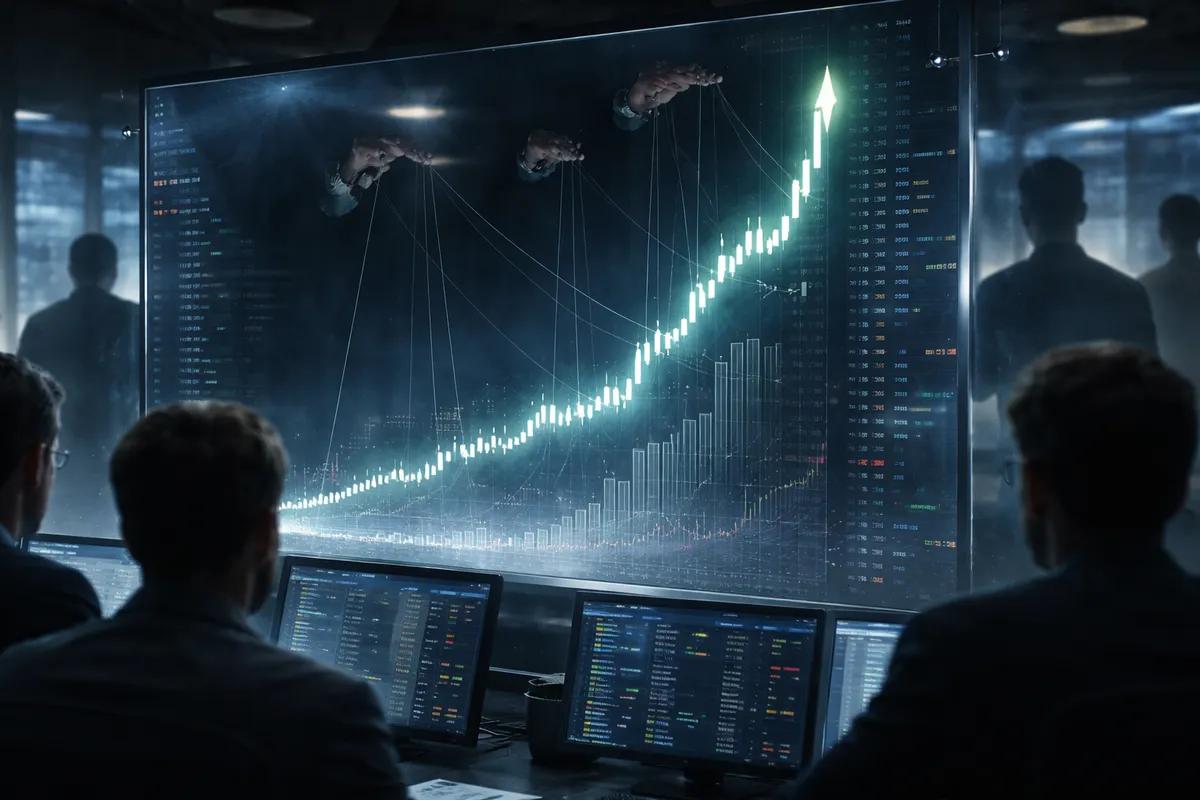
Why Some Tokens Skyrocket Due to Manipulations?
 DeFi
DeFiIn the world of cryptocurrencies, new tokens explode upward by hundreds or even thousands of percent in just hours or days. RAVE, LAB, FF, STO — these are just a few vivid examples from the past few months of 2026. Their prices surge without any obvious fundamental news, then crash just as fast. Most traders call this a classic “pump and dump” scheme. Why does it happen? And why do regulators almost never step in?
How Manipulation Works?
Most of these tokens have a low circulating supply (often only 20–30% of the total) and very low liquidity on exchanges. This makes them perfect targets for manipulation:
- Insiders (whales, developers, or connected wallets) accumulate tokens at low prices or hold a large portion.
- They withdraw tokens from centralized exchanges (like Binance or Bitget) or move them to DEXes, creating an artificial shortage (supply shock).
- FOMO (fear of missing out) kicks in, the price starts rising because there are almost no sell orders.
- Futures and leverage are added: short sellers get liquidated, pushing the price even higher.
- At the peak, insiders dump large volumes, and the price collapses by 70–95%.
This scheme works precisely because the market is decentralized and anonymous. There is no central authority tracking every transaction like on a stock exchange.
Real Examples from April 2026
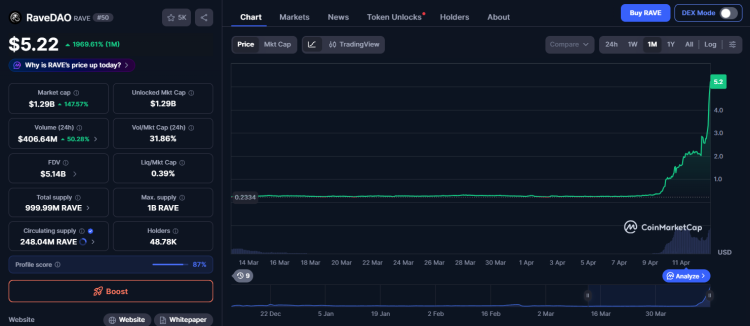
$RAVE (RaveDAO)
The token surged 250–500% in 24–48 hours: from $0.36 to $1.31–2.35. Trading volume jumped 1,300%, nearly matching the market cap. Just 10–48 hours before the pump, wallets linked to RaveDAO developers moved 18.5–18.58 million tokens ($8 million) to Bitget. Circulating supply was only ~24%. Analysts immediately flagged it as a coordinated pump: insider deposits + low float + futures-driven short squeeze. After the peak, the price corrected sharply.
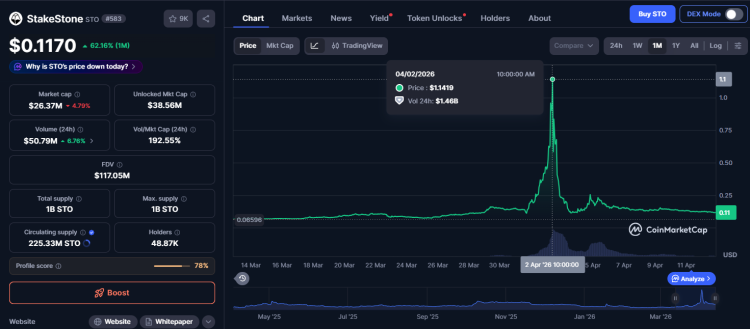
$STO (StakeStone)
A textbook “supply squeeze.” One wallet withdrew 11–12% of the circulating supply (25.5 million STO) from Binance. The price skyrocketed 1,500–2,500% in a few days. Then the same (or connected) wallets began selling, the price dropped 92%. Trading volume reached 870% of market cap. Developers and whales were accused of direct manipulation.
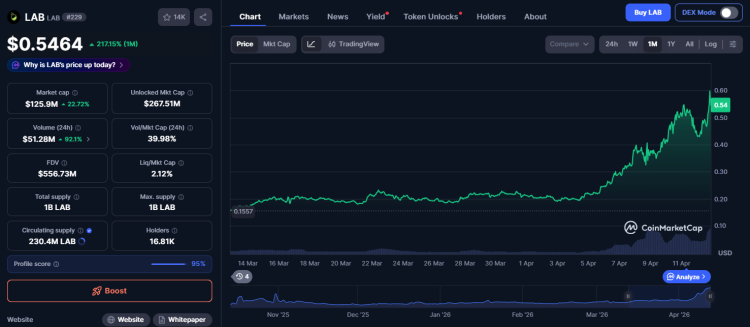
$LAB and $FF
These tokens showed the same pump-and-dump patterns: sudden spikes with no fundamental news, extremely high volume-to-market-cap ratios (often over 50–80%), and rapid corrections. $LAB is frequently mentioned in “pump or dump” analyses, while $FF (Falcon Finance) is a typical example of a DeFi token with high volatility due to whale activity and low float in early stages. Such moves are common for memecoins and low-cap projects on Solana and other fast blockchains.
Similar stories happen every week on Pump.fun, Raydium, and other DEXes: 93–98% of tokens show clear signs of pump-and-dump or rug pulls.
Why Is This Almost Never Regulated?
- Crypto is the Wild West. Most memecoins and DeFi tokens are not considered securities in many jurisdictions (USA, EU). The SEC and CFTC are trying to regulate, but the process is slow and mostly targets big projects.
- Anonymity. Wallets are not linked to real people. Even if manipulation is detected, it’s extremely hard to prove a crime and hold anyone accountable.
- Decentralization. Tokens are launched on Solana for pennies with no KYC. Platforms like Pump.fun bear no responsibility for what’s launched.
- Global market. One manipulation can involve actors from Asia, Europe, and the US at the same time. There is no single regulator.
- Historical precedent. On traditional markets, pump-and-dump is illegal (USA - SEC Rule 10b-5), but in crypto many schemes operate in a legal “gray zone.” Regulators simply cannot keep up with the speed of Solana.
Result: investors are left to fend for themselves. Platforms sometimes add warnings, but that’s just cosmetics.
How Users Can Protect Themselves from Sharp Drops?
You can’t eliminate volatility completely, but you can drastically reduce risks:
DYOR on steroids. Always check:
- Token distribution (tokenomics, top holders).
- Wallet history of developers (Arkham, Solscan, Birdeye).
- Large transfers right before a pump.
- Volume/ market cap ratio (over 50–100% is a huge red flag).
- Avoid FOMO. If a token rose 300% in a day with no news, it’s not a “mission,” it’s probably a pump.
Risk management:
- Risk only 1–2% of your deposit on any single token.
- Use stop-losses (on DEXes this means limit orders or trailing stops).
- Take profits in stages (e.g., sell 50% at +100%, trail the rest).
Tools:
- Dexscreener/ Birdeye/ Photon, for real-time monitoring.
- Rug-check sites (tokensniffer, honeypot.is).
- Track on-chain data (large withdrawals before a pump = warning sign).
- Psychology. Treat memecoins like a lottery: “fun, but not with your last money.” Better to have 10 small positions than one big one.
- Long-term approach. Choose projects with real utility, audits, locked liquidity, and a transparent team. Memecoins are a casino, not an investment.
Conclusion
The sharp rises of RAVE, STO, LAB, FF, and hundreds of similar tokens are not market magic, they are a well-practiced scheme that works because of low liquidity and almost zero regulation. As long as crypto remains decentralized and anonymous, these manipulations will stay the norm. The only real protection is your own knowledge and discipline.


 Successfully copied... Thank you for sharing our content!:



5% deposit bonus up to 100 gems

a free Gift Case





EGAMERSW - get 11% Deposit Bonus + Bonus Wheel free spin


EXTRA 10% DEPOSIT BONUS + free 2 spins

3 Free Cases + 100% up to 100 Coins on First Deposit


5 Free Cases, Daily FREE & Welcome Bonuses up to 35%

3 free cases and a 5% bonus added to all cash deposits.

+5% to deposit




Comments