




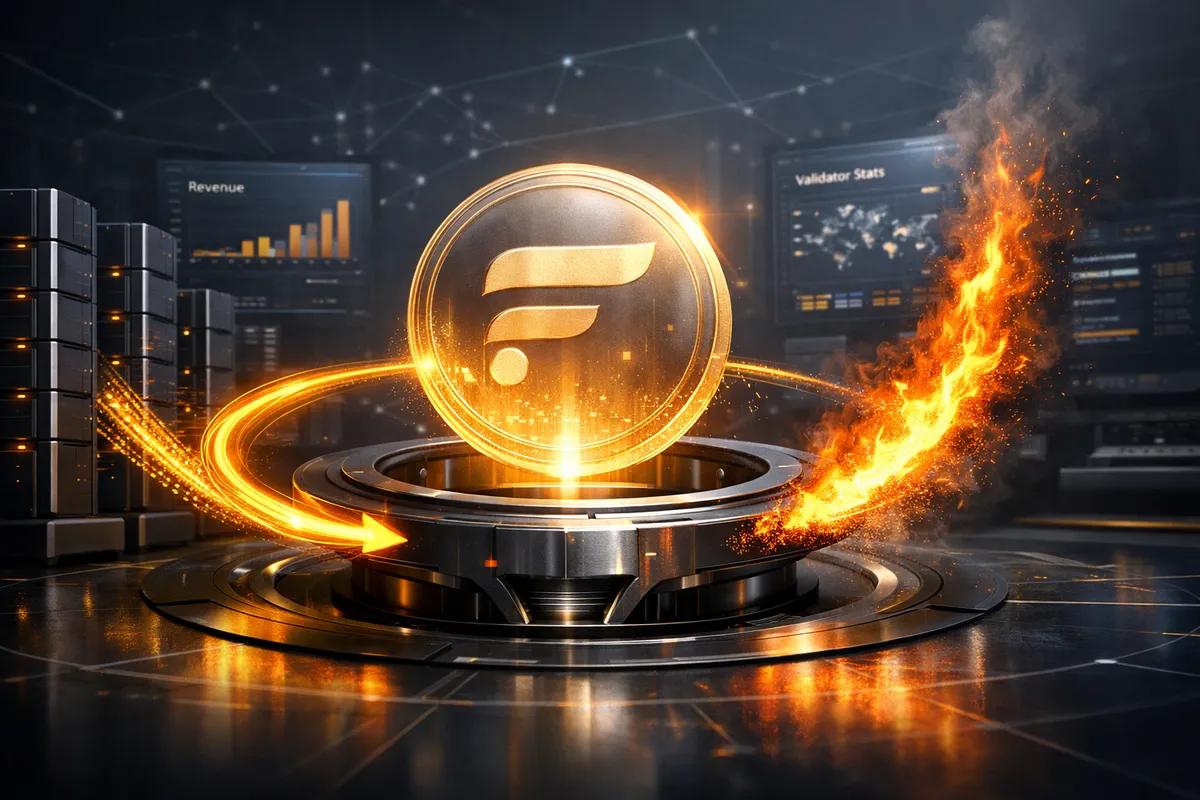
Flare (FLR) Launches Revolutionary MEV Capture Mechanism: Validator Revenues Turned into Token Buyback and Burn
 DeFi
DeFiFlare Network has released an ambitious proposal — FIP.16 — that radically reshapes FLR tokenomics. The network is introducing protocol-level MEV capture (Maximal Extractable Value). Previously, this value flowed to validators or external searchers. Now it will be redirected into a dedicated protocol revenue pool.
According to the proposal, MEV generated from liquidations, arbitrage, JIT liquidity, and other DeFi operations will no longer “leak” out of the network. Instead, the protocol itself will act as the block builder, capture the revenue, and route it to the new Flare Income Reinvestment Entity (FIRE) — a decentralized “treasury” structure for the entire network.
How the New Mechanism Will Work
- Protocol-Level MEV Capture
A three-stage transition moves block building from individual validators to a fully protocol-owned builder.
- Stage 1: Appointed builder (FEL)
- Stage 2: Flare Confidential Compute for full transparency and auditability
- Stage 3: Merger of builder and proposer rolesValidators shift to verifiers while keeping their staking power. Only “network-positive MEV” (liquidations, atomic arbitrage, etc.) is permitted. All profits go directly to FIRE.
- FIRE - The Special Revenue Pool
FIRE will receive not only MEV but also fees from:
- FAssets and Flare Smart Accounts
- Flare Data Connector (attestations)
- Flare Confidential ComputeIts primary mandate is maximum FLR supply reduction through open-market buybacks followed by permanent burning. A portion of funds may also support ecosystem rewards, dApp liquidity, and Foundation operations, but burn remains the top priority.
- Additional Deflationary Measures
- FLR inflation drops immediately from 5% to 3% (hard cap of 3 billion FLR per year).
- Base gas fee increases 20× (from 60 gwei to 1,200 gwei), raising annual burns from 7.5 million FLR to **300 million FLR** at current volumes.
- All transaction fees continue to be burned automatically, as before.
Why This Matters for FLR
Flare’s own statement is clear:“Network activity should not just happen on Flare — it must compound back into FLR.”
The network already has over $160 million TVL, more than 150 million FXRP deployed in DeFi, and hundreds of thousands of active addresses. The new mechanism converts this growth into direct downward pressure on FLR supply, making the token more deflationary and tightly linked to real utility.
The Flare team emphasizes:
“This proposal creates a stronger economic link between the growth of activity on Flare Network and the FLR token. The goal is simple, to turn network activity into an economic flywheel that compounds back into FLR.”
Voting Timeline
- Discussion period: April 9–16, 2026
- Voting window: April 17–24, 2026
- If approved, changes go live the following month.
This is one of the most powerful governance proposals in Flare’s history. It positions #FLR among the first Layer-1 networks where MEV benefits every holder, not just validators or MEV bots. The community is already buzzing, stay tuned for updates!


 Successfully copied... Thank you for sharing our content!:



5% deposit bonus up to 100 gems

a free Gift Case




EGAMERSW - get 11% Deposit Bonus + Bonus Wheel free spin


EXTRA 10% DEPOSIT BONUS + free 2 spins

3 Free Cases + 100% up to 100 Coins on First Deposit


5 Free Cases, Daily FREE & Welcome Bonuses up to 35%

3 free cases and a 5% bonus added to all cash deposits.

+5% to deposit




Comments