




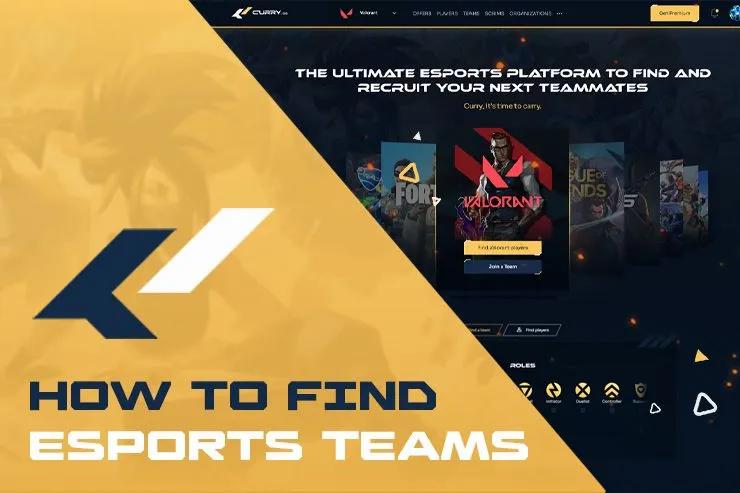
How Esports Players Actually Find Teams Today
The Global Esports and Competitive Gaming Industry has experienced a tremendous increase in growth over the last Ten years, with billions of dollars generated annually, millions of spectators worldwide, and stadiums becoming utilized as venues for professional sporting events. However, the method of player networking, scouting, and recruiting remains somewhat broken and uncoordinated. For most developing players, it is still a complex journey from being an amateur to a professional player. Much of the talent identification currently occurs via a variety of different methods including the use of scattered Discord servers and Reddit threads, niche forums, or just through lucky coincidences. As a result, both players and teams struggle to find each other in an effective manner. A new solution is developing that could potentially resolve this issue. Platforms such as curry.gg, are attempting to bring together esports networking and recruitment into one centralized place so that players can more efficiently display their skills and increase their visibility in the professional Esports market.
The Flawed State of Traditional Esports Recruitment
In order to understand how much value a dedicated network can provide you need to look back at what the traditional bottlenecks within competitive gaming are. When we look at traditional sports you will see that they have an established collegiate system that is tied into minor leagues and scouting networks. In esports we have no established collegiate model, no defined minor leagues, and very few scouting networks as all talent exists behind an anonymous username globally.
Whether you are an amateur team looking to play at the same level of S-Tier tournament powerhouses such as NaVi, MOUZ or Team Vitality in Counter-Strike 2, or a new organization looking for your tactical genius/scout. Building a roster is a very large first step forward. Previous methods of recruitment involved managers spending thousands of hours verifying third party statistics and evaluating fragmented records of player performances from a number of different sites, completing uncoordinated trials that took a lot of time to coordinate with no centralized location for results. The previous methods were highly ineffective and resulted in many talented players who worked hard to be good players falling between the cracks due to simply not knowing enough people.
Building a Comprehensive Digital Identity
Curry.gg solves this problem by letting players craft a complete digital resume that caters to their career as a gamer. While traditional job seekers have a conventional employment CV, players showcase verified proof of their overall competitive game play profile by way of a statistical breakdown of performance (current and historical) and rank of their performance over time, which are represented through their current in-game ranking, highest historical rank, various player roles they occupy, and any other objective statistical evidence of success.
The breakdown of player skills and performance is important, now more than ever, due to the nature of gaming. In gaming with many different and unique characters/maps, generic references to players aren't relevant as teams are looking for very specific experiences. For example, a team looking for a player won't just say, "I'm looking for a really good gun shooter." They may need someone whose primary role is the team leader or is responsible for initiating the attack. By presenting their entire history of gameplay in one centralized location, opportunity seekers have a high likelihood of being discovered by coaches/scouts/teammates that are seeking exactly what they can offer.
Streamlined Scouting for Organizations and Captains
Amateur teams, collegiate programs, and established esports organizations face an ongoing struggle identifying reliable talent, including not knowing where to turn when they need players for their rosters due to high levels of roster change and pressure from regional leagues. The team finder feature of the platform helps alleviate this consistent bottleneck which plagues the esports industry, giving the ability to identify players with precision, thanks to its advanced filtering and search capabilities — allowing team captains and managers to use metrics firmly driven by data to narrow down candidates.
Using the team finder, organizations can immediately sort players based on their MMR, primary language(s) used to communicate, availability for practice schedules, and regions that they are located in. Take for example an EMEA or Americas team that is flying high and competing hard. All of a sudden, one needs a replacement player who is familiar with the complex angles and rotations of a map, like Ascent. They can simply use the filters on the find teammates to play with to find the exact players who are available, verified, and willing to compete — no longer needing to place time-sensitive desperate posts to social media. Removing uncertainty from recruiting allows teams to secure the players they need quickly and effectively while ensuring that those players fit with the team's tactical mindset and culture.
Taking Control of Your Competitive Journey
Both scouts and gamers will find this platform invaluable. Anyone who plays ranked multiplayer games has experienced the frustrations of random matchmaker and how this prevents them from progressing solo through ranked queues, as these create inconsistent communication and result in toxic behaviour by team members, as well as a lack of synergy among players.
Matchmaker frustrations occur in games other than tactical shooters. For example, MMORPG players who complete new high end content from the latest midnite expansion, including mythic dungeons, will quickly discover that they need other players with very specific character builds, as well as flawless synergy with their groups, to complete these potentially difficult tasks.
Instead of continuing to depend on chance when playing competitively online using random groups, players can tap into this network of like-minded gamers to form a group of players for their games. By actively connecting with gamers who share similar goal ranks, favourable communication styles, and committed standards for enhancing positive player experiences, any player can improve their game instantly when each member of a party works toward the same goal. When players are on the same wavelength while playing together, party members can concentrate on winning rather than dealing with party discontent.
The Future of Competitive Networking
With the growing maturity of the gaming industry, so too must the infrastructure surrounding the gaming industry mature. Creating a competitive roster by utilizing different social media networks is becoming a thing of the past. Curry.gg will set the new standard for the community while centralizing player data, streamlining recruitment tools, and cultivating a professional networking environment.
Whether your ultimate goal is to ascend regional leaderboards, compete in weekend amateur tournaments, or secure a professional contract and hit the main stage of an international S-tier event, having these connections in place is half of the battle. Not only is this platform validating the career path of future professionals, but it also greatly improves the day-to-day experience for competitive gaming enthusiasts worldwide, demonstrating that esports future of esports depends on quality, reliable connections.


 Successfully copied... Thank you for sharing our content!:

Comments