



Metro 2039 Twist — From Hero to Tyrant: Hunter’s Dark Return
The Metro series has always thrived on atmosphere—quiet tension, moral ambiguity, and the slow realization that the real danger often lies beneath the surface. That’s why the reveal of Metro 2039 feels like a natural yet dramatic evolution of the franchise.
A Familiar World, A Darker Direction
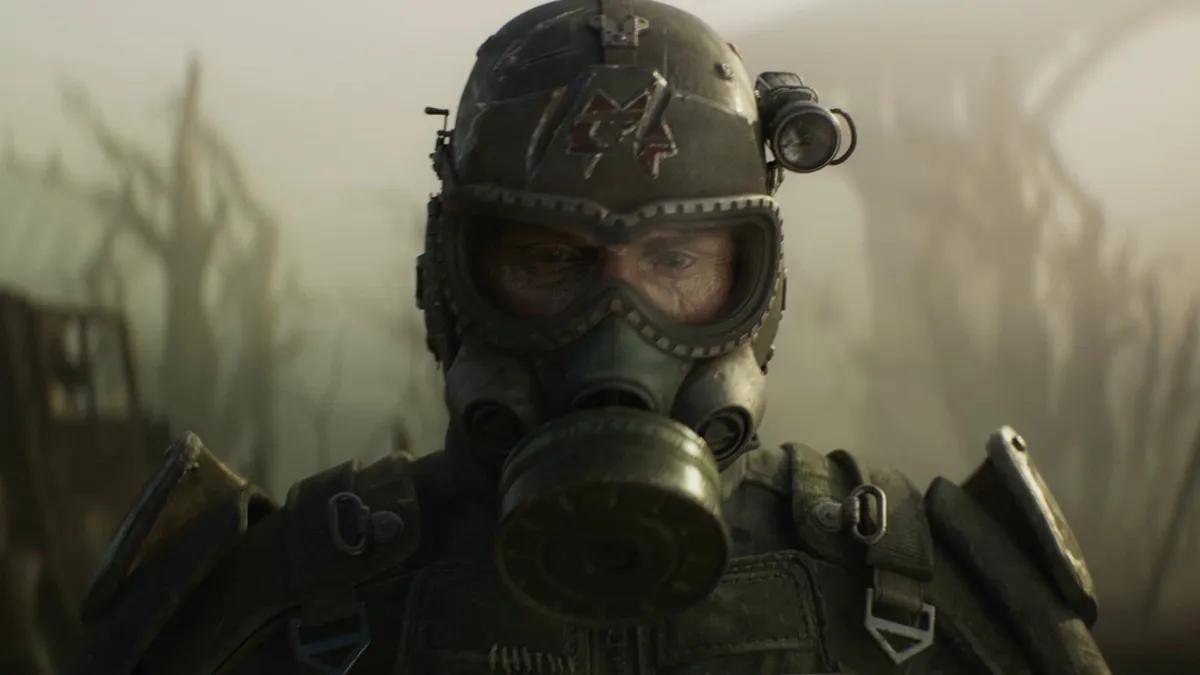
Returning to the Moscow Metro was expected, and introducing a new protagonist fits the series’ progression. However, the biggest twist comes from the emergence of a unified regime led by a familiar figure—Hunter.
Once known as a Spartan Ranger and symbol of order, Hunter now stands as the Fuhrer of the Novoreich, ruling over a centralized system built on fear, propaganda, and absolute control. His transformation suggests that the traits once seen as strength may have always carried a darker potential.

Hunter’s Legacy Reimagined
Hunter first appeared in Metro 2033, where his mission set the entire story in motion. He entrusted Artyom with a critical task before disappearing into the tunnels, leaving behind a legacy that grew into legend.
He was decisive, ruthless, and unwavering—guided by a simple belief: eliminate any threat to humanity. While this mindset made him effective, it also hinted at a dangerous lack of nuance.
His story, however, was never fully resolved. Over time, his absence elevated him into a myth—one shaped by fear, memory, and interpretation.
From Hero to Antagonist
In Metro 2039, Hunter returns—not as a protector, but as the central antagonist. The Metro, once fragmented into independent factions, is now unified under the Novoreich, a regime that promises safety but delivers control.
Hunter’s philosophy hasn’t changed—it has simply expanded. What was once a personal survival doctrine is now applied on a systemic level, where:
- Threats are broadly defined
- Dissent is eliminated
- Control replaces uncertainty
This makes him a compelling villain—not because he changed, but because he remained the same in a world that amplified his beliefs.

A Conflict of Ideologies
At its core, Metro 2039 appears to shift the series’ focus. Instead of asking how people survive in a broken world, it explores what kind of world is created by someone willing to do anything to survive.
Hunter likely doesn’t see himself as a villain. From his perspective, chaos has been replaced with order, and threats are eliminated before they grow. The conflict, therefore, becomes less about good versus evil and more about two opposing philosophies:
- Survival through adaptation and uncertainty
- Survival through control and elimination

Final Perspective
By bringing Hunter back as the main antagonist, Metro 2039 reframes one of the series’ most iconic figures. The character who once set the story in motion now stands as its greatest obstacle.
It’s a bold narrative shift—one that suggests the series has been building toward this moment all along.


 Successfully copied... Thank you for sharing our content!:


5% deposit bonus up to 100 gems

a free Gift Case




EGAMERSW - get 11% Deposit Bonus + Bonus Wheel free spin


EXTRA 10% DEPOSIT BONUS + free 2 spins

3 Free Cases + 100% up to 100 Coins on First Deposit


5 Free Cases, Daily FREE & Welcome Bonuses up to 35%

3 free cases and a 5% bonus added to all cash deposits.

+5% to deposit




Comments