




Pokémon Champions Review
 Review
 Nintendo
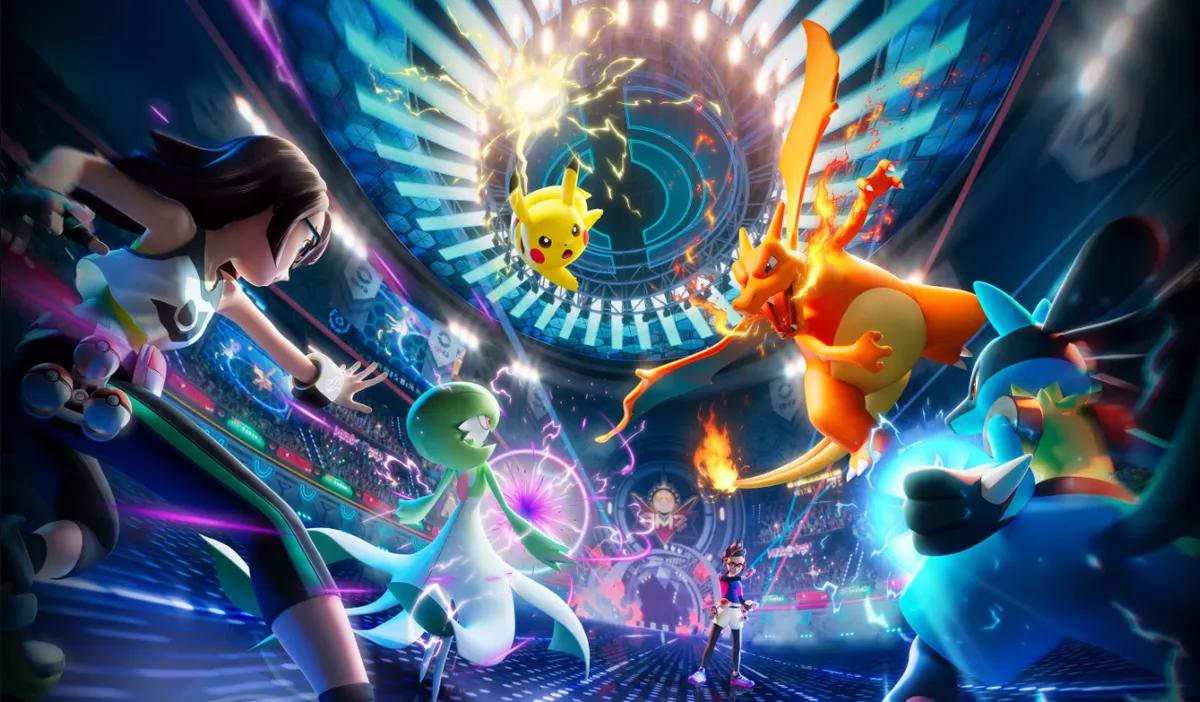
Pokémon Champions is a free-to-start battle simulator for Nintendo Switch and Switch 2, developed by The Pokémon Company with mobile ports in development. It launched in April 2026 with 187 Pokémon, ranked and casual online modes, and no traditional single player adventure. The game strips away catching, exploring, and story progression to focus entirely on competitive player-versus-player battles in 3v3 singles and 4v4 doubles formats. Twenty years after Pokémon Battle Revolution on the Wii, this is the first game to revive the Pokémon Stadium formula, and it arrives with both ambition and visible gaps.
Training and Team Building Cut Hours of Busywork

The strongest feature in Pokémon Champions is how fast it lets players build a competitive team. Changing a Pokémon's Nature, Ability, and move pool takes a single button press. Stat allocation uses sliders that let players distribute points visually instead of grinding through hundreds of wild encounters or breeding cycles. Held items and Mega Stones can be purchased from the in-game Frontier Shop using Victory Points, the game's primary currency. A first competitive team can be assembled in minutes. In Pokémon Scarlet and Violet, the same process took hours.
The game also makes mechanical information more transparent than any mainline entry has. The move Iron Head, for example, lists a specific 20% flinch chance, the number of targets it can hit, and how it connects. In Scarlet and Violet, the same move only says it "may also make the target flinch." For years, players relied on third-party databases like Bulbapedia and Smogon to find exact numbers. Champions puts this data directly on the training screen, which makes team building more deliberate and less dependent on external research.
Pokémon recruitment works through a daily rotating roster. Once per day, players can meet a random lineup of Pokémon for free and choose one. Additional recruitment costs Quick Coupons or VP. Recruited Pokémon can be kept on a seven day trial at no cost, or permanently added for VP. The randomized nature of recruitment means players cannot target specific Pokémon without spending currency or waiting, which slows down anyone trying to assemble a particular team composition.
Battles Are Snappy and Competitive Ranked Play Works

Battles follow the same turn-based system the series has used since Red and Blue. Players select moves, factor in type advantages, manage held items, and account for abilities. In standard 1v1 matches, each player picks three Pokémon from a pool of six, and neither side sees the opponent's selection until the fight starts. This blind pick phase adds a layer of prediction before a single move is made.

Compared to Scarlet and Violet, bouts run faster. Animations are quicker, battle text is streamlined, and connection times between turns are shorter. Most doubles matches finish in under 20 minutes. Stall strategies, which historically dragged games out, have been weakened by balance changes that make them harder to sustain.

Ranked matchmaking is the game's competitive backbone, and it performs well. Opponents scale in skill as players climb ranks, and matches at the mid-to-upper tiers tend to come down to a handful of decisive turns where reads and pivots determine the outcome. Casual matchmaking is less consistent. Skill levels vary wildly from match to match, making it a poor environment for testing specific strategies or evaluating whether a team composition holds up under pressure.
Tutorials Teach the Basics but Skip the Depth

The onboarding process takes roughly 30 minutes. A cast of NPCs walks new players through battling, obtaining Pokémon, and assembling a team. Nine battle tutorials follow, and most of them cover surface-level concepts without going far enough. The weather tutorial, for example, explains that rain boosts Water-type moves and triggers certain abilities, but it never mentions the other three weather states or rain's additional mechanical effects. The Move Priority tutorial glosses over interactions between moves with different priority levels. An in-game glossary adds some detail, but even that leaves gaps.
There are no NPC battles to practice against. The only way to test a team is in casual online matchmaking, where the inconsistent skill spread makes it hard to isolate whether a loss came from a bad strategy or a bad matchup. A training mode exists for practicing combos and move interactions, but it does not simulate the decision-making pressure of a real match. Players who want to understand competitive battling at more than a surface level will need to consult external resources. Communities on Reddit, Discord, and YouTube have already begun filling the gap, but the game itself does not point players toward the information they need.
187 Pokémon and Missing Features Leave the Roster Thin

The launch roster of 187 Pokémon is a fraction of the full National Pokédex, which now exceeds 1,000. Competitive staples like Amoonguss and Rillaboom are absent, along with popular held items like Rocky Helmet and Life Orb. The restricted pool does force a new meta to develop without defaulting to established dominant strategies, and some unexpected picks have found competitive viability as a result.

The roster has another constraint: except for Pikachu, every available Pokémon is a final-stage evolution. This limits team-building variety and narrows the pool of top-tier options. Incineroar is already the most-used Pokémon in doubles, and Floette Eternal Flower, a Pokémon Legends: Z-A exclusive that requires completing that game's post-game grind, is the strongest special attacker available. At higher ranks, players encounter the same small group of Pokémon repeatedly.
The game launched with only 3v3 singles and 4v4 doubles. Full 6v6 battles, a format central to the mainline games, are not available. Local multiplayer, a feature present in every Pokémon Stadium title, is also missing. Cross-generation battle gimmicks like Tera Types were shown in the debut trailer but did not ship. Only Mega Evolutions are present at launch. The absence of these features gives the game an unfinished quality, and it is unclear how quickly updates will address the gaps.
Pokémon Home Connectivity Creates an Uneven Playing Field

Players who use the Pokémon Home storage app can transfer Pokémon directly into Champions. There is no limit to how many can be moved over, as long as box space allows. The base game offers 30 box slots. The $6.99 Starter Pack raises that to 80, and the $4.99 monthly subscription pushes it to 1,000. Anything stored in Pokémon Home's free basic box can be transferred without a subscription, but anyone with a large Home collection built over years of mainline games has immediate access to meta-relevant Pokémon that free players cannot reliably recruit.
I find this asymmetry to be the game's most damaging structural problem, because it splits the player base into two tiers before a single match begins. Players without Home access must rely on randomized daily recruitment and VP spending, which means building a specific team takes days or weeks of grinding. Players with Home access can import Incineroar, Sneasler, and Floette Eternal Flower on day one and start climbing ranked immediately. The ranked matchmaking does a reasonable job of sorting players by skill over time, but in the early ranks, the difference between a Home-backed roster and a free recruitment roster is stark.
VP acquisition compounds the issue. One ranked win earns roughly 300 VP. Recruiting and fully training a single Pokémon can cost up to 5,000 VP. The game frontloads currency through starter missions and daily rewards, but once that initial supply runs out, the grind tightens. Real money cannot buy VP directly, but the Starter Pack's 30 Teammate Tickets and 50 Training Tickets bypass the cost for specific transactions, giving paying players a measurable advantage in roster flexibility.
Bugs and Technical Gaps Undercut the Launch

Pokémon Champions launched with a list of bugs that players have been cataloging since day one. Text errors caused some moves to display incorrect information. Visual glitches affected battles for some players. A persistent "Communicating..." message appears before most moves, breaking the flow of otherwise snappy battles. Some players reported connectivity drops mid-match, which in ranked play means a loss.

I see a pattern here that echoes Scarlet and Violet's rough launch, and the concern is whether each future content update introduces a new cycle of bugs. A live service game depends on regular patches and additions to keep players engaged. If those updates ship with reliability issues, the competitive integrity that ranked play depends on erodes quickly. Some bugs have already been patched, but enough remain to make the experience feel unpolished for a first-party Pokémon release.
Battle arenas are also limited. The game shipped with a small number of stages, despite decades of iconic locations across the franchise that could serve as backdrops. Trainer customization exists but the cosmetic options at launch are sparse, with better outfits presumably reserved for future updates and the $9.99 Premium Battle Pass.
Verdict

Pokémon Champions delivers the most accessible competitive battling the series has ever offered, but thin content, uneven onboarding, and Home-driven roster imbalance hold it back from its potential. Pokémon Champions is a 7/10 game.
Pros:
- Training and stat customization cut hours of mainline busywork down to minutes.
- Ranked matchmaking scales well and produces competitive, close matches at higher tiers.
- Transparent move data and in-game stat information reduces dependence on external databases.
Cons:
- Tutorials skip critical competitive mechanics, and no NPC battles exist to practice against.
- Pokémon Home connectivity gives veteran players immediate roster advantages over free players.
- Missing features at launch, including 6v6 battles, local multiplayer, and Tera Types, leave the game feeling incomplete.
The foundation for a long-running competitive Pokémon platform is here, built on fast team building, clean ranked play, and a monetization model that avoids pay-to-win at the point of attack. Whether it reaches that potential depends on how quickly The Pokémon Company fills the content gaps and whether future updates ship clean. For now, Champions is a solid starting point with visible seams where the rest of the game should be.


 Successfully copied... Thank you for sharing our content!:

Comments