




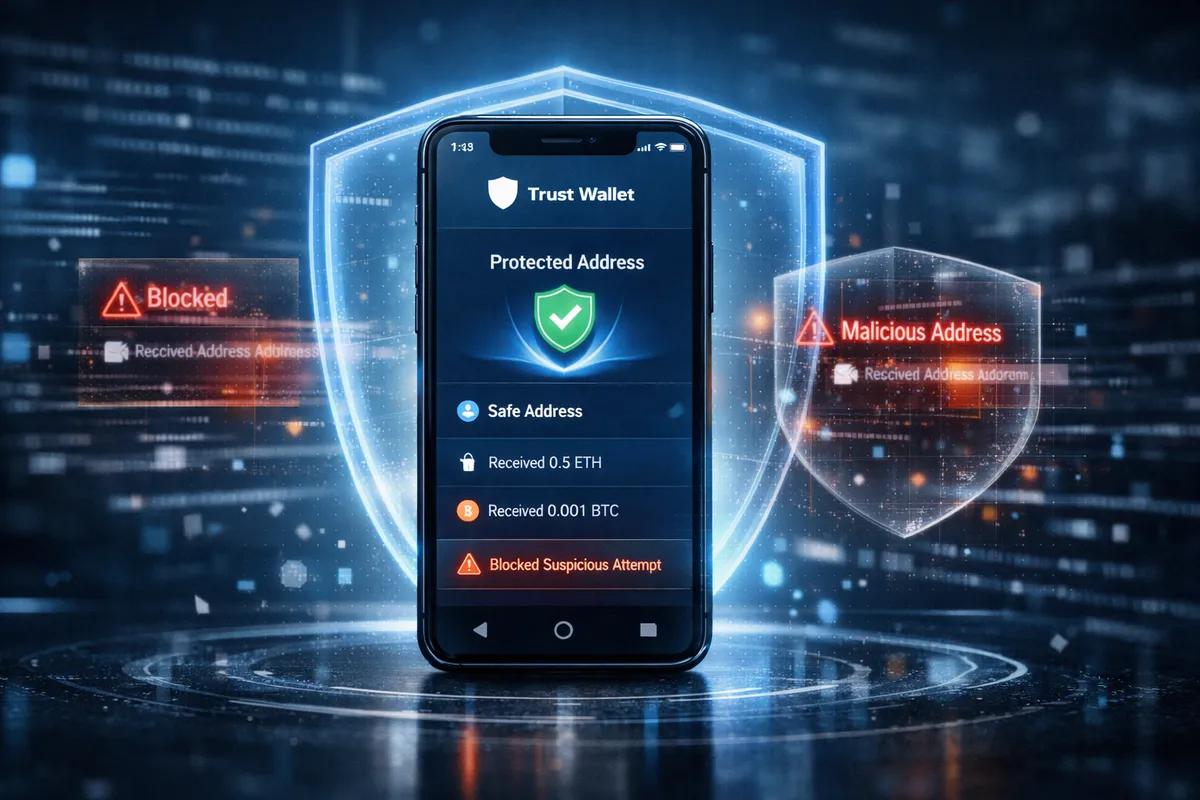
New Feature in Trust Wallet: Protection Against Address Poisoning and Dusting Attacks
Trust Wallet has announced a new feature that protects users from so-called "address poisoning." This update, announced in an official post on X on March 10, 2026, allows the wallet to check recipient addresses in real-time before sending funds, blocking suspicious fake addresses that resemble your own. According to the developers, this makes a popular scammer trick, injecting similar addresses through tiny transactions, ineffective.
"Scammers slip fake copies into your transaction history. You quickly copy-paste, and the funds disappear. This scam is now dead," the announcement states.
The feature is already available on 32 EVM-compatible networks, including Ethereum, BNB Chain, Polygon, Base, Arbitrum, and others. It automatically scans the address for similarity to those in your transaction history and issues a red warning highlighting the differences if a risk is detected. The statistics provided by Trust Wallet are impressive: over 225 million attack attempts across the industry, $500 million in stolen funds, and about 34 thousand attacks per hour. Users are recommended to update the app via the official website trustwallet.com/download to activate the protection. More details about the feature are in the company's blog.
What Are Dusting Attacks and How Are They Related to Address Poisoning?
Dusting attacks, or "dusting attacks," are a tactic where attackers send minuscule amounts of cryptocurrency (so-called "dust") to thousands of wallets. These amounts are so small (for example, a few satoshis in Bitcoin) that they often go unnoticed, as the fee to spend them exceeds their value. The main goal is not theft, but de-anonymization of users. Due to the transparency of the blockchain, attackers track how this "dust" moves further, analyzing transactions and linking wallets to real individuals. This can lead to further attacks, such as phishing or blackmail.
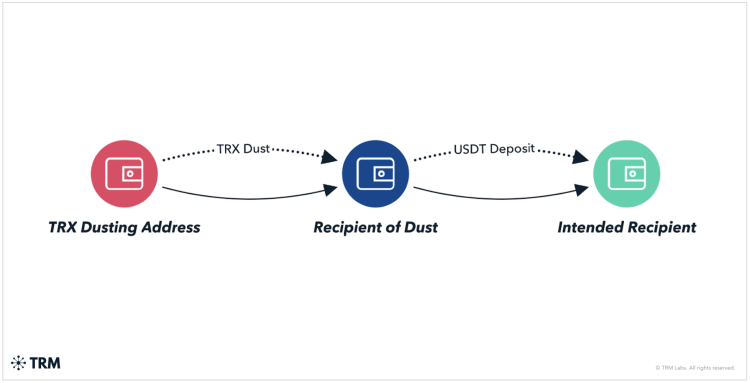
Address poisoning is a variant of a dusting attack, where "dust" is used to inject a fake address into your wallet's history. Scammers generate an address that visually resembles yours (for example, differing by a few characters in a 42-character Ethereum address) and send a tiny transaction. When you copy an address from your history to send funds, there's a risk of selecting the fake one, and the money goes to the attackers. This method of social engineering doesn't require hacking the wallet but relies on human error.
Dusting attacks are automated with scripts: attackers scan the blockchain for active wallets (with recent transactions or interactions with smart contracts) and send "dust" en masse. While the "dust" itself is harmless (you can't hack a wallet just by receiving a transaction), the risk arises if you interact with unknown tokens or visit linked sites, this can lead to phishing or malware.
Recent Examples and Trends
Recently, dusting attacks have featured in high-profile cases. For example, on March 5, 2026, the FBI arrested John Dagita, son of a US Marshals Service contractor, for stealing over $46 million from government wallets. After being exposed by blockchain analyst ZachXBT, Dagita used dusting attacks to taunt the researcher, sending tiny amounts from the stolen funds. This shows how "dust" is used not only for tracking but also for psychological pressure or compromise.
Another case: crypto-influencer sillytuna lost $24 million in aEthUSDC due to address poisoning. Attackers slipped a fake address via "dust," and the victim accidentally sent funds to it. Such incidents highlight the growing threats: according to industry data, dusting attacks are becoming more frequent due to automation and blockchain transparency.
To protect yourself:
- Use wallets with built-in protection, like Trust Wallet.
- Always manually verify addresses, especially the first and last characters.
- Ignore unknown tiny inflows; do not interact with them.
- Use hardware wallets for large amounts.
- Enable two-factor authentication and monitor activity through tools like Etherscan.
The Trust Wallet update is a step forward in combating these threats, making crypto more accessible and secure for 220+ million users. Stay vigilant, in the crypto world, security starts with you!


 Successfully copied... Thank you for sharing our content!:



5% deposit bonus up to 100 gems

a free Gift Case





EGAMERSW - get 11% Deposit Bonus + Bonus Wheel free spin


EXTRA 10% DEPOSIT BONUS + free 2 spins

3 Free Cases + 100% up to 100 Coins on First Deposit


5 Free Cases, Daily FREE & Welcome Bonuses up to 35%

3 free cases and a 5% bonus added to all cash deposits.

+5% to deposit




Comments