




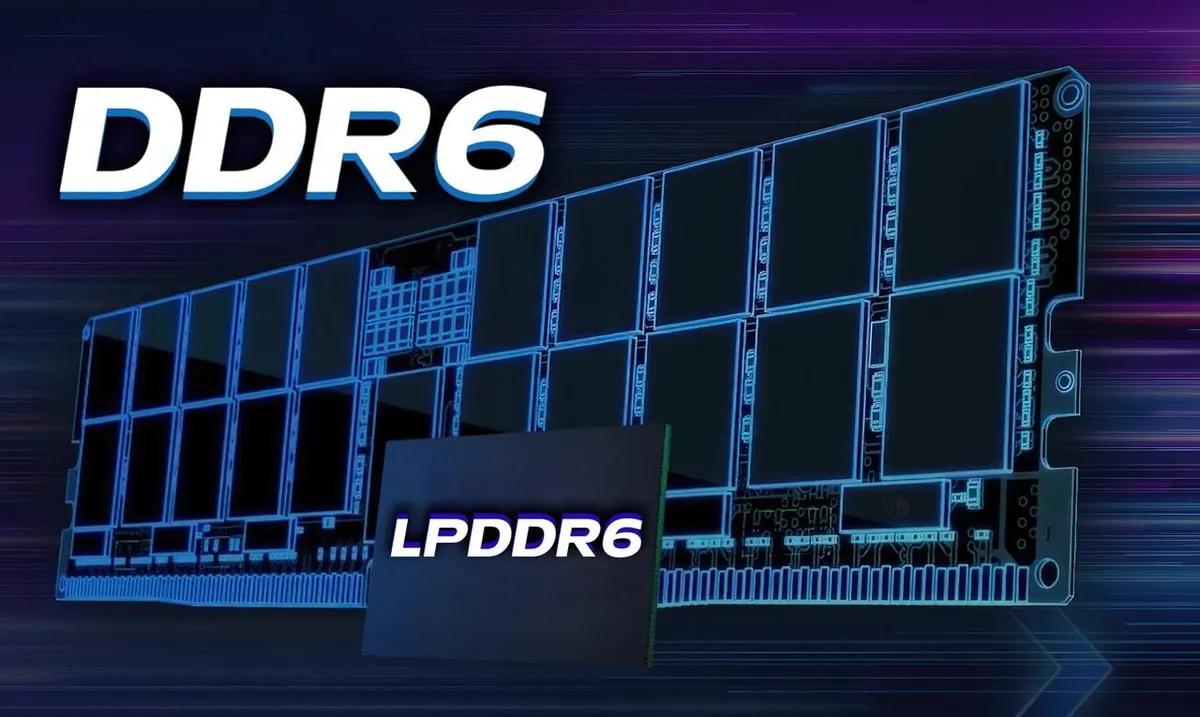
DDR6 Set to Launch in 2028 With Massive Speed Boost Up to 17,600 MT/s Over DDR5
 Announcement
 Majors events
The next generation of memory technology is already taking shape, with DDR6 expected to arrive around 2028, marking a major leap in performance for future PCs, servers, and gaming systems. Early expectations suggest that DDR6 will significantly outperform current DDR5, starting with speeds of around 8,800 MT/s and potentially scaling up to an impressive 17,600 MT/s in later iterations.
This generational jump is not just a simple improvement in numbers but a reflection of how rapidly computing demands are evolving. Modern applications, from AAA games to AI-driven workloads, are increasingly limited by memory bandwidth. DDR6 is being designed to address these limitations by delivering much higher data throughput, reducing bottlenecks, and allowing CPUs and GPUs to work more efficiently with large datasets.
In gaming, this could translate into faster asset streaming, reduced loading times, and smoother performance in highly detailed open-world environments. As game engines become more complex and rely heavily on real-time simulation and physics, memory speed becomes a critical factor. DDR6’s projected bandwidth increase could allow developers to create richer and more dynamic worlds without being constrained by hardware limitations.
Artificial intelligence and high-performance computing are expected to benefit even more. AI models require enormous amounts of fast-access memory to process and train data efficiently. With DDR6 potentially doubling the peak performance of DDR5, systems will be able to handle larger models and more complex computations with improved efficiency and lower latency. This could accelerate advancements in machine learning, scientific simulations, and data analytics.

Compared to DDR5, which already introduced improvements in bandwidth, efficiency, and module density over DDR4, DDR6 represents a more aggressive step forward. While DDR5 typically operates between 4,800 and 6,400 MT/s (with higher overclocked variants reaching beyond that), DDR6 is expected to begin at a significantly higher baseline. This means that even entry-level DDR6 systems could outperform high-end DDR5 configurations from the start of the transition.
However, such advancements come with challenges. Higher memory speeds require more advanced memory controllers, improved motherboard architectures, and refined power delivery systems. Stability at extreme data rates is another engineering hurdle that manufacturers will need to overcome. As with all previous transitions in memory technology, early DDR6 adoption will likely be limited to high-end platforms before gradually becoming mainstream.

Cost will also play an important role. New memory standards are typically expensive at launch, and widespread adoption takes time as production scales up and yields improve. Additionally, DDR6 will require new hardware compatibility, meaning users will need updated CPUs and motherboards designed specifically to support the standard.
Despite these challenges, the direction is clear. As computing workloads continue to grow in complexity across gaming, cloud computing, AI, and professional applications, the need for faster and more efficient memory solutions is becoming unavoidable. DDR6 is expected to be a key part of that evolution, pushing system performance into a new era.
If current projections hold, DDR6 will not just be an incremental upgrade but a foundational shift in how memory performance is defined, setting the stage for the next generation of high-performance computing systems.


 Successfully copied... Thank you for sharing our content!:



5% deposit bonus up to 100 gems

a free Gift Case





EGAMERSW - get 11% Deposit Bonus + Bonus Wheel free spin


EXTRA 10% DEPOSIT BONUS + free 2 spins

3 Free Cases + 100% up to 100 Coins on First Deposit


5 Free Cases, Daily FREE & Welcome Bonuses up to 35%

3 free cases and a 5% bonus added to all cash deposits.

+5% to deposit




Comments