




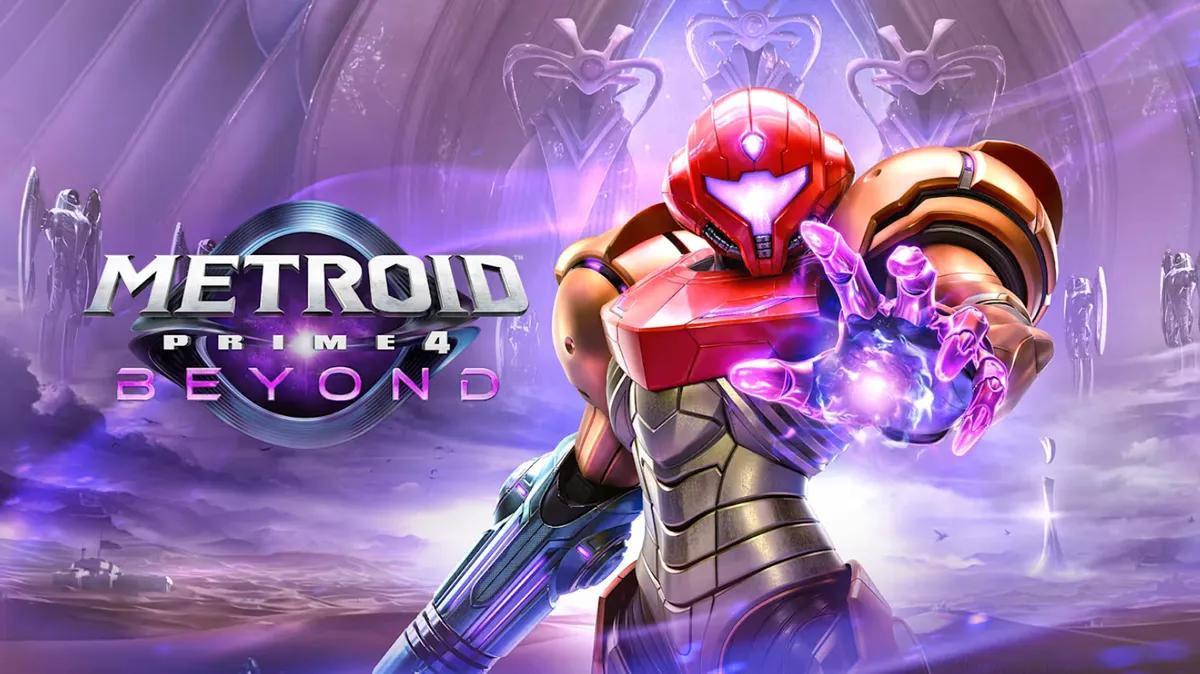
Metroid Prime 4: Beyond Review Examines A Bold But Uneven Return
 Review
 Nintendo
Metroid Prime 4: Beyond Review traces the sharp contrasts inside Nintendo’s latest entry, a game built on confident design choices that collide with outdated structures. The fourth Prime installment pursues new forms of scale and spectacle while trying not to break from the formula that defined the trilogy. The result is a sweeping but inconsistent revival that reaches its highest points inside enclosed, meticulously shaped zones and falters when leaning on an open hub meant to bind them together.
Logan Plant’s review on IGN, which informs this report, outlines how the game’s strongest moments arrive when it trusts the series’ core identity instead of stretching toward ideas that sit awkwardly around its edges.
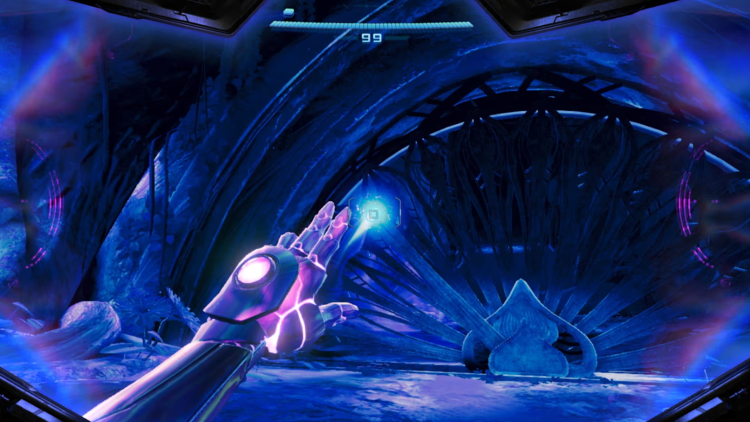
Samus opens her new mission on Viewros after an unexplained teleportation, stepping into a story built around the lost Lamorn civilization. The setup functions as a narrative hinge for a suite of psychic abilities that operate alongside her familiar tools. These powers fuel environmental manipulation, momentum-driven Morph Ball routes, and beam-routing puzzles. They slide neatly into the language of Prime’s exploration, even when individual applications echo older mechanics. They add a sharper sense of reach and control without disrupting the cadence of scanning, navigating, and unlocking terrain. Most puzzles reinforce established rhythms; only a few push toward something structurally inventive.
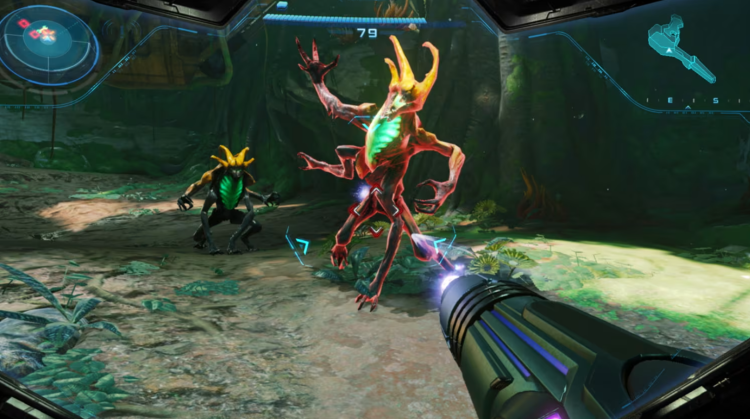
Combat layers these additions onto the same lock-on approach that shaped the original trilogy. Samus moves with greater precision, framed by snappier visor use, a quick dodge, and refined Morph Ball handling. Encounters escalate through elemental beam variants and enemy types that demand targeted strikes or timed shots. The structure still favors sparse battles that punctuate exploration rather than overwhelm it. When the game breaks from this restraint, especially in corridor-like stretches that echo mid-2000s design, repetition sets in. Boss encounters reverse that trend, presenting large, staged fights that blend pattern recognition with movement tests. The early plant guardian, shielded by petals that shift its weak points, shows how these battles use scale without turning unwieldy.
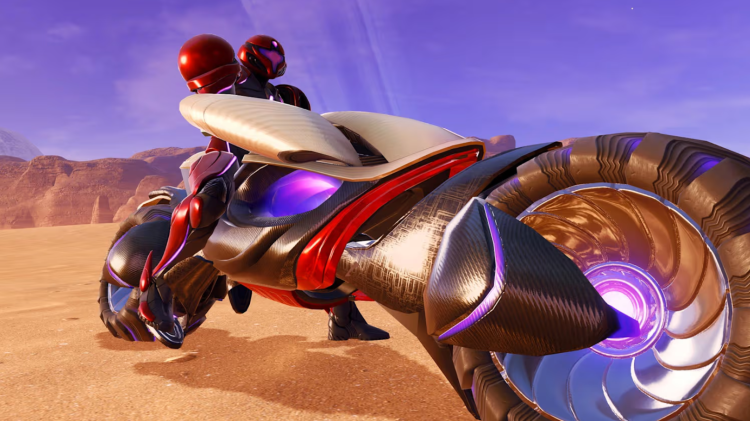
Retro Studios built several control setups for the Switch 2 era, including dual-stick, motion refinement, and a mouse mode that transforms the Joy-Con 2 into a pointer when placed flat. The latter feels more like an experiment than a practical option, but the traditional layouts remain clean and responsive. Movement on Samus’ new motorcycle follows that standard as well, though its function inside the game exposes a broader design problem.
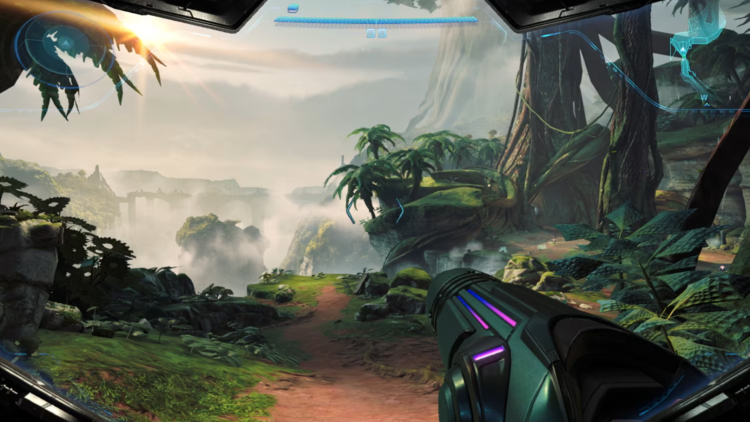
Sol Valley, the desert hub connecting major locations, holds the game’s most visible stumble. The motorbike’s presence suggests a route system designed for speed and discovery, but the environment offers little to support it. Enemy encounters repeat, visual variety is limited, and the terrain rarely pulls the player toward meaningful diversions. Small shrine-like structures sit across the sand with short puzzles inside, yet the surrounding landscape never gives their placement narrative or environmental weight. The area delivers transit rather than tension or discovery, and the game returns to it often enough that the contrast with its crafted regions becomes hard to ignore.
That issue sharpens when a core objective requires gathering green energy across the same desert. The premise—preserving Lamorn history—carries narrative value, but the task reduces to driving between crystals scattered with little structural intent. The mission unfolds early, allowing steady progress between main zones, but its function still feels like padding. The pace slackens without producing atmosphere or challenge.
Beyond the desert, Metroid Prime 4 recovers its sense of purpose. Each major zone adopts its own detail-rich identity, supported by atmospheric lighting, crisp environmental framing, and music that blends choral elements with electronic textures. Exploration leans on self-contained maps shaped like large dungeons, each with a signature upgrade, boss encounter, and optional return routes. The structure echoes Prime 2 and Prime 3 in its segmentation but leans closer to Zelda-style progression. This arrangement reduces extensive backtracking and creates a steady march through distinct biomes marked by their own histories and mechanical hooks.

The game’s presentation stands out on Switch 2 hardware. Lighting cues, dense architecture, and polished effects support a strong sense of place while retaining consistent 4K performance at 60 fps, with an optional 120 fps mode that trades resolution for fluidity. Switch 1 offers a pared-down version that holds 60 fps despite lower clarity and occasional pop-in, maintaining playability for older hardware without major compromise.
Volt Forge demonstrates how tightly Prime 4 can bind story, layout, and atmosphere. The factory’s gothic-industrial framing, driven by a rock score, expresses its purpose through both scale and machinery. Its scanning entries reinforce how its systems were used, turning each room into a function rather than a backdrop. That sense of grounded worldbuilding extends to several other locations, each shaped to reflect the cultures or histories tied to them.
The game’s linearity stands out in comparison to older entries. Many rooms offer multiple exits, but only one usually advances the story. This reduces the chance of wandering without direction and keeps pacing tight. While longtime players may miss the complex routing of Metroid’s labyrinthine heritage, the streamlined design gives the game a defined tempo and a clearer entry point for new players. Mapping improvements—borrowed from Metroid Dread—support late-game cleanup by letting players mark uncollected upgrades.
Companions from the Galactic Federation accompany Samus in several regions. Each carries a brief backstory and distinct demeanor, from an anxious engineer to a wounded sniper. Their presence changes the game’s rhythm without overwhelming it, although dialogue often leans on clichés and battle chatter that sits outside Metroid’s usual tone. These characters rarely obstruct puzzle-solving, but they offer navigational nudges more frequently than necessary. Some scenarios fall into old habits, such as co-op door prompts or revival mechanics that slow movement. The radio silence imposed by certain areas counters this by giving Samus extended stretches alone, restoring the atmospheric solitude that defines the series.
One notable absentee in terms of narrative weight is Sylux. Despite being positioned as the central antagonist, the character appears sparingly and without meaningful development. The story instead devotes its attention to Lamorn history and the implications of Samus’ new abilities. This direction carries its own intrigue but creates a gap between expectations and delivery for fans familiar with past teases.
"Prime 4 reaches heights worthy of the Metroid name, even when its weaker ideas threaten to dilute the whole." — Logan Plant
Prime 4’s structure reflects that split. Its best sequences deliver focused exploration, integrated storytelling, and environments shaped with intention. Its weakest segments come from design grafted onto a series that thrives on density rather than breadth. Even so, the game threads classic Metroid elements—lonely traversal, layered architecture, mechanical upgrades, and environmental storytelling—through a lengthy portion of its 15-hour runtime.
The game’s final impression rests on the strength of these crafted regions. Their clarity of purpose, precise pacing, and cohesive atmosphere overshadow the inconsistencies tied to the hub and companion systems. The experience never collapses under its missteps because the core of Metroid Prime remains intact. Isolation, tension, and discovery still drive the moment-to-moment play, supported by reliable controls and consistently strong performance.
Metroid Prime 4: Beyond Review shows a game that reaches toward multiple ambitions at once. Some stretches stand as some of the strongest material Retro Studios has built since the GameCube era. Others reveal the limits of experimentation layered onto a formula defined by focused exploration. The game’s wide-ranging structure never fully fuses into a single direction, but its highest moments reaffirm why the Prime series carries such weight.


 Successfully copied... Thank you for sharing our content!:






EGAMERSW - get 11% Deposit Bonus + Bonus Wheel free spin


EXTRA 10% DEPOSIT BONUS + free 2 spins

BEST ODDS, free daily case, free rains, daily, weekly and monthly rakeback!

Sign up now and get 2 FREE CASES + 5$ Bonus

3 Free Cases + 100% up to 100 Coins on First Deposit







Comments